


Edmonton has some fine examples of residential architecture from various eras, although many have been demolished. Henderson’s Edmonton Directories are a valuable resource for locating the names of those who owned or resided in a house over time, and in some cases, their occupations. For married couples, the only listed name was often that of the husband, but later editions included the wife’s name.
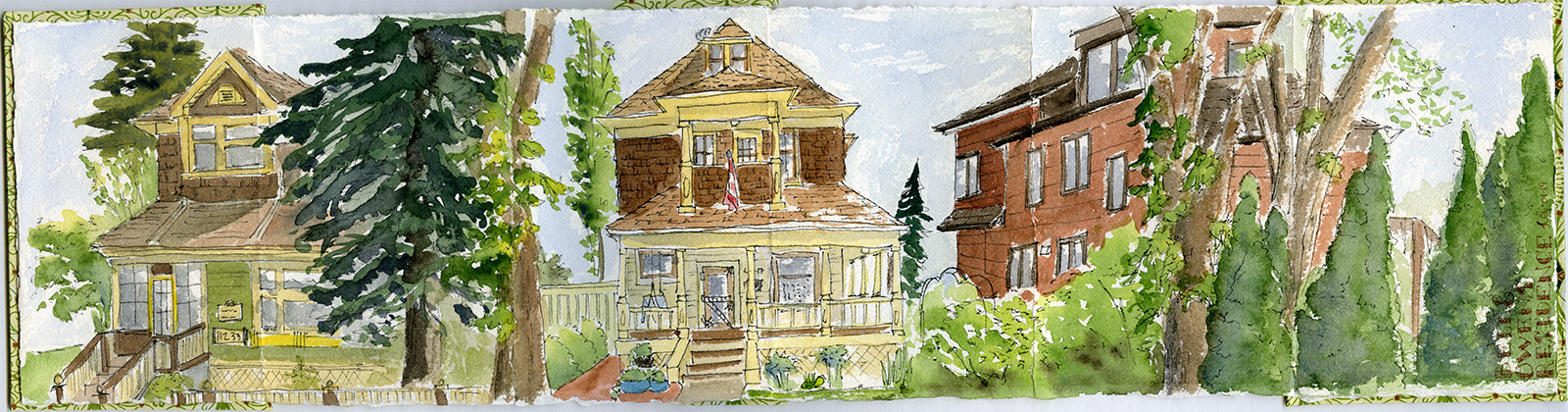
Sketch by Angie Sotiropoulos, 1 June 2019
View full-sized image
The house at 13110 – 104 Avenue serves as an example. The address first appears in the 1931 directory. Regd [Reginald] T. Boyce is listed as residing, and then as householder from 1932 to 1935. His occupation is first noted as an employee of the Board of Pensions, and by 1933 he is listed as the Chief Clerk of the Canada Pensions Commission.
Hon Chas C. Ross lived in the house in 1936, followed by Edgar Dowton, Office Manager for Canada Packers, who owned the house from 1937 to 1939. J. Delbert McFarland, Manager/President of McFarland Shoe Co. owned the house from 1942 to 1948.
A partial story can be conjured for Russell Johnson, who owned the house from 1949 to 1961, with his wife Eva also listed beginning in 1951. However, their names do not appear in 1950 or in 1957. In 1950, Mrs. M. Dazell, widow, is listed as residing, and in 1957, Robert J. and Rita Johnson are listed as residing, his occupation as attendant at Oram & Tucker Service Station. From 1962 to 1965, Russell is listed as retired, and from 1966 to 1986, his name no longer appears, listing only Mrs. Eva M. Johnson, and in 1987, the address simply indicates “No Return”.
This house was an Ernest Litchfield Home, built in the Tudor Revival style. Litchfield was a local contractor who was known for building a publicly displayed model home, “The Home of Tomorrow”, now located at 1 St. George’s Crescent.
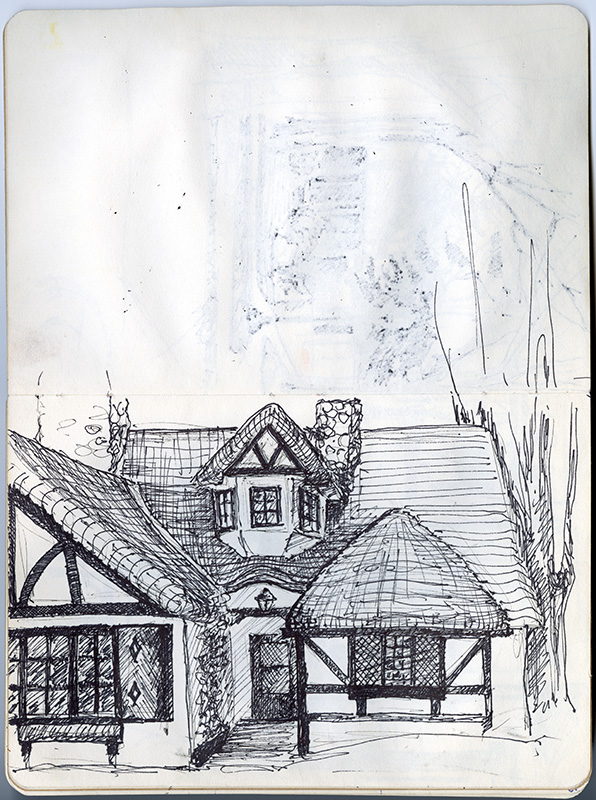
Sketch by Irina Kruglyakova, n.d.
View full-sized image
The City of Edmonton’s John Walter Museum consists of three houses built by John Walter. He came from the Orkney Islands in 1870 to build York boats for the Hudson's Bay Company, and then carried on to own and operate businesses including a blacksmith and carriage shop, ferry, coal mine, and sawmill.
The third home was built in 1901 in the Queen Anne style featuring refined Victorian details and insulated with wood shavings from his mill. It was one of the first homes in Edmonton to have electricity. In 1974 it was moved closer to the two other homes from its original location under the High Level Bridge.
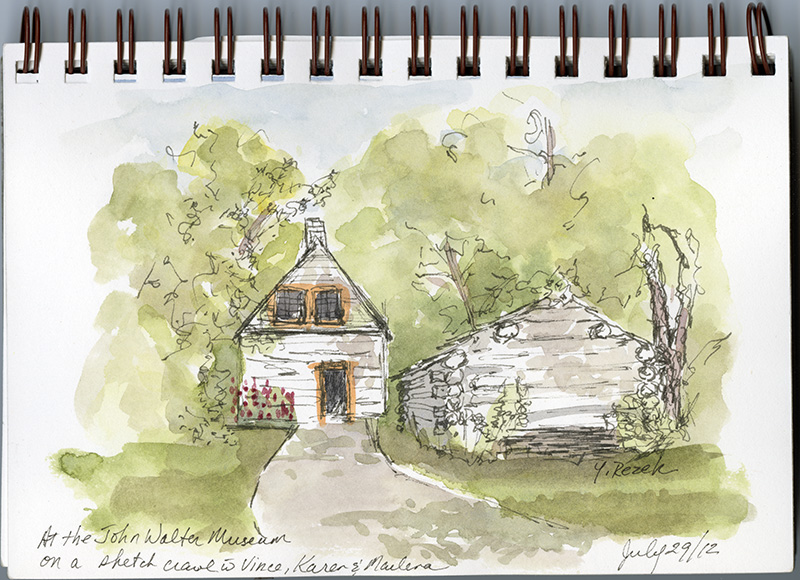
Sketch by Yvonne Rezek, 29 July 2012
View full-sized image
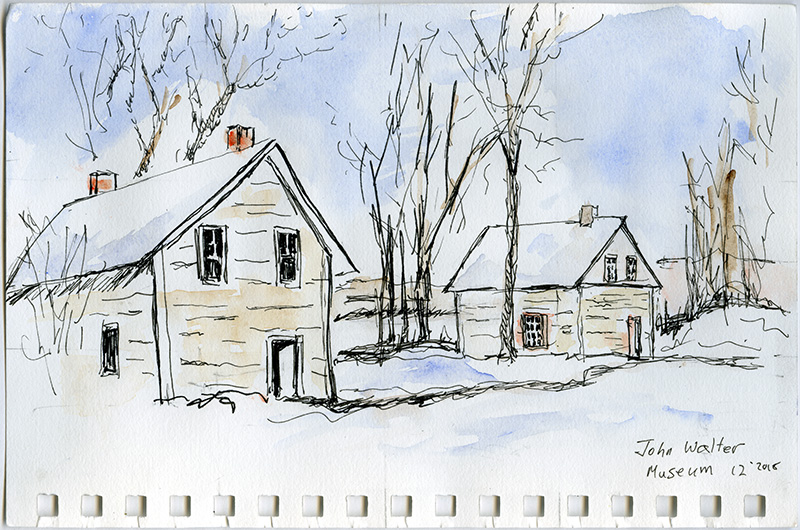
Sketch by Julie Daly, December 2015
View full-sized image
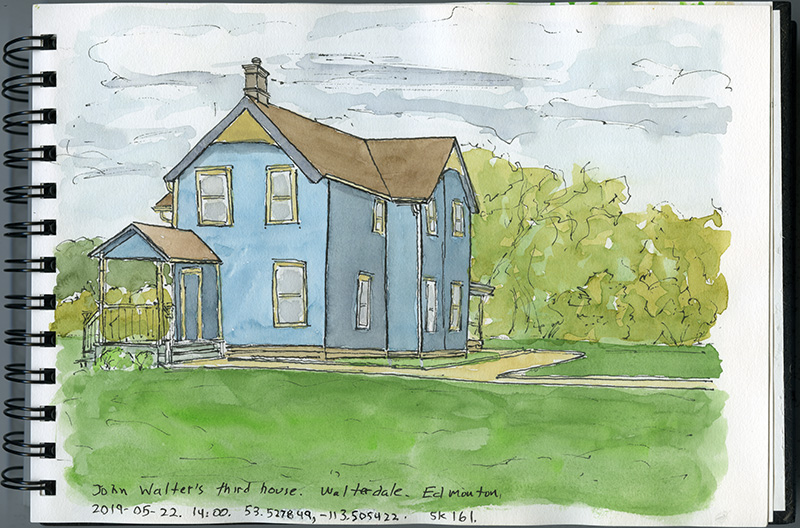
Sketch by Terry Elrod, 22 May 2019
View full-sized image
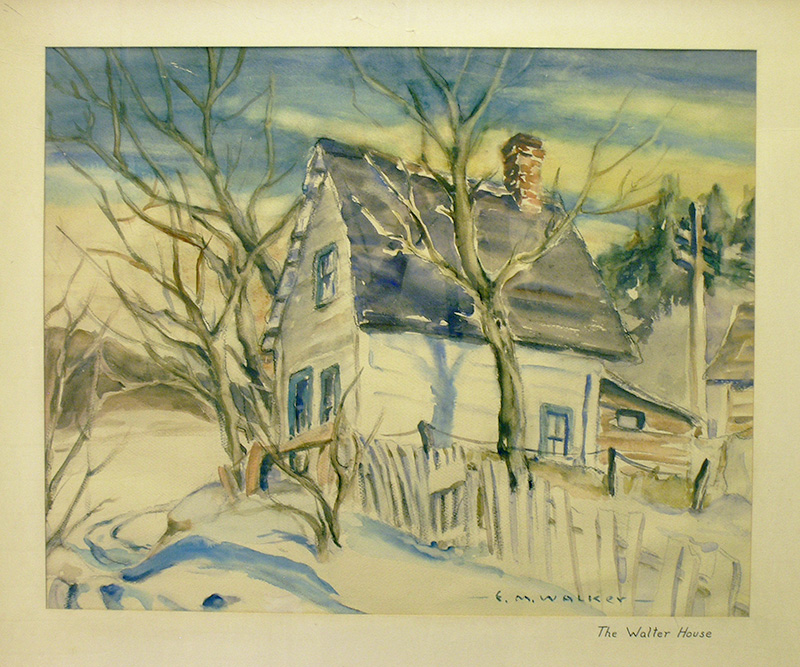
Sketch by Ella May Walker, City of Edmonton Archives, EAA-1-7
View full-sized image
Herbert and Elsie McLuhan built their house in the Highlands neighbourhood in 1912. The craftsman style bungalow was designed by architects Nesbitt & Morehouse and constructed by Bailey & Berry.
The house features a low pitch roof, open verandah with front gable, and tapered square columns. The wood cladding and double hung wooden sash windows are typical of Edmonton homes of the era. Marshall McLuhan spent his early years here until 1915 when the family moved to Winnipeg. He is known for his sociological and philosophical theories, focusing on language, perception, and communication under the influences of the mass media.
In the early 1920s the McLuhans sold the house to Gladys Griffin, a teacher and assistant principal at Highlands School.
In 2012 the house was purchased by Arts Habitat Edmonton, who restored and renovated the house with architect David Murray, interior designer Johanne Yakula, and support from the City of Edmonton, Edmonton Arts Council, and the Social Enterprise Fund (Arts Hab). The house was designated a Municipal Historic Resource in 2013. It has become a space for artists and their work, a legacy to McLuhan’s theme “the medium is the message”.
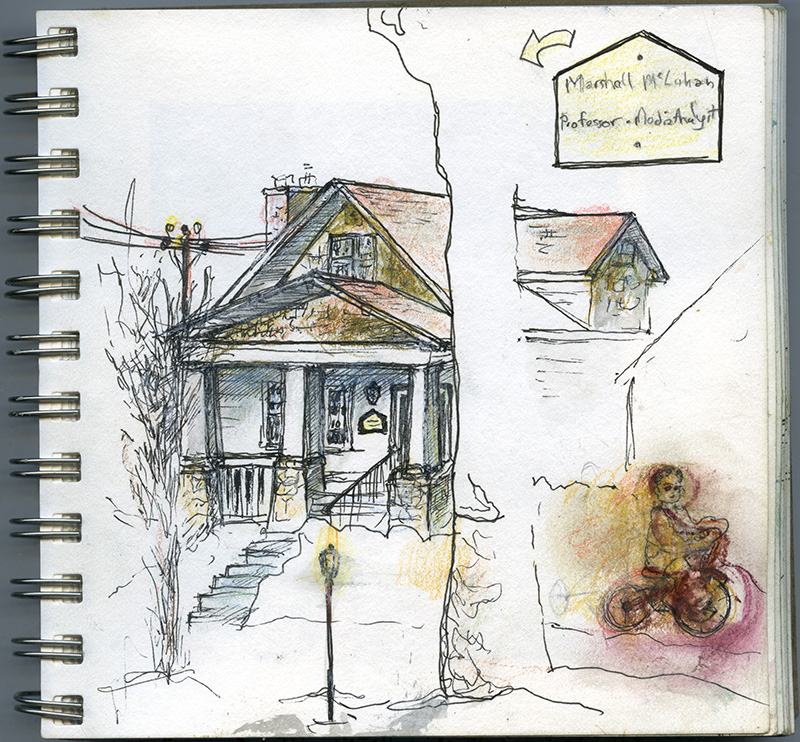
Sketch by Karen Wall, 2013
View full-sized image
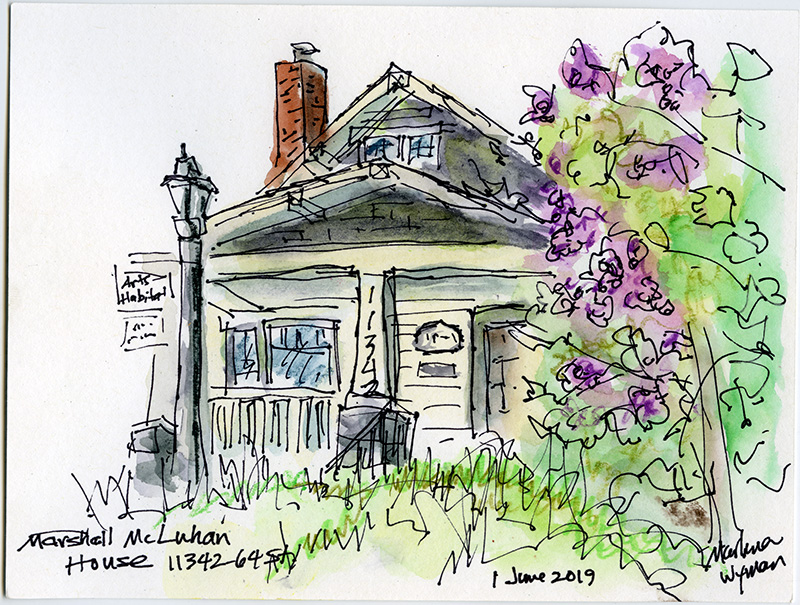
Sketch by Marlena Wyman, 1 June 2019
View full-sized image
This two and a half-storey Four Square house was built by Garnett Meiklejohn in 1912. In 1915, Herbert and Eda Owen moved in and the house also served as a Dominion Meteorological Station. A 60-foot tall wooden tower, painted red, sat atop the roof with access from a modified rear dormer. It held a rotating anemometer to gauge wind speed and the tower had to be climbed daily to take readings.
Herbert worked as meteorologist with Eda assisting him. When Herbert left to fight in WWI, Eda took over his duties, and when he died overseas in 1917, she was named the Provincial Agent and Weather Observer at a time when women were not considered persons under the law, nor thought to be qualified to be working as professionals.
The Highlands station was regarded as the most significant meteorological post outside of Toronto. Eda was the only woman in Canada to hold such a position and she worked until 1943, although she did not receive the pay that a man in the same position did.
The house has been restored to its original appearance and was designated a Provincial Historic Resource in 1994.
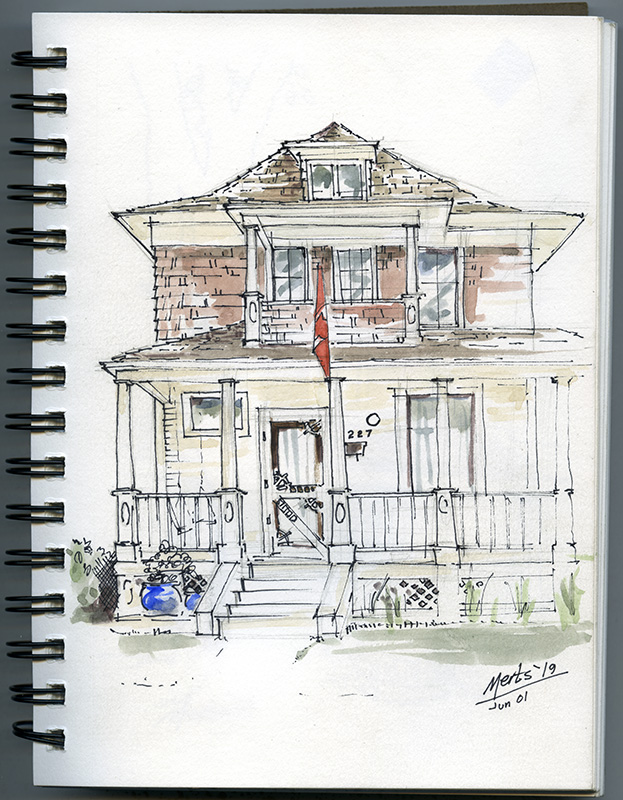
Sketch by Merts Belmes, 1 June 2019
View full-sized image
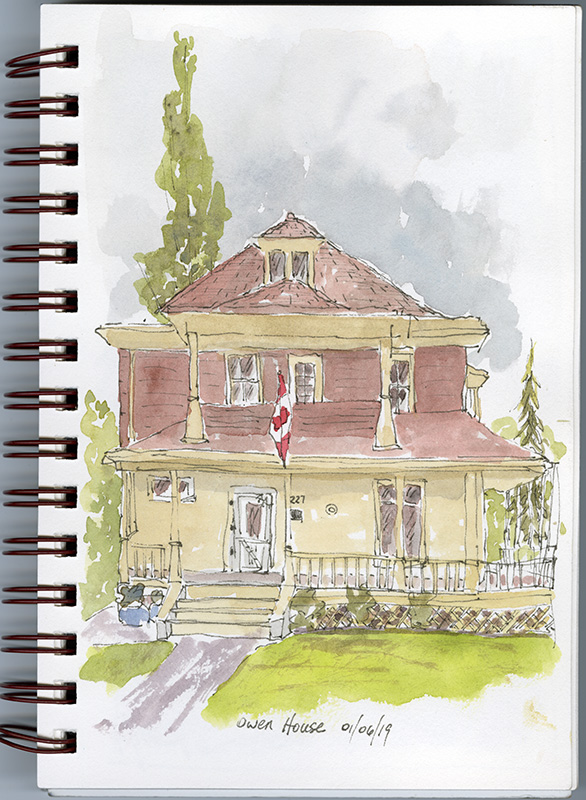
Sketch by Yvonne Rezek, 1 June 2019
View full-sized image
Edmonton realtor Edward H. Molstad and his wife Addie built their home in 1912. It is a stately two-storey brick and wood Four Square house originally built on 5 acres of land, surrounded by a circular driveway, fountains and trees, and included a carriage house and servants’ quarters. In 1931, part of the house was converted into apartments, but the Molstad family continued to live there until 1982.
When Walter and Jean Kipp purchased the house in 1988, they worked to restore it to its previous glory as a single family home. Present owners Scott and Erica Richards continue the care for the preservation of this elegant home.
The interior retains the original hardwood floors, oak panelling, sculptured ceilings, brass chandeliers, and fireplaces. In 1994, Molstad House became Edmonton’s first historically designated residential building, and was designated a Provincial Historic Resource in 1996.
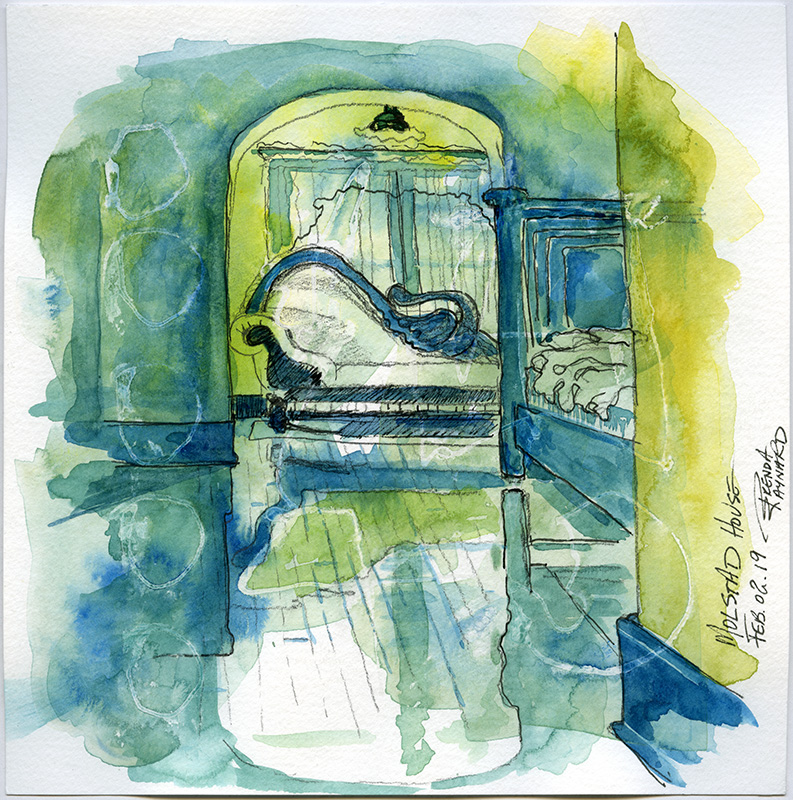
Sketch by Brenda Raynard, 2 February 2019
View full-sized image
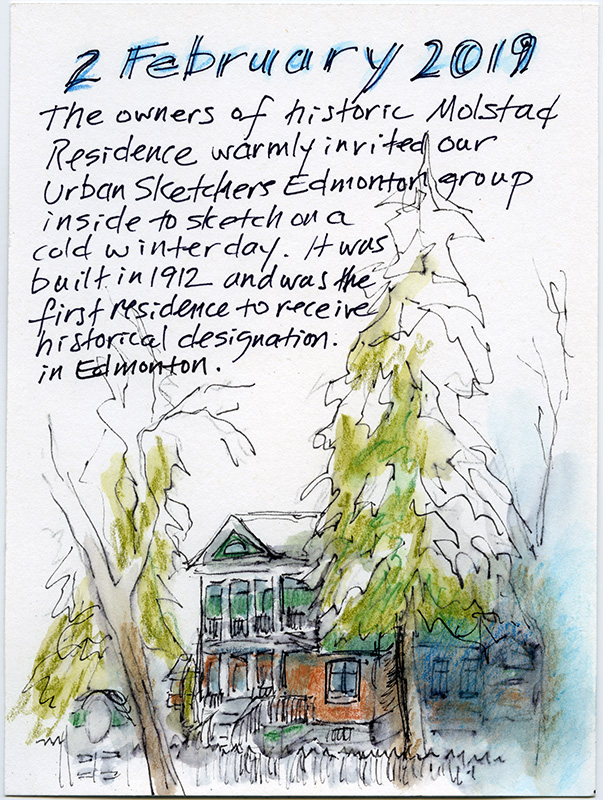
Sketch by Marlena Wyman, 2 February 2019
The writing on this sketch reads as follows: "2 February 2019. The owners of historic Molstad Residence warmly invited our Urban Sketchers Edmonton group inside to sketch on a cold winter day. It was built in 1912 and was the first residence to receive historical designation in Edmonton."
View full-sized image
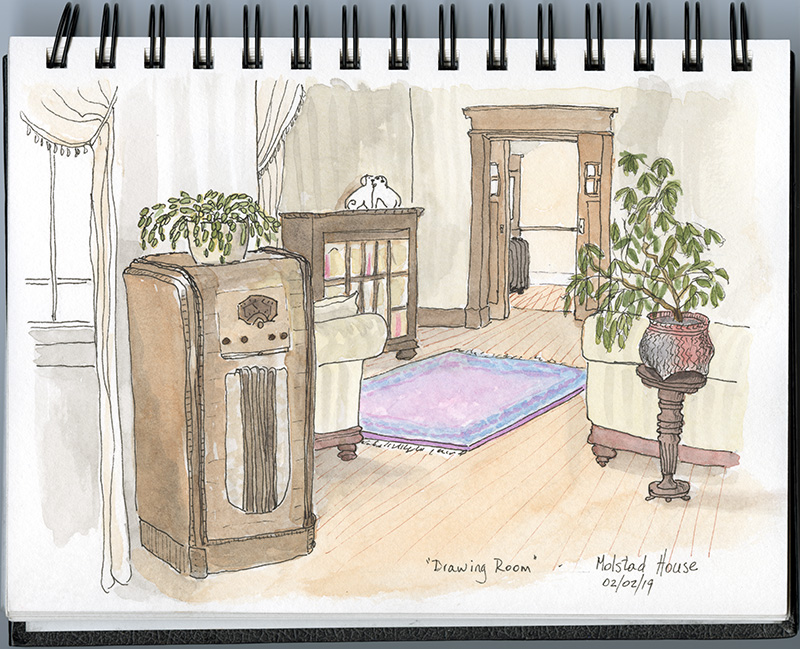
Sketch by Yvonne Rezek, 2 February 2019
View full-sized image
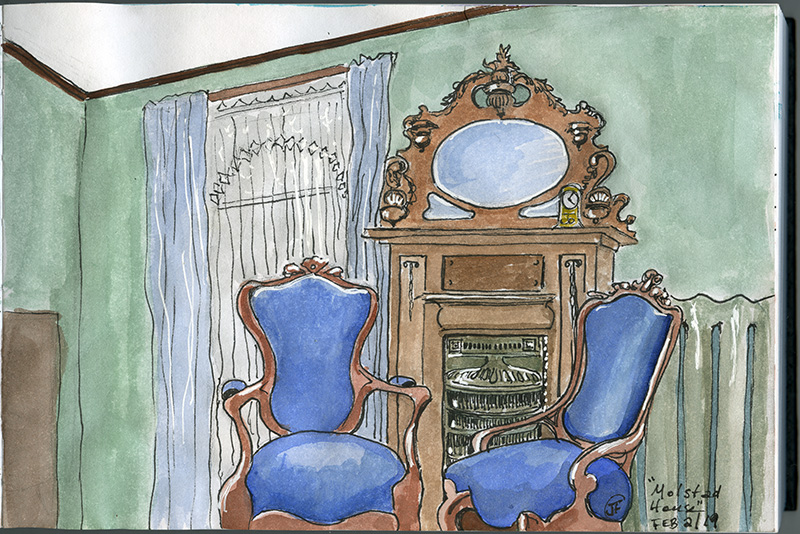
Sketch by Jo-Anne Farley, 2 February 2019
View full-sized image
The Trynicky Apartments and Georgia Apartments, with their distinctive pink and blue colour scheme, were a recognizable feature for six decades, perched atop the river bank in the Boyle Street neighbourhood, one of the oldest in Edmonton. The property is non-grid aligned because it followed the traditional Metis river lots common to the city’s fort history, which were long and narrow plots perpendicular to the river.
This pair of two-and-a-half storey flat-topped apartment houses were constructed in 1958, south of and across the street from the Gibson Block. The blue building to the east had a stone-work façade on the first floor and faced the St. Barbara Russian Orthodox Cathedral. This building was known as the Trynicky Apartments or the 10110 Suites, with six apartments. The pink building with 20 suites, known as the Georgia Apartments, sat on the same site on the west side.
Unfortunately, these apartment buildings were neglected for many years. By 2010 the structures had fallen into disrepair and demolition took place between 2015 and 2017. The plot of land is currently empty.
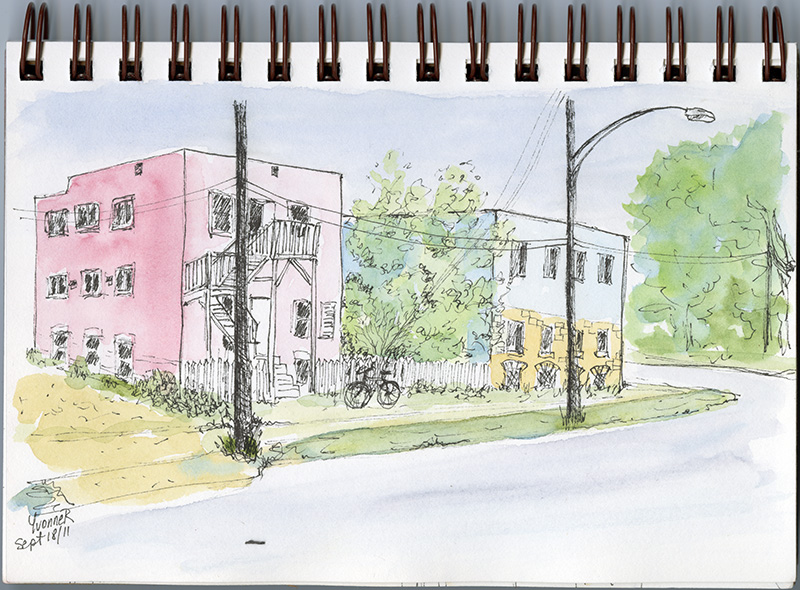
Sketch by Yvonne Rezek, 18 September 2011
View full-sized image
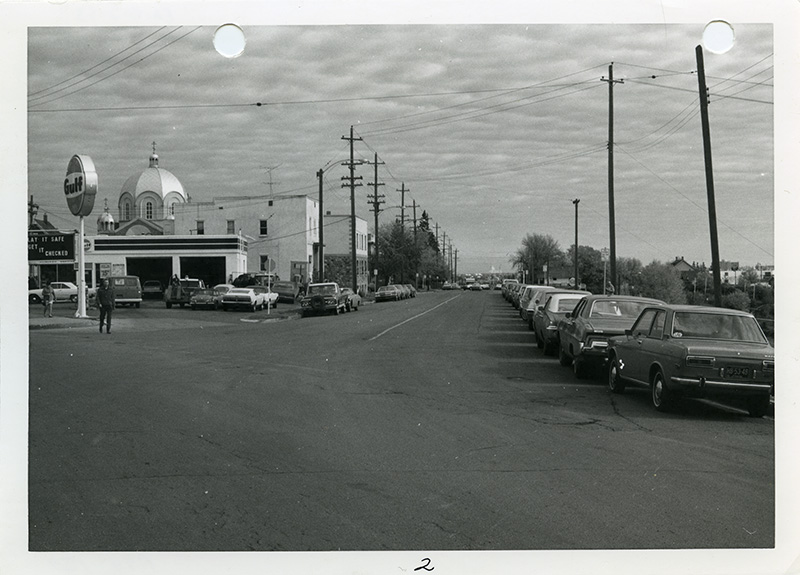
City of Edmonton Archives, EA-802-53 [ca. 1973]
View full-sized image
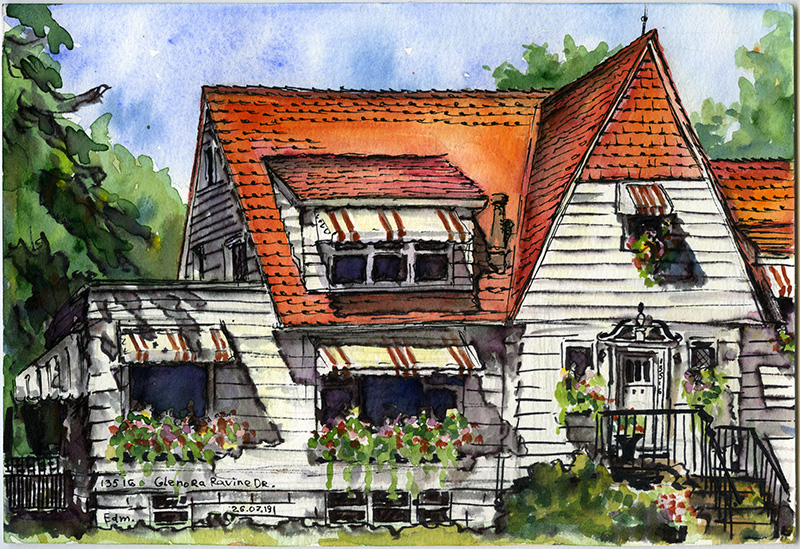
Sketch by Irina Kruglyakova, 25 July 2019
View full-sized image
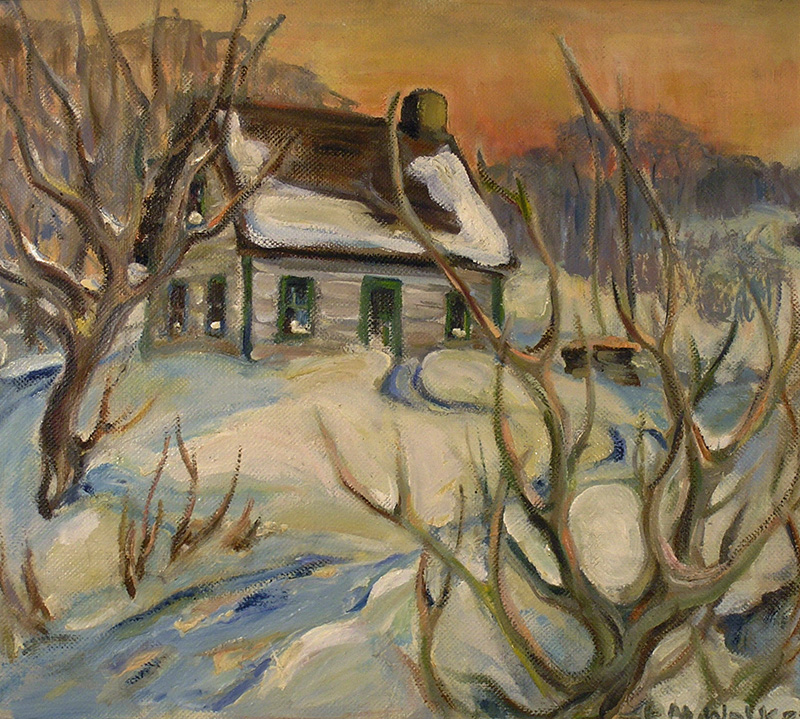
By Ella May Walker, City of Edmonton Archives, EAA-1-4
View full-sized image
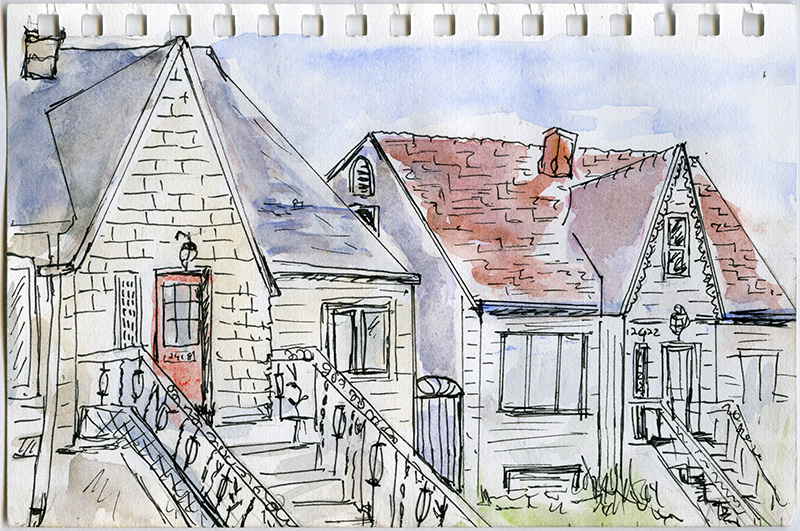
Sketch by Julie Daly, n.d.
View full-sized image
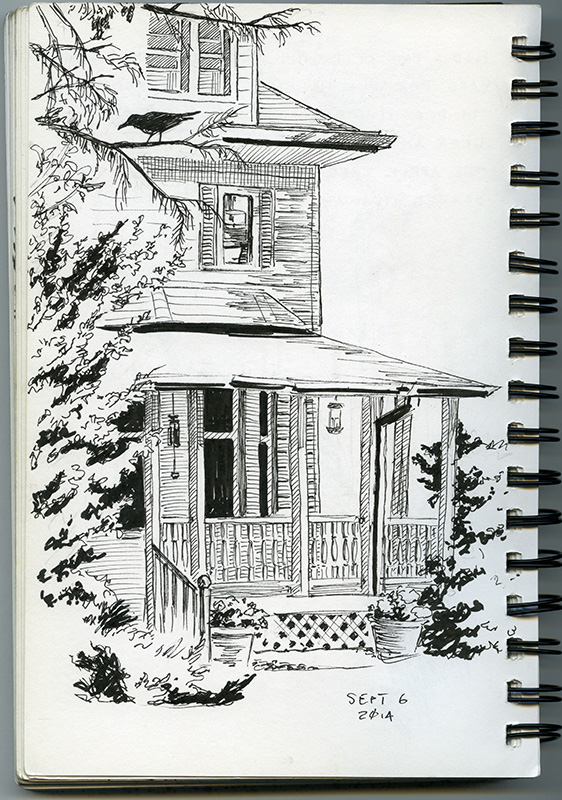
Sketch by Joanne Wojtysiak, 6 September 2014
View full-sized image
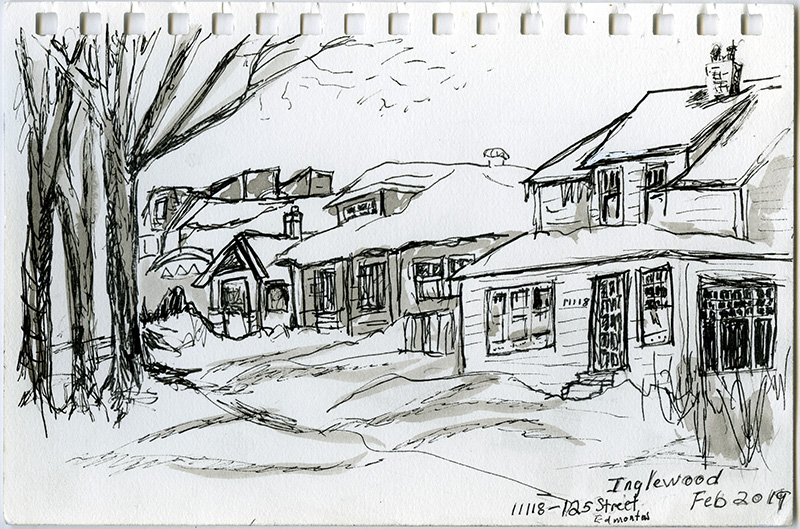
Sketch by Julie Daly, February 2019
View full-sized image
Contact Us
City of Edmonton Archives
Prince of Wales Armouries, 2nd floor
10440 108 Avenue
Edmonton, Alberta
Email cms.archives@edmonton.ca