Project Update - Summer 2026

Valley Line West LRT construction continues along the majority of the alignment. Some of the most impactful work for drivers, cyclists and pedestrians is along 102 Avenue in downtown and along 87 Avenue in west Edmonton, where major roadwork is taking place.

104 Avenue Temporary Signal Timing Adjustments 

In August, the City worked with Marigold to adjust the temporary signal timing along 104 Avenue to improve traffic flow through the construction corridor while continuing to balance pedestrian safety and nearby intersections. Signal timing during construction is temporary. Watch our latest video to learn what changed, how traffic conditions are monitored during construction and how signal timing will continue to evolve as work progresses.

102 Avenue

Construction has led to the temporary full closure of 102 Avenue to vehicle traffic between 107 Street and 102 Street for the entire 2026 construction season. The work on 102 Avenue will happen in phases. Phase 1 started in March 2026.

  • Phase 2 is expected to start on July 15 and last until the end of 2026.
  • During Phase 2, north/south vehicle access across 102 Avenue will be maintained on 104 Street. However, vehicle access on 104 Street will be unavailable on Saturdays to allow the Downtown Farmers’ Market to continue to operate. 101 Street or 109 Street remain open to north/south traffic. 
  • Details can be found in Marigold Infrastructure Partners' construction notice.
  • Pedestrian access will be maintained, but detours will be in place. The bike lanes along 102 Avenue were temporarily relocated to 103 Avenue in November 2025. Find updated pedestrian wayfinding.

87 Avenue

Road construction along 87 Avenue resumed this spring. Drivers and pedestrians can expect changing traffic patterns and lane reductions throughout the construction season as crews continue rebuilding the corridor in west Edmonton.

  • In late April, lane reductions and traffic shifts began between 159 Street and Anthony Henday Drive.
  • Work started at:
  • 87 Avenue will be reduced to one lane in each direction between 161 Street and Anthony Henday Drive throughout staged construction activities until the end of 2026.
  • Work will happen in stages, with traffic patterns changing throughout the year. See the Current Construction Notices (Area 6).

To stay informed of the work, please sign up for Marigold Infrastructure Partners’ construction notices.
87 Avenue Construction Area

About the Project

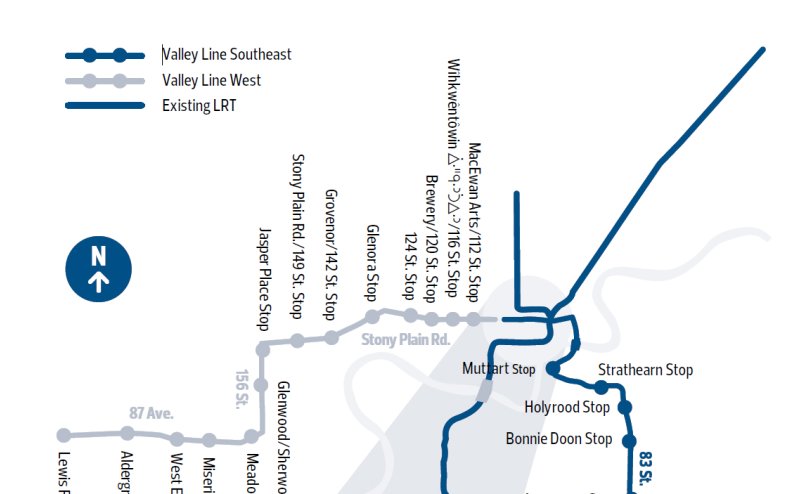
It’s the second stage of the Valley Line, an urban-style 27-km line that will operate between Mill Woods in southeast Edmonton and Lewis Farms in west Edmonton.

Valley Line West includes:

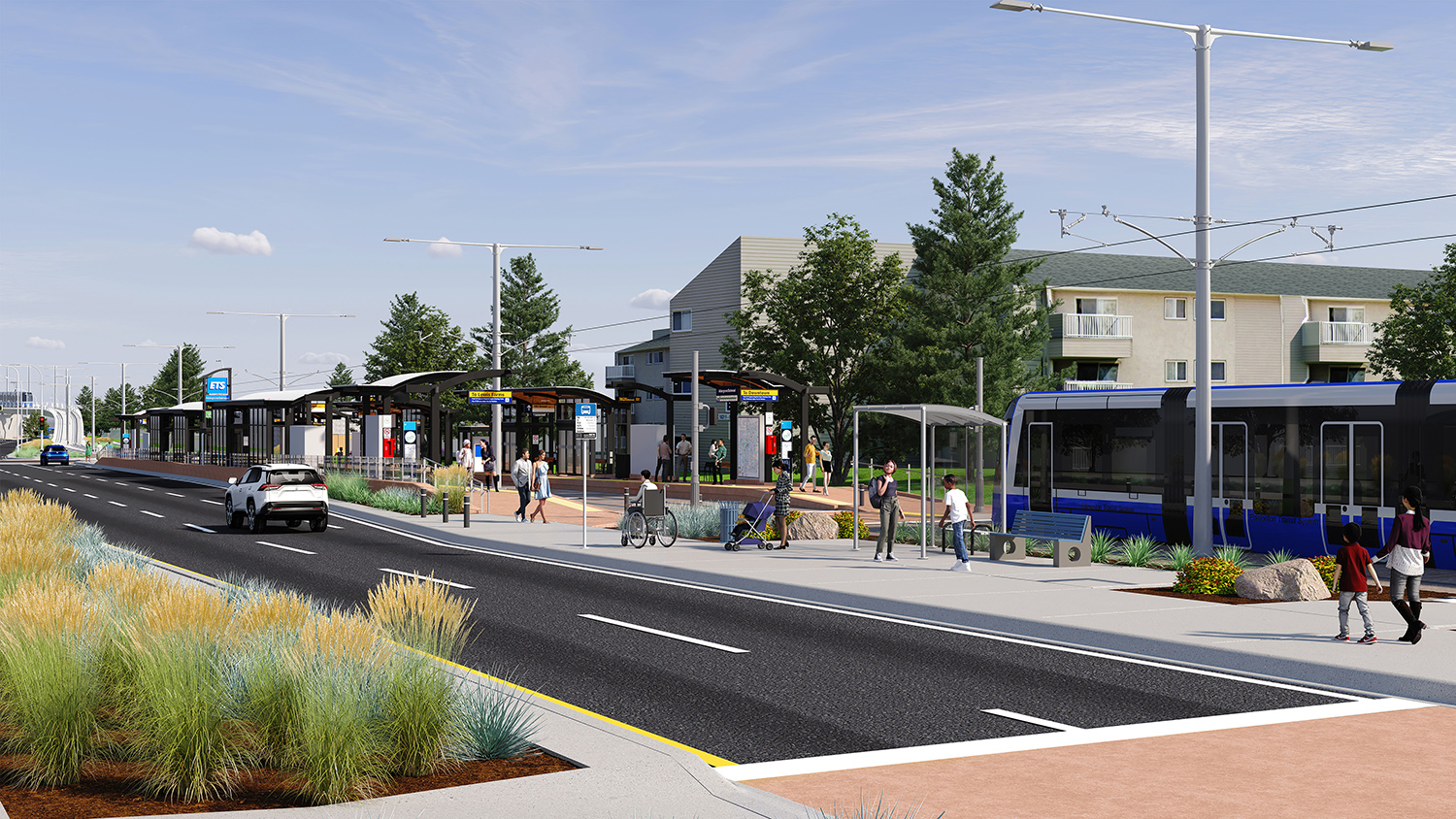
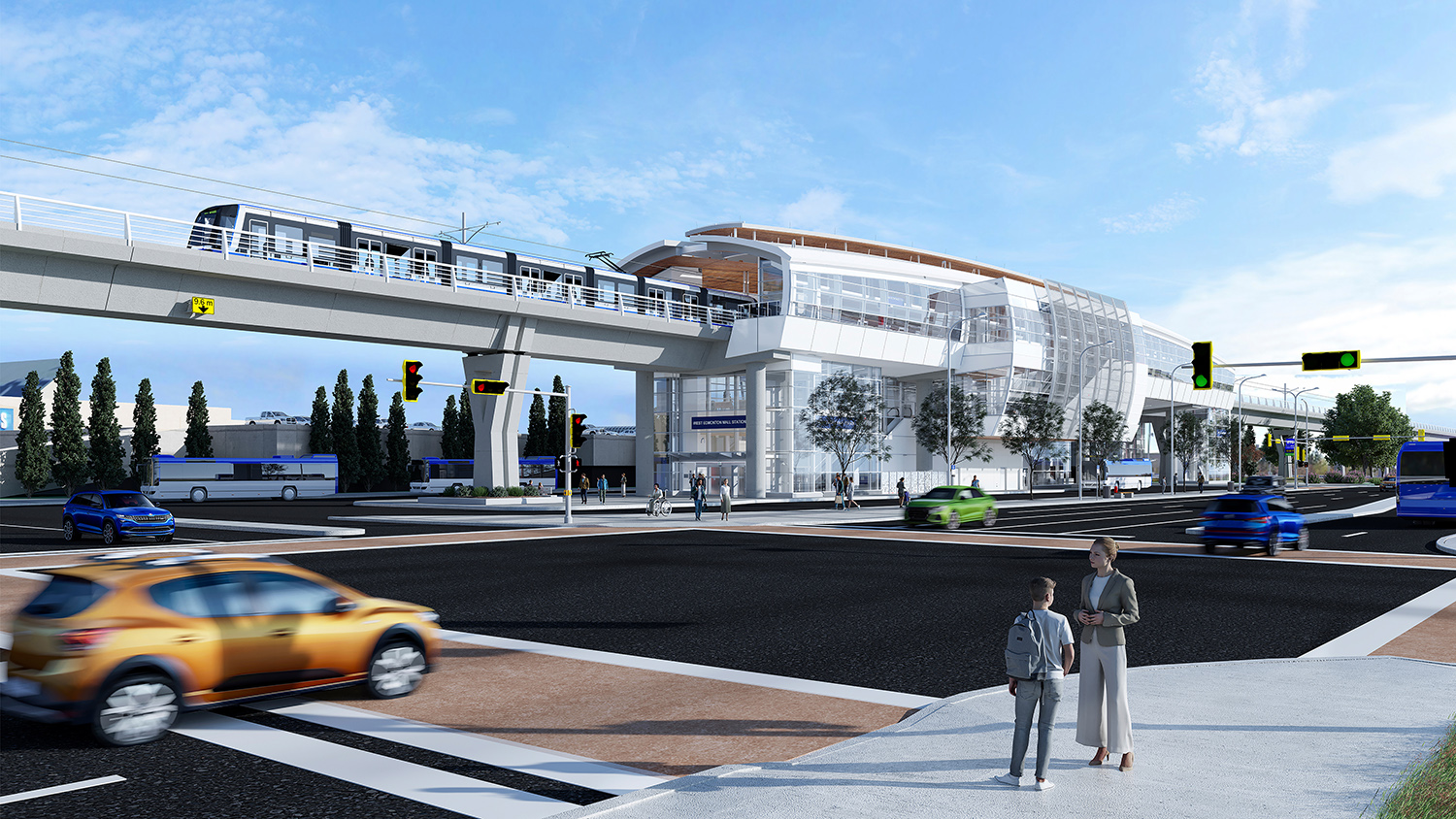
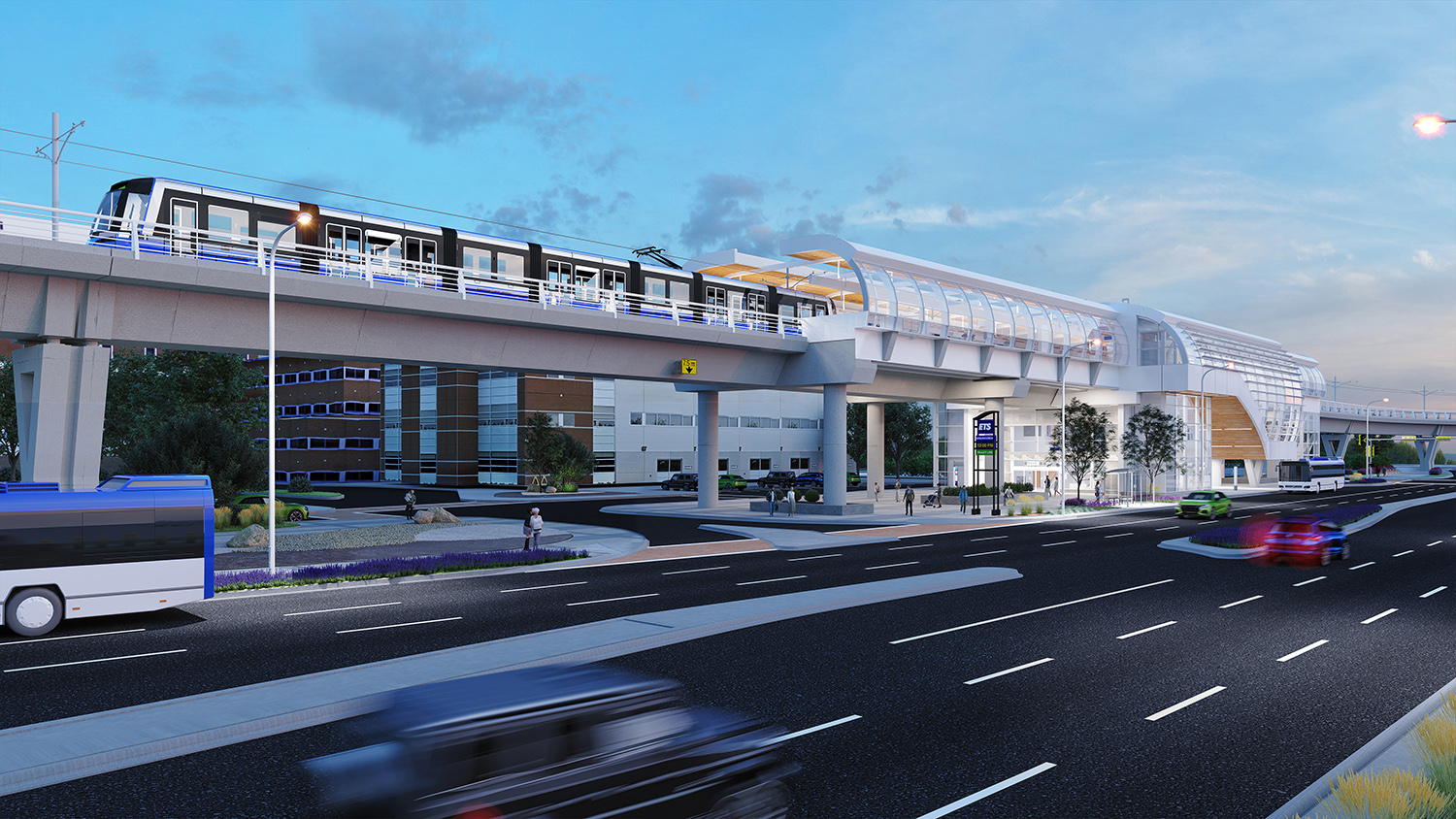
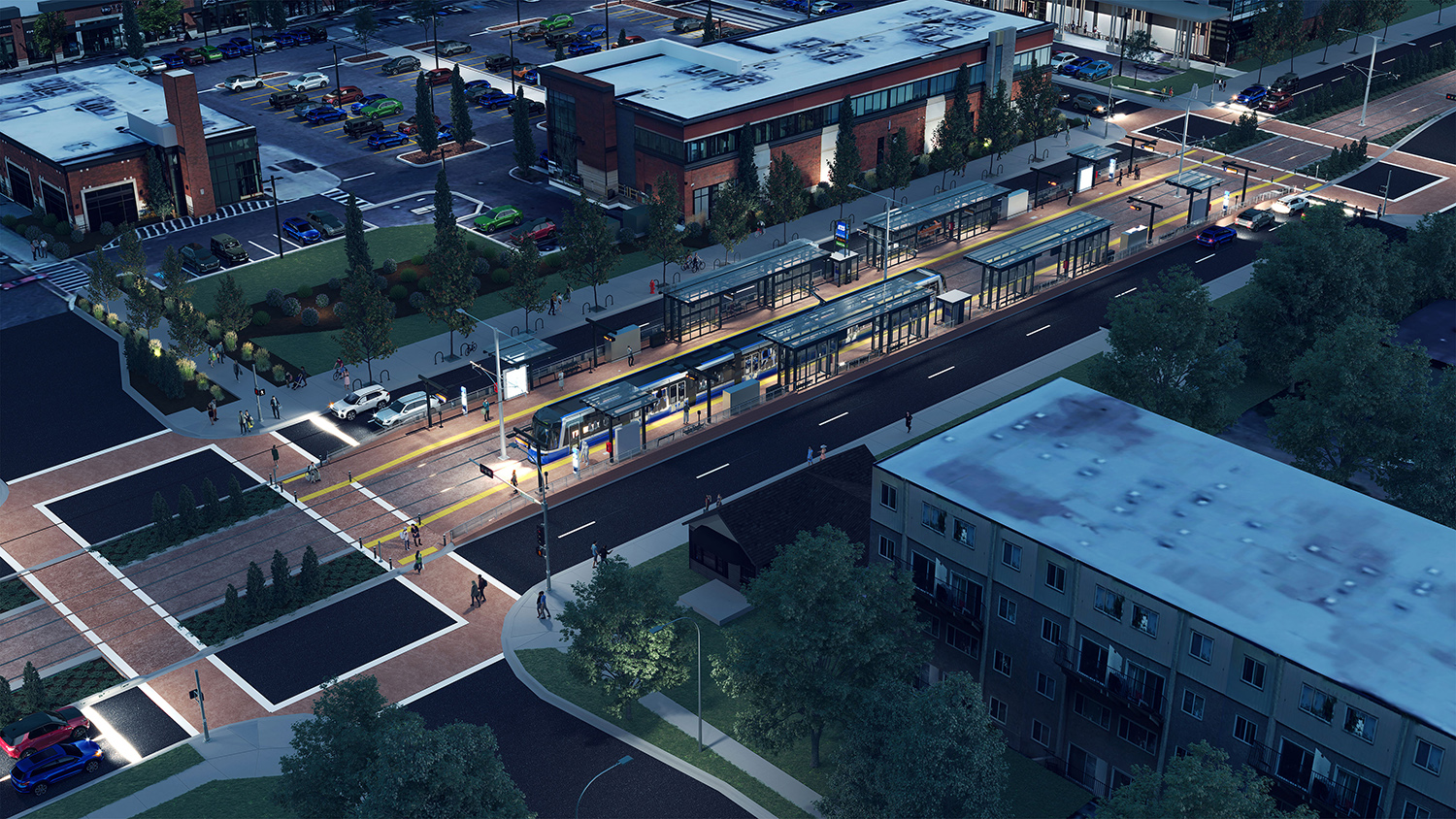
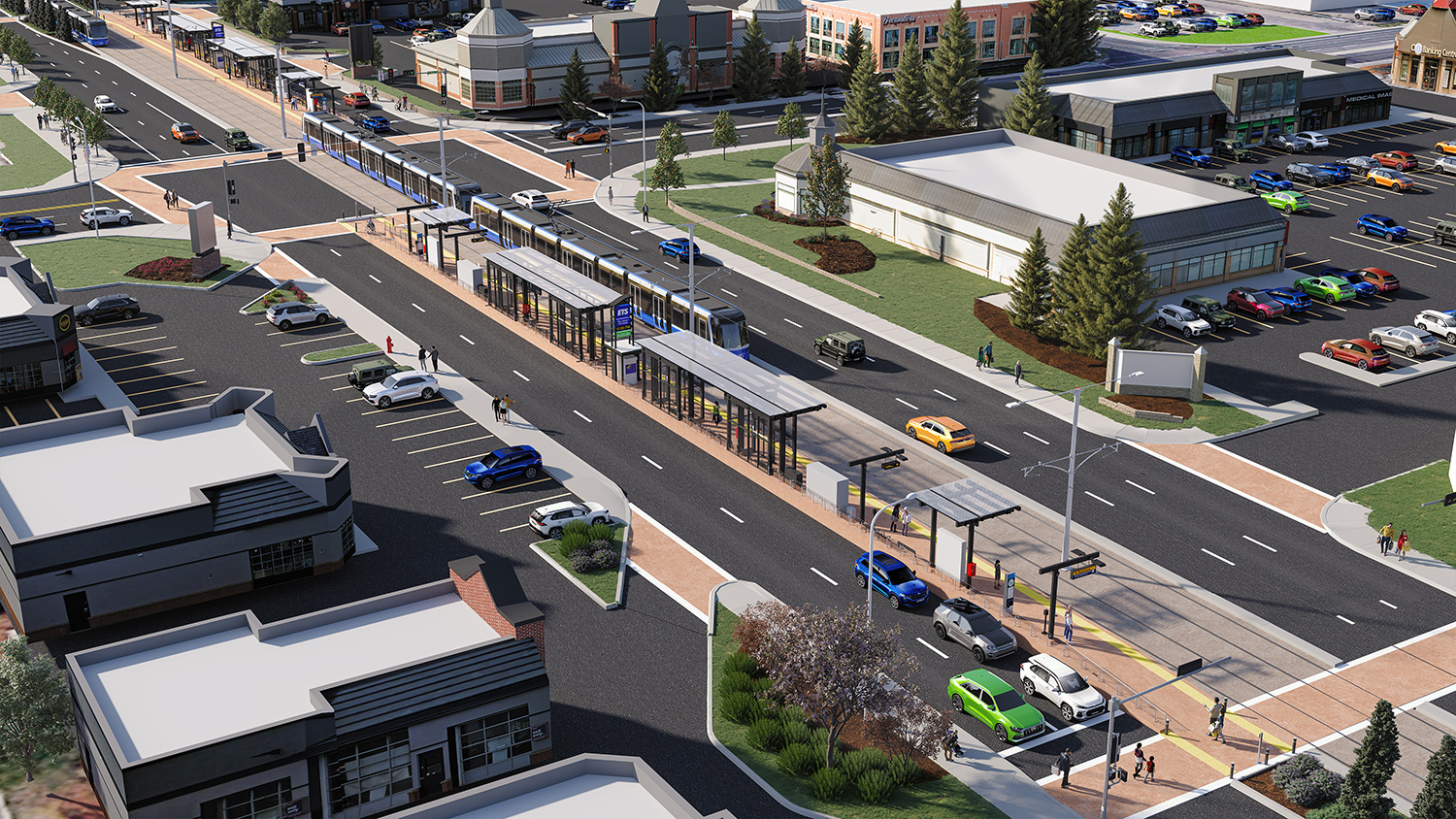
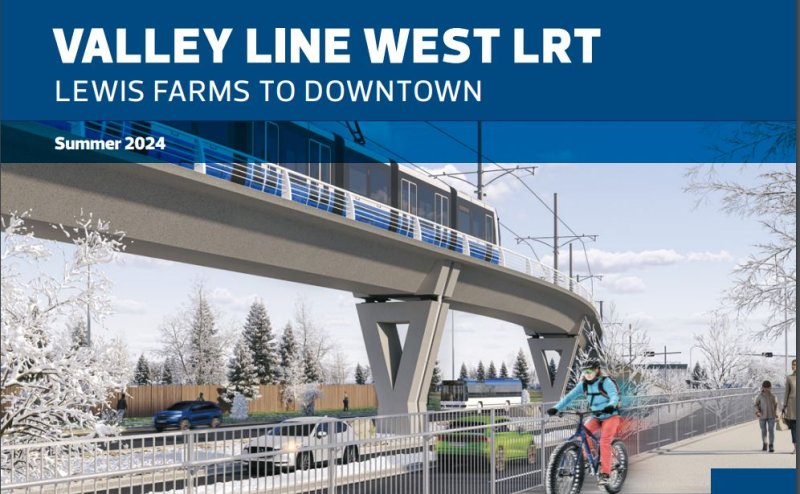
  • 14 street-level stops and two elevated stations (West Edmonton Mall and Misericordia Hospital)
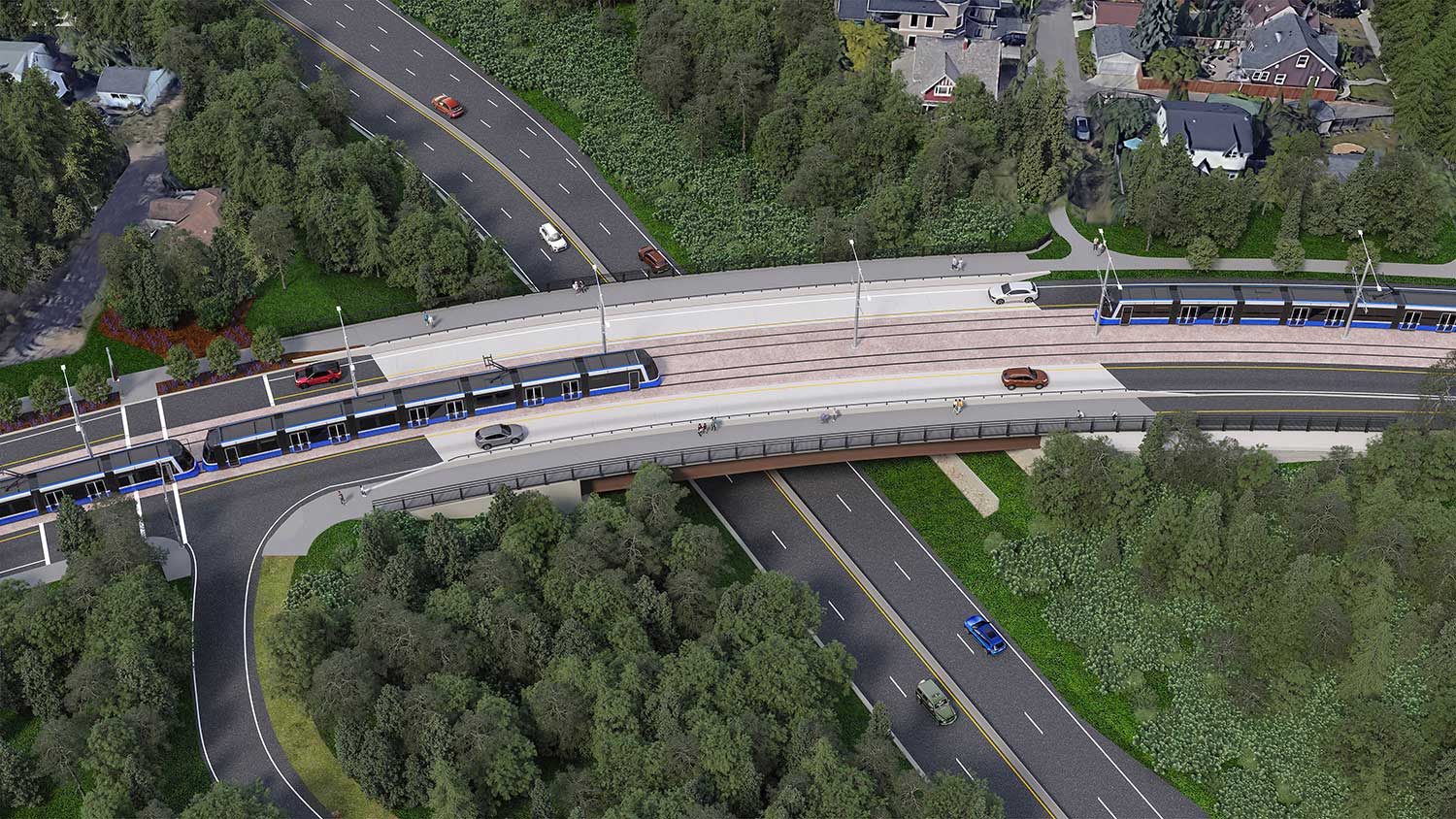
  • Two new bridges (crossing Groat Road and Anthony Henday Drive)
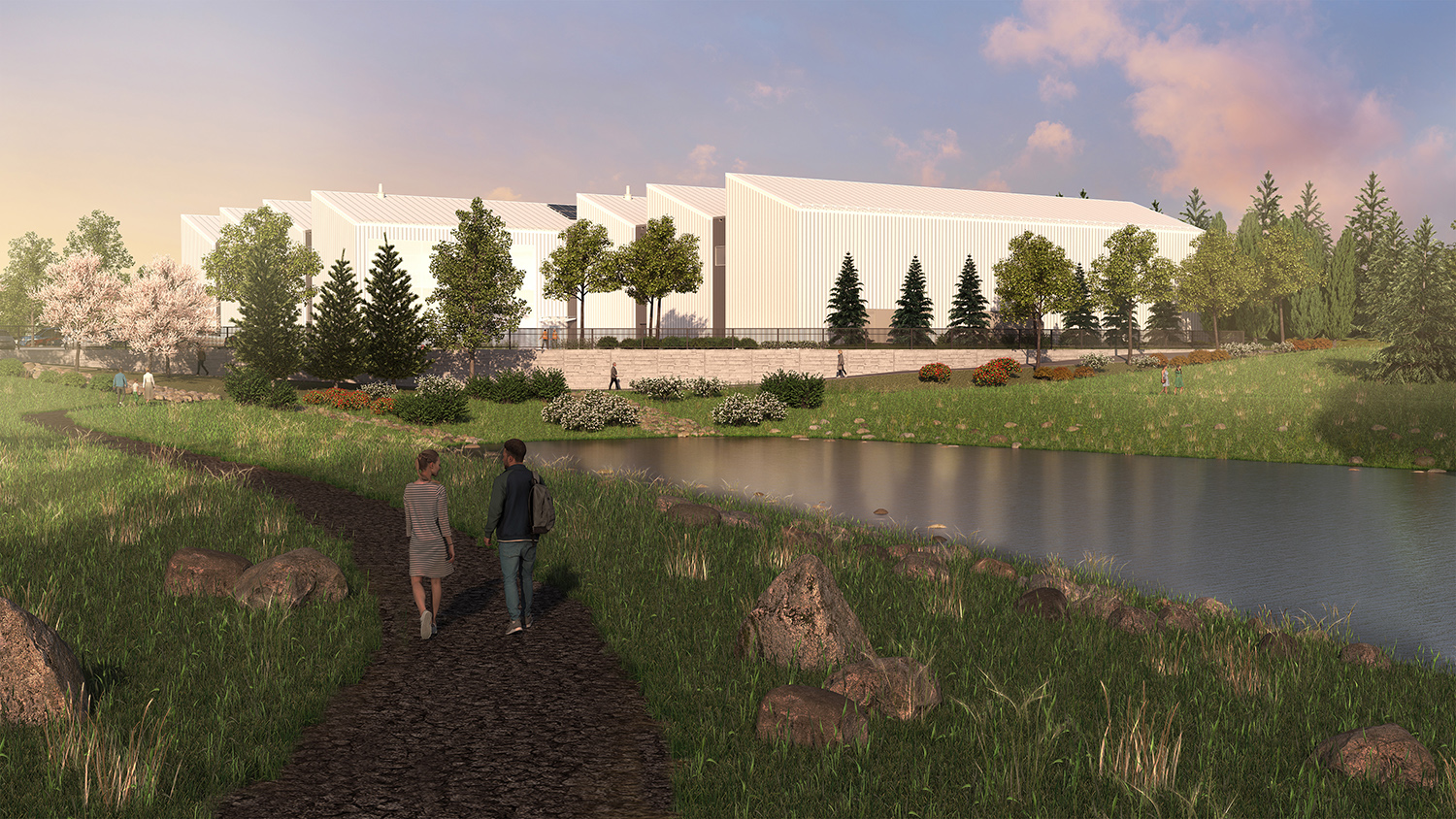
  • Two new facilities (Gerry Wright Operations and Maintenance Facility near Whitemud Drive and 75 Street, and Lewis Farms Storage Facility in west Edmonton)
  • Elevated guideway along 87 Avenue
  • 46 new light-rail vehicles

Learn more about the history of public engagement or the project.

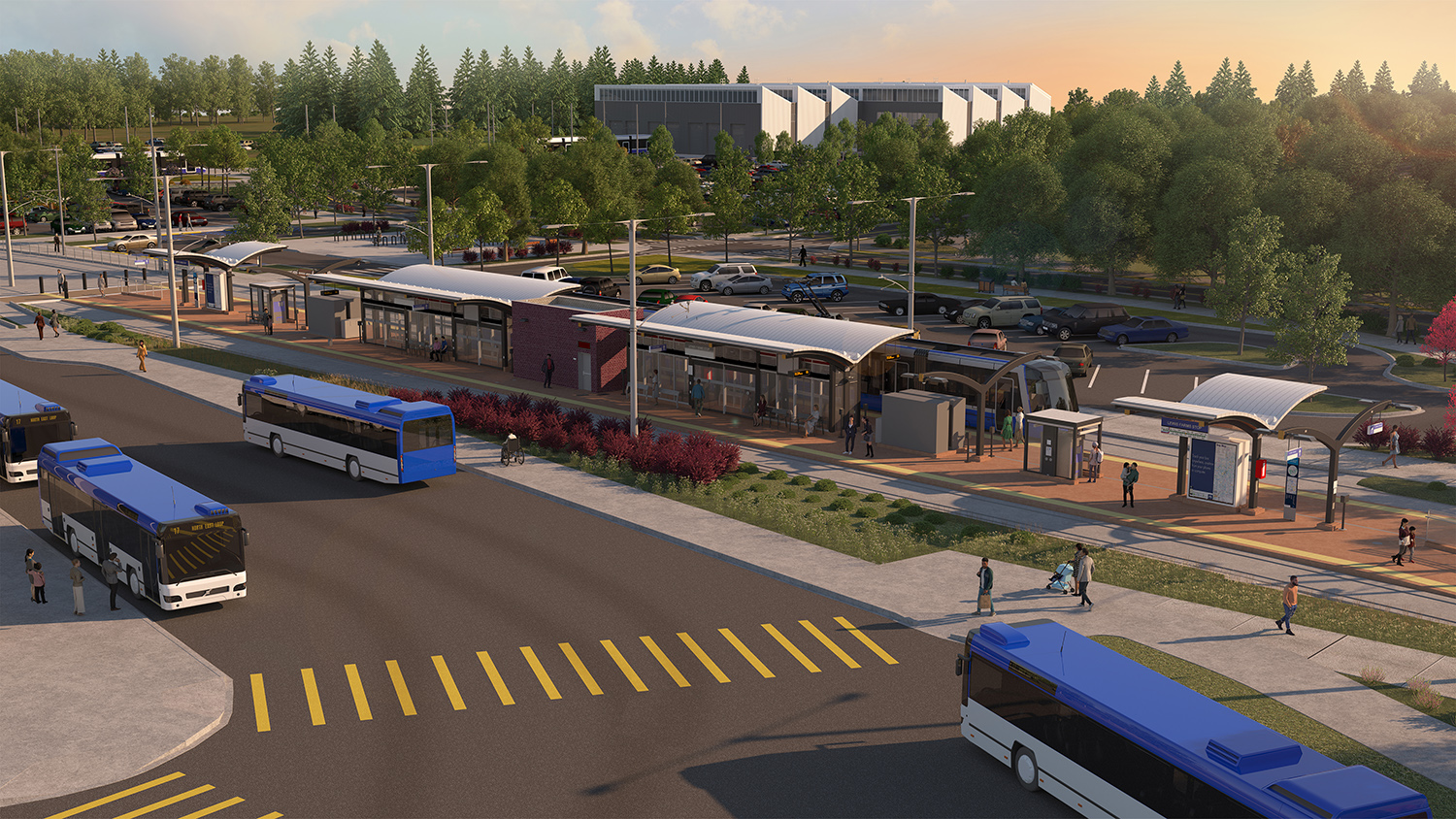
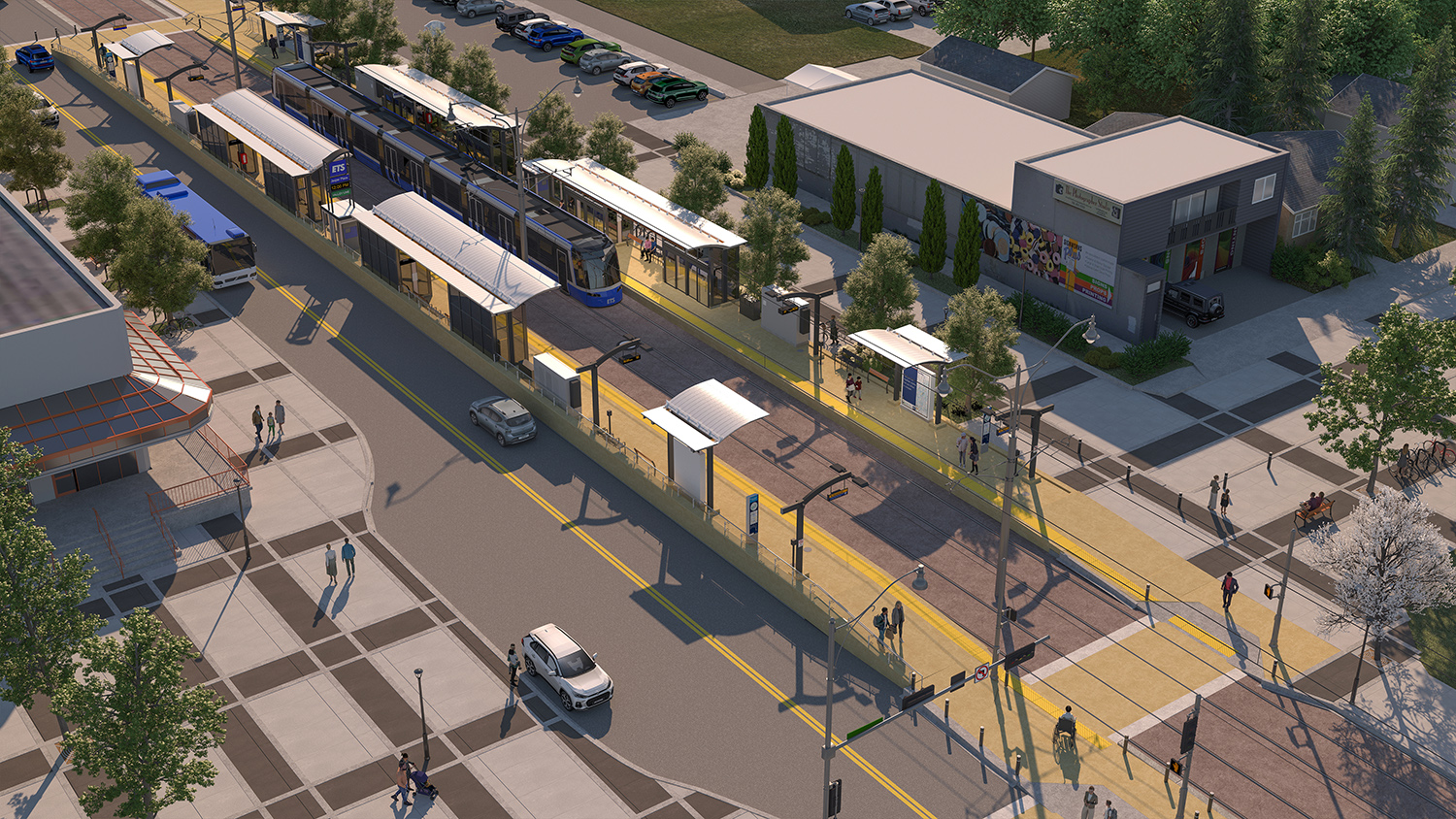
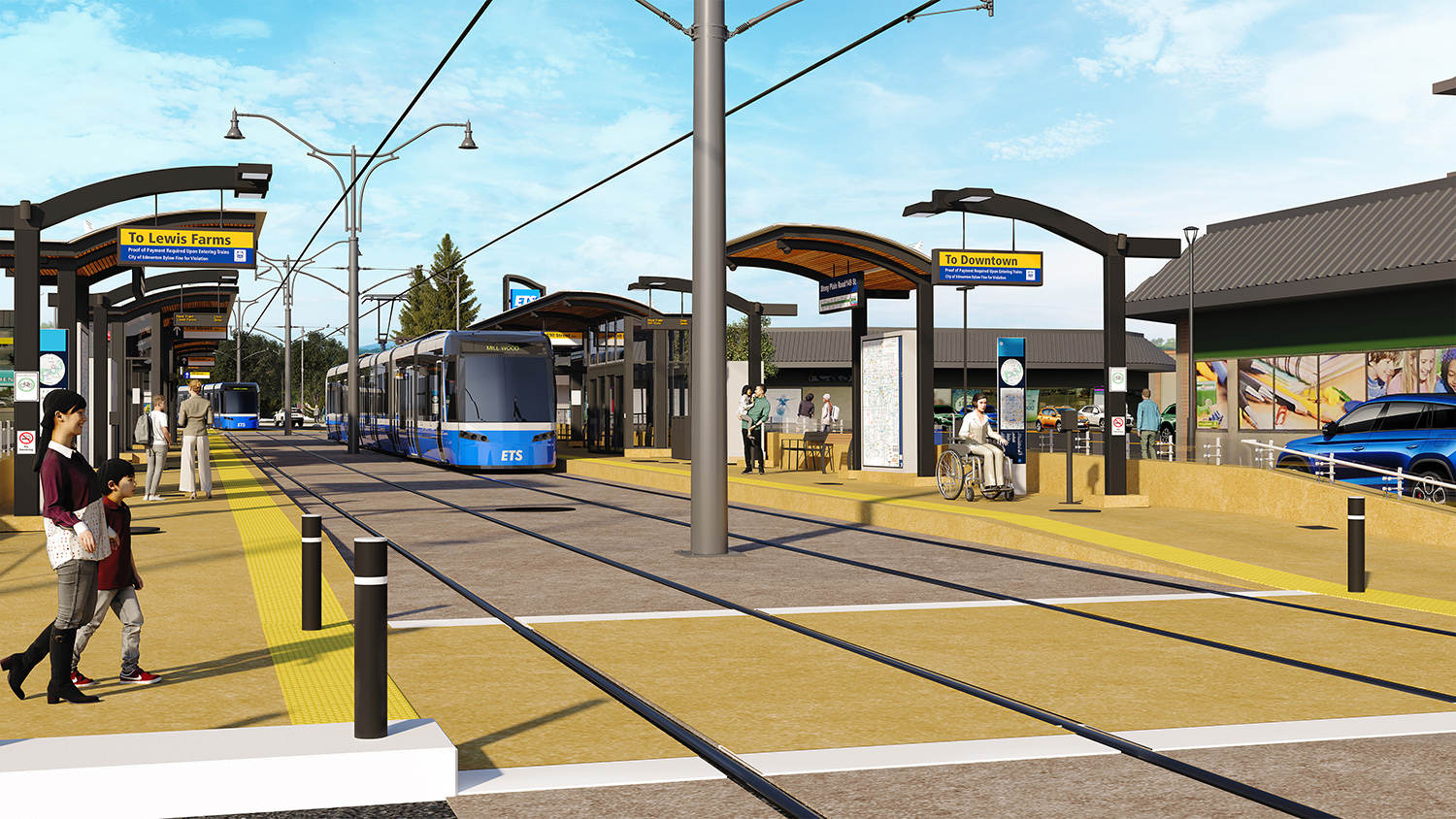
Holyrood Concept Render Photo

Sign up for project updates

LRT Projects

Valley Line West Summer 2024 Booklet

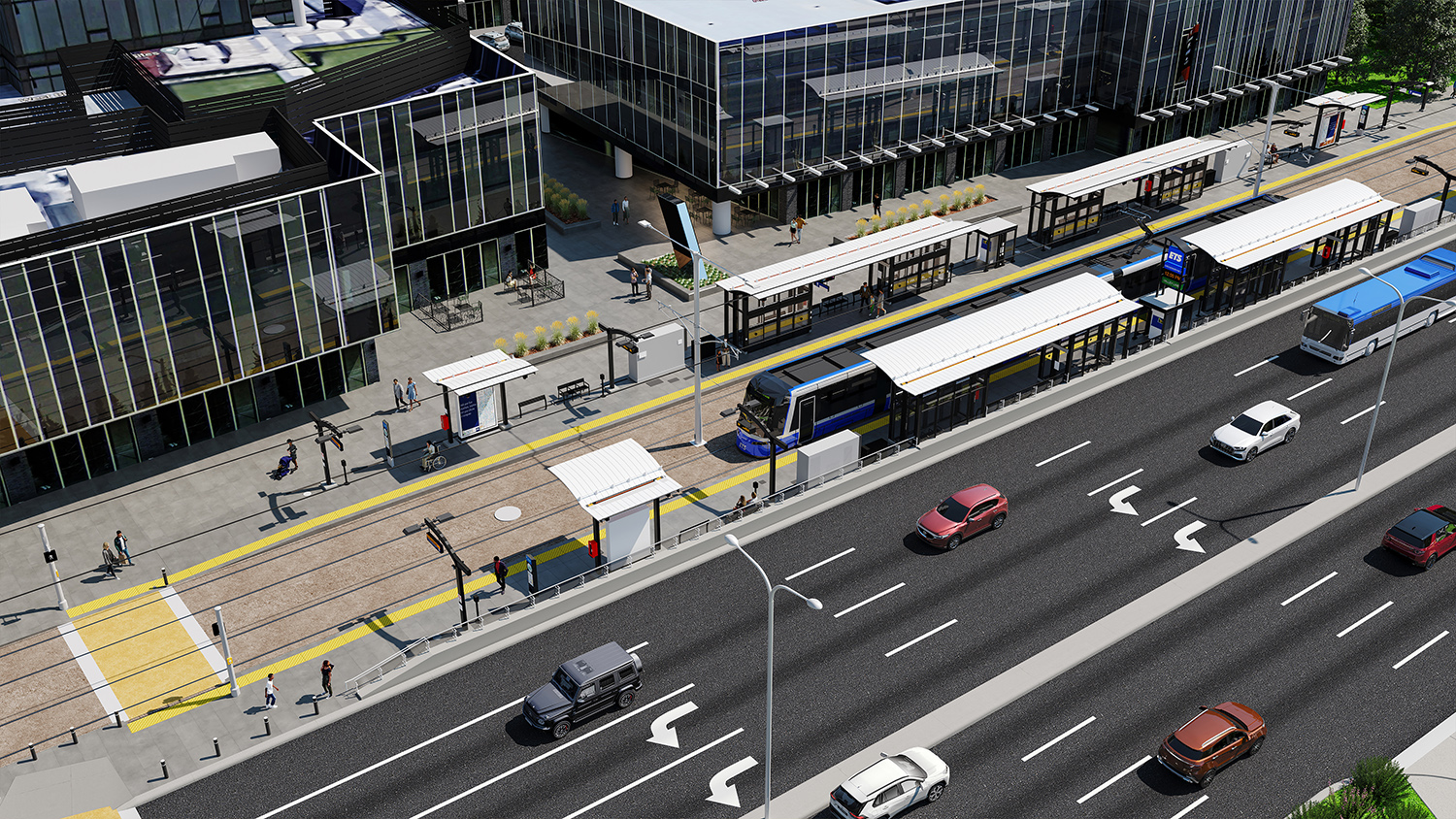
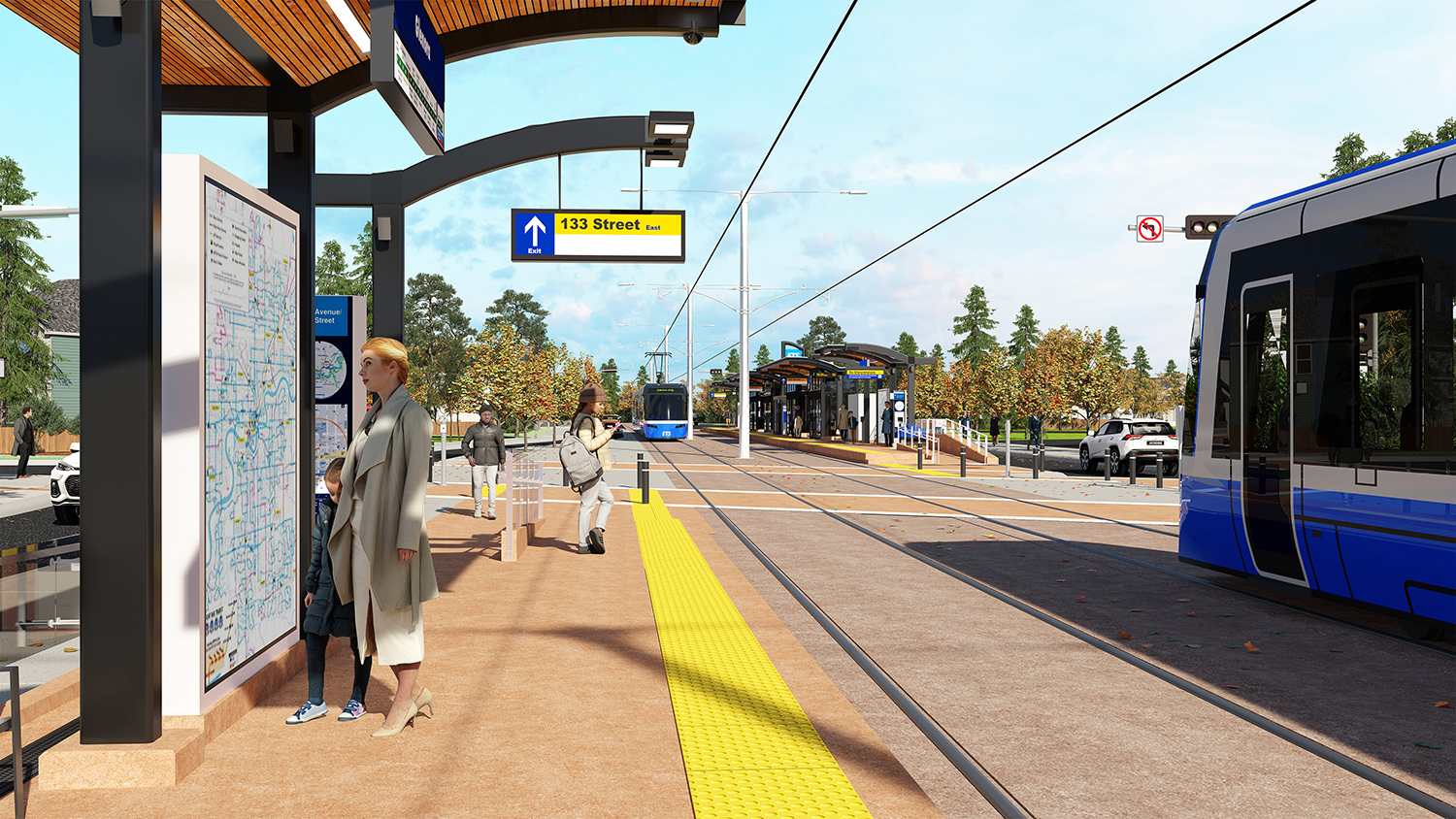
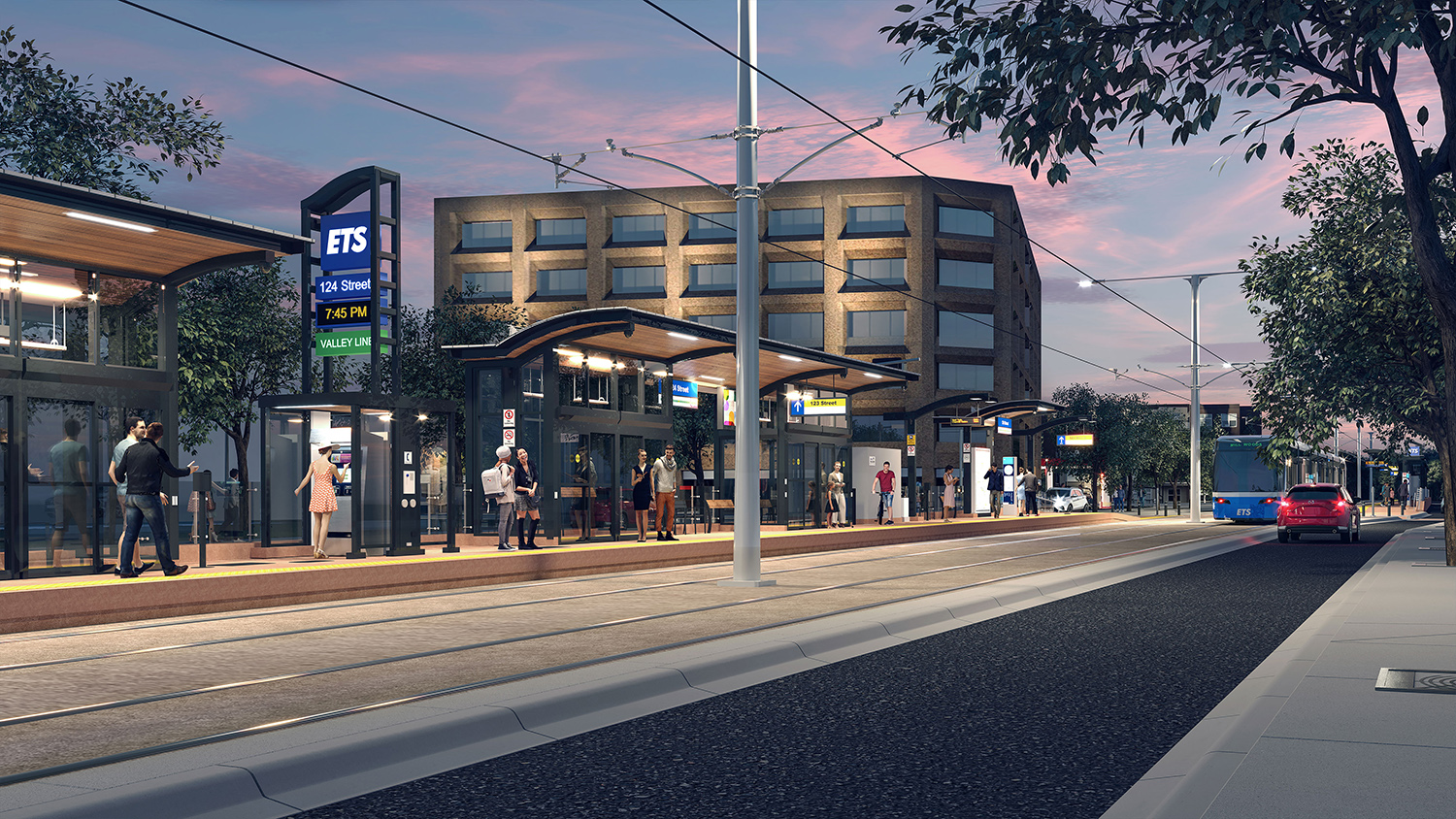
Note: All images and renderings remain subject to change and are not final. Final designs will be shared publicly when complete.

LRT Construction Guide for Businesses

Valley Line West

Preliminary Design

Virtual Reality Video

View our 360-degree virtual reality video of the Alex Decoteau stop on the Valley Line West route. See first-hand how the Valley Line LRT will transform communities into more walkable, street-oriented places for people to live, work and play.

102 Street to Lewis Farms

Map Legend

Design PhaseBuild PhasePark and RidePark & Ride
Elevated ElevatedPublic EngagementPublic Engagement Meeting(s)
BridgeBridgeStops or StationsStops or Stations
Kiss and RideKiss and RideTransit StationTransit Centre

Frequently Asked Questions

When will construction be complete?

Construction is anticipated to be complete in 2028, followed by an extensive testing and commissioning phase to ensure safety and reliability before the line opens to the public. 

What do you mean by ‘final configuration

As construction on the Valley Line West progresses, many of the roads along the alignment are now, or soon will be, in their final permanent traffic configuration. This means most of the roadwork is nearing completion, and the allowable turning movements for vehicles are permanent.

Some traffic movements that were previously available to drivers are no longer allowed, particularly left turns crossing the tracks. Permanent traffic changes will be implemented as soon as roadwork is completed. This gives drivers, pedestrians and cyclists time to adjust to the new configuration.

Information on the final configuration

When did construction start?

Construction began in 2021. See current construction notices on the Marigold Infrastructure Partners website.

Who is building Valley Line West LRT?

The City is responsible for delivering the project. The project is funded by all 3 levels of government, with the Government of Canada and the Government of Alberta each providing approximately 40% of the funding, and the City of Edmonton funding the remaining 20%.

Marigold Infrastructure Partners was selected to design, build and partially finance the Valley Line West. Marigold is responsible for communicating the day-to-day construction impacts to residents and business owners along the LRT alignment. The City selected Hyundai Rotem Company as the successful supplier that will provide 46 light-rail vehicles (LRVs) for this project. Other contractors will be selected as needed, to supply operations and maintenance services, and other supporting construction activities.

What is Sustainable Urban Integration (SUI)?

With direction from the City and 2 years of public consultation, the principle of Sustainable Urban Integration (SUI) was established. 

SUI looks beyond the building of tracks and trains to create neighbourhoods that are safe, attractive and connected. This involves designing livable, pedestrian-friendly environments and adding enhancements that reflect the feel and character of each of the communities along the LRT corridor.

Some examples of SUI enhancements include:

  • Building shared-use pathways, sidewalks and trails
  • Adding bike lanes that connect to the City’s existing bike lane network
  • Designing pedestrian-friendly zones around stops and stations
  • Using enhanced landscaping and streetscaping along the length of the corridor to create a more natural environment
  • Incorporating organic materials such as stone and wood wherever possible

These principles were incorporated into the Valley Line LRT - Stage 1 Project Agreement.

What is Sustainable Urban Integration (SUI)?

With direction from the City and 2 years of public consultation, the principle of Sustainable Urban Integration (SUI) was established. 

SUI looks beyond the building of tracks and trains to create neighbourhoods that are safe, attractive and connected. This involves designing livable, pedestrian-friendly environments and adding enhancements that reflect the feel and character of each of the communities along the LRT corridor.

Some examples of SUI enhancements include:

  • Building shared-use pathways, sidewalks and trails
  • Adding bike lanes that connect to the City’s existing bike lane network
  • Designing pedestrian-friendly zones around stops and stations
  • Using enhanced landscaping and streetscaping along the length of the corridor to create a more natural environment
  • Incorporating organic materials such as stone and wood wherever possible

These principles were incorporated into the Valley Line LRT - Stage 1 Project Agreement.

Why is the LRT designed to run primarily at street level, and how is it made compatible with car traffic?

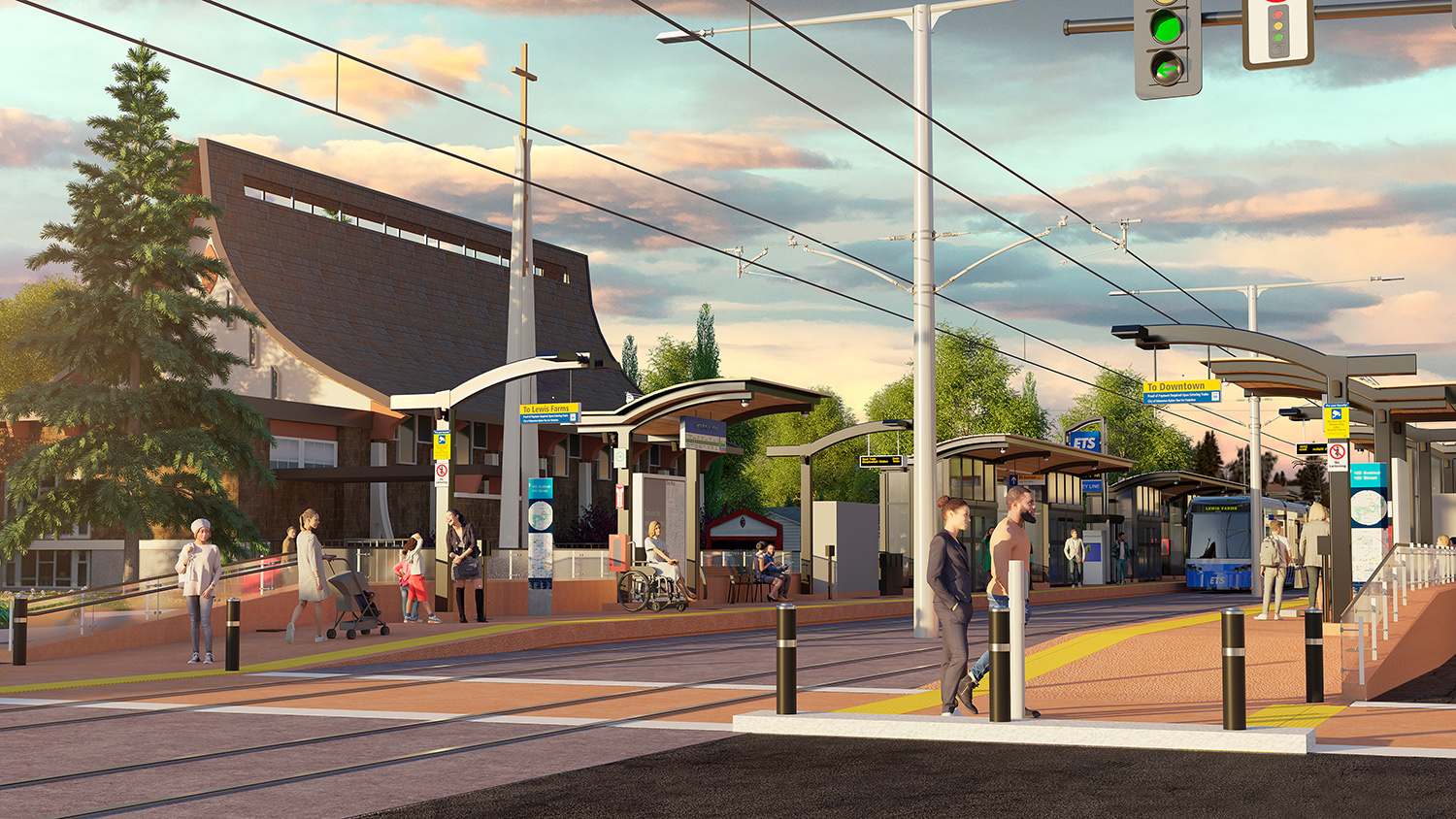
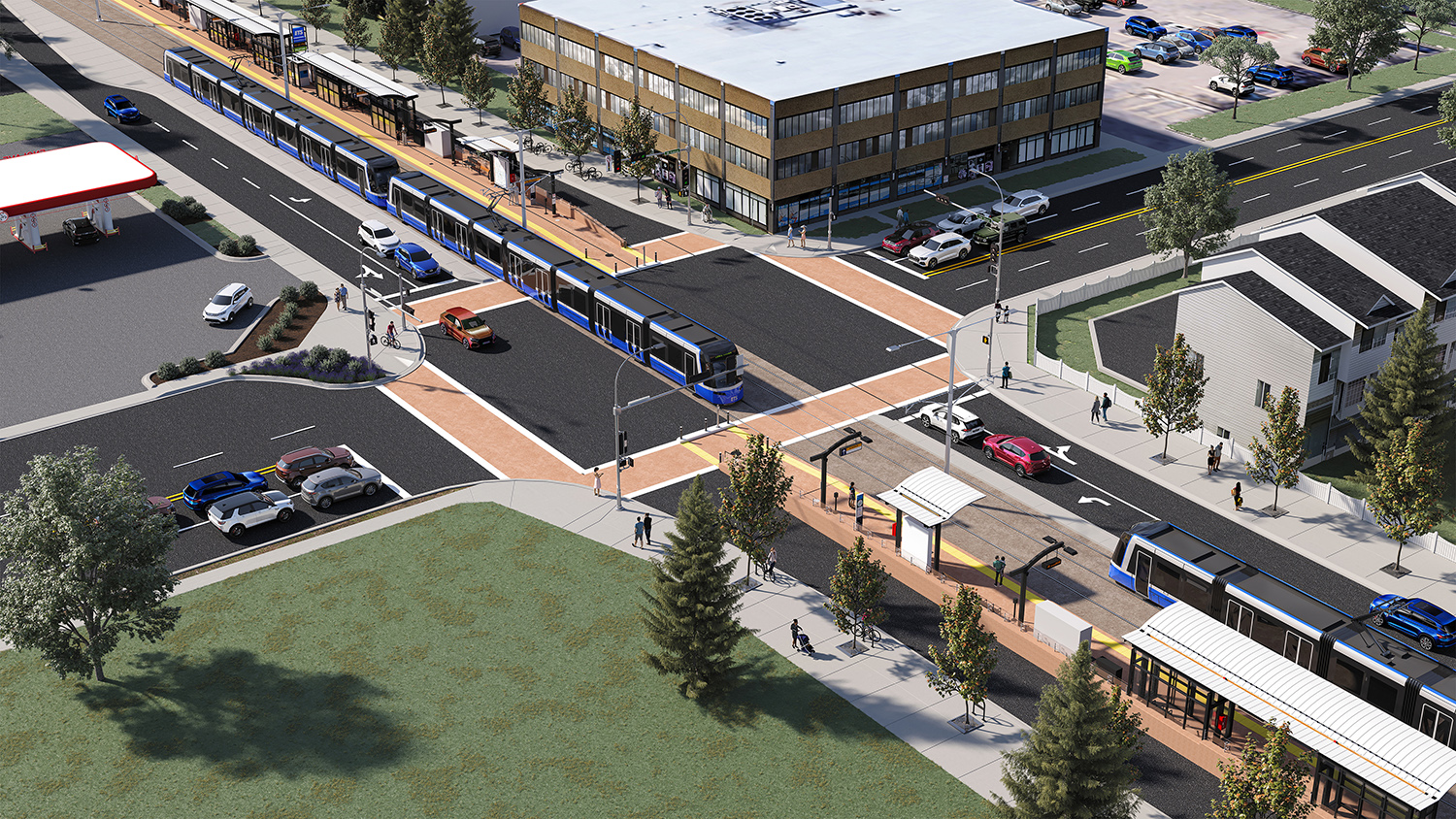
The Valley Line LRT is designed to meet the overall goals of LRT expansion while fully integrating with the communities it serves. The low-floor, urban style LRT allows stops to be small, basically a raised curb and sidewalk with a shelter. Stops can be spaced closer together, making LRT accessible to more people. It costs less than elevated or subway systems.

The Valley Line LRT will run alongside traffic in designated lanes and follow the posted speed limits. The LRT will cross through an intersection during a green light and stop at a red light, just like the other vehicles on the road. The LRT may get green light priority at some intersections, but because no crossing arms will be lowered, cross-traffic won’t have to wait additional time before and after the LRT passes. As a result, increases in wait times are usually minor.

Another benefit of keeping the LRT at street level is that no overhead structures or tunnels are required. Going above or below street level creates visual and physical barriers in the community that reduce comfort and accessibility for pedestrians and cyclists moving through or within the area.

Why not elevate or tunnel the entire LRT?

A fully elevated or underground LRT would be inconsistent with the City’s vision, and it would be very costly. This higher cost would result in a much longer time to expand the system and realize the benefits.

Future Valley Line West

downtown construction

Downtown Construction

Sign up to receive news and updates on Downtown construction.

Investing in Canada Logo

Contact Us

LRT Projects Information Centre

General project inquiries

Email  lrtprojects@edmonton.ca

Phone  780-496-4874 (voicemail) or 311

Marigold Infrastructure Partners

Construction Information

Email  public@marigoldinfra.ca

Phone  780-412-2183