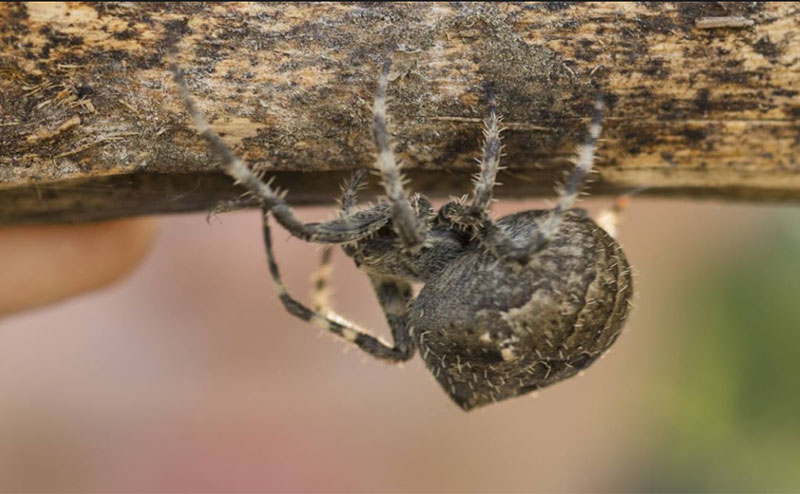
Orb weaver spider hanging on the underside of a tree branch

Use this reference to identify some of Edmonton's more common bugs around the home and yard, and to determine if any control steps are required.

Here you can find information and advice on Edmonton's more common pest problems. We've also provided some information to help you recognize beneficial insects that reduce pests on Edmonton's shade trees.

Help With Identification

By Mail

You can send specimens through the mail. To prevent damage, specimens mailed to us should be wrapped in a protective material, such as tissue paper and sealed in a rigid container, like a clean plastic pill bottle, before being placed in the envelope. Include a brief explanatory note with your name and contact information.

Pest Management
12304 107 Street NW
Edmonton, AB
T5G 2S7

In Person

Specimens should be sealed inside a see-through hard container, such as a pill bottle, jar or similar, and labelled with your name and contact information.

You can drop off specimens directly at 12304 107 Street NW during office hours, Monday to Friday, 8am to 4pm. There is a self-serve drop-off box labeled for insect specimens inside the main entrance. You will need to buzz Forestry/Pest reception for entry into the facility.

We aim to identify most specimens within three business days.

Bugs In My House

Ants

Ants most regularly encountered are native field ants (Formica species) nesting under sidewalks or creating mounds in lawns. If your house is not well sealed, workers can wander in foraging for food, but they seldom do any real damage.

The Pharaoh ant (Monomorium pharaonis) and other exotic species of ants such as fire ants, argentine ants, crazy ants and thief ants, will nest in apartments and other buildings, where they are potential pests year-round.

These exotic species, usually imported with plant material, will feed on many household foods such as meats, grease, sweets, fruits, vegetables and liquids.

The most damaging ants in Edmonton are native carpenter ants (Camponotus species) which can excavate their galleries in wood. Like termites, these insects can cause serious structural damage if left unchecked.  There are no termites in Edmonton.

Several other ant species collectively known as "moisture ants" have also been found associated with rotting wood in buildings. One of these ants (Lasius pallitarsis) is sometimes recovered from Edmonton homes that have experienced water damage.

The Problem

Although most ants around Edmonton are at worst a nuisance, some species can become serious pests in the house, even causing structural damage.

Types of Ants

Carpenter Ants
Carpenter ants prefer to nest in moist decaying wood but they will tunnel through dry timbers.  In addition to causing damage to trees and buildings, carpenter ants will also bite if provoked.

To help prevent carpenter ants from coming into your house, remove all stumps, logs and wood debris from your yard.

Wood in contact with the soil, such as deck supports and fence posts, should be treated
Store any firewood away from the house and off the ground
Finding carpenter ants indoors at any time of the year indicates the presence of a nearby colony or colonies. Locating the nest usually is the most difficult step in control. Swarms of large, black, winged ants in the house, usually in the spring, indicates that you likely have a serious infestation in your home.

Piles of sawdust are also indicators of carpenter ant activity in your home, but they may not always accumulate in evident locations. Sometimes a nest can be located in walls by listening for a dry rustling sound that will get louder if you disturb the ants by pounding on the wall.

Control of carpenter ants in a building is best left to a professional exterminator. When searching for an exterminator, look for a company that guarantees its work.

Field Ants
To prevent field ants from wandering into your house, repair cracks and crevices with a silicone sealant. Before sealing the cracks, apply a drying absorbent dust, such as diatomaceous earth, into wall voids and other inaccessible places to provide long-term control.

Strategic placement of sticky insect barriers can also deny ants access to certain areas. Exercise good housekeeping practices and seal all food and organic waste in tightly sealed containers so as not to provide attractive food sources for ants.

Moisture Ants
This group of ants are common, native insects. These ants are not a primary structural pest, but they can speed the deterioration of wood that is already in a state of decay.

They are secretive insects and often go undetected in homes until the colony is mature enough to produce winged, reproductive swarmers. They will excavate water-damaged wood in walls, often worsening matters by filling wall voids with soil.

The presence of these ants in a building is usually a symptom of a leakage or condensation problem. Correct the moisture problem and replace all damaged wood with sound material.

Ants in wall voids should be treated with dust formulations, as liquid sprays may damage insulation or cause electrical shorts.

Pharaoh Ants
The pharaoh ant is one species of exotic ant that can survive in Edmonton homes year round. It is important to seal food and garbage properly. Food that the ants have swarmed over should be assumed to have been exposed to organisms causing spoilage, and should be discarded.

Typical insecticides cannot be used against these ants as they will undergo a process called budding, whereby the colony will fragment and spread to other areas.

It will take time, but baiting is the only sure way of eliminating these persistent pests.

Ant bait stations, small plastic discs containing a food attractant mixed with an insecticide, are available at hardware stores and garden centres.


Carpet Beetles

The black carpet beetle (Attagenus unicolor) is the commonest of the carpet beetle species in the Edmonton area. Shed skins of the larval stage are the most frequently encountered symptom of infestation in the home. The reddish-brown, carrot-shaped larvae may attain a length of 9 mm (a third of an inch), with a distinctive tuft of long hairs at the tail end.

Adult black carpet beetles are oval, dark brown to black in colour and up to 5 mm (a quarter of an inch) long. Unlike their dark-loving larvae, they are attracted to windows or can be seen outside on bright sunny days feeding on the pollen of flowers.

The Problem

The larval diet of the black carpet beetle consists mainly of animal skins or animal based fibres like feathers, fur or woollen products. They often will be found behind baseboards feeding on accumulations of lint and hair or scavenging the remains of dead insects that collect around windows and vents.

Other species of carpet beetle prefer dried plant or stored food products, but are not commonly found here.

What You Can Do

Infestations of these insects can be managed effectively through a combination of proper food storage and good house-cleaning and maintenance practices. Besides obvious things like food spill cleanup and refuse management, routine crack and crevice vacuuming in clothing storage areas, heat registers, window sills, light fixtures, and along baseboards will help, however, be prepared to dispose of the vacuum cleaner contents afterwards since it may contain live insects.

Check chests of drawers, old trunks, anywhere where woollens, feather, fur or any other animal fibre products may be stored. Infested articles should be laundered or frozen for several days to curb any further feeding damage.

Insect proofing the home against entry of the adult beetles from the outdoors includes ensuring the proper function of external door seals and window screens, especially on sliding windows; caulking external cracks in walls and around window and door frames, and checking if vents to the outside can be screened or valved as in the case of a dryer vent.

In persistent infestations, consider the use of crack and crevice applications of diatomaceous earth, a low toxicity insecticide dust that provides effective long-lasting control of these insects. Diatomaceous earth is available at seed stores, garden centres and other insecticide retail outlets.

Indian Meal Moth

The Indian meal moth (Plodia interpunctella) is a commonly encountered pest in the home year round. The adults are about 12 mm (0. 5 inches) long and are distinct from other moth pests in homes by having a reddish-brown forewing with a light grey basal area. The moths fly around erratically, mostly at night.

The mature, creamy coloured caterpillars are about 12 mm (0. 5 inches) long with a brown head, and are often seen crawling up walls a week or so before they change into the moth stage.

The Problem

This insect pest is commonly introduced into the home through infestations in raw sunflower seeds, dried fruits, pet bird food and in chocolates which contain nuts.

What You Can Do

Improved storage of dry foods in sealable glass or polythene containers protects against these and other pantry pests.

Watch for incoming infested food materials. These should be immediately frozen to control the pest before returning the product to the store.
Similarly before disposing of any infested container contents, freezing for a few days will usually kill off any living stages.

Spraying is not required or recommended.

Larder Beetle

The most familiar stage of the larder beetle (Dermestes lardarius) is the adult. These beetles are up to 9 mm (a third of an inch) long, dark brown to black with a prominent greyish-yellow band roughly across the middle of the body.

Although they are capable of flight, adults are commonly found trapped in a cooking pot or a sink, where the sides are too slippery to escape. The worm-like larval stages grow up to 13 mm (half an inch long), are dark brown on top with spiky hairs and a pair of short spines at the tail end.

The Problem

Larder beetle females fly in from outdoors during May and June and lay their eggs on or near available food items which may be provided by fat splashed from the back of the stove, grease deposits in a fume hood, spilled food, a bag of dog food, a dead mouse or an accumulation of dead flies in a ceiling light fixture.

Adult beetles eat similar food materials as their young, preferring animal protein, fats and animal skins including dead insects, feathers and woollen materials.

What You Can Do

Beetles that are seen can be caught by hand and killed. Cheese can be used as a bait.<

Eliminate food sources, including the removal of old bird nests close to the home and cleaning dead insects from light fixtures, baseboards and windowsills. Seal insect entry points into the house. Vacuum often. Larder beetles in dry pet foods can be killed by heating to 50 degrees Celsius for at least half an hour or by freezing for several days.

If infestations persist, consider the use of crack and crevice applications of diatomaceous earth, a low toxicity insecticide dust that provides effective long-lasting control of these insects.

Merchant Grain Beetle and Sawtooth Grain Beetle

The merchant grain beetle and sawtooth grain beetle (Oryzaephilus mercator and Oryzaiphilus surinamensis) are some of the most commonly encountered kitchen pests in Edmonton. 

The beetles are flightless, slender-looking, dark brown insects measuring only 3 mm (an eighth of an inch) long. The sawtooth grain beetle has characteristic “teeth” running down the sides of its prothorax, but is otherwise almost identical to the merchant grain beetle.

Worm-like larval stages are most often found in infested food packages while the very active adult beetles may escape and spread to other dry foods, or infest small cracks in the woodwork, feeding on any available spilled food materials.

The Problem

These insects are often brought into the home through infested food purchases, including grains, cereal and pasta. They can render food inedible, or reduce the desirability of food with their presence.  They prefer processed grains like cereal, oatmeal, rice, or flour, but can also infest chocolate, nuts, dried fruit, and even spices or tobacco.

What You Can Do

Eliminating such pest problems is achieved through good food storage (use glass, heavy plastic or metal containers with tight-fitting lids) and house cleaning practices. Keep food storage areas clean and sanitary.  Wipe up food spills immediately.  A crack and crevice vacuum tool is useful for removing food and insects from cupboard joint lines as well as the bottom edge of kitchen baseboards. Remember to dispose of the vacuum bag contents which may contain live insects.

Infested crack lines can then be injected with diatomaceous earth, a low-toxicity insecticide dust that will provide effective, long-lasting insect control if applied according to label direction. Diatomaceous earth is available through seed stores, garden centres and other insecticide retail outlets.

Application of stronger pesticides, such as permethrin sprays is not recommended.

Strawberry Root Weevil

The strawberry root weevil (Otiorhynchus ovatus) is a dark brown to black beetle with elbowed antennae and a blunt snout. The adult insect is about 6 mm (one-quarter inch) long.

The Problem

Most complaints about this beetle occur because of their abundance in homes during late spring and late summer. The beetles cannot fly but can be found crawling on walls, floors, ceilings, and items in the home.

Adult root weevils will feed on leaves of host plants, such as strawberries, clover and grasses. The Larvae prefer the roots of strawberry, raspberry, and containered evergreens. In severe infestations, root damage can stunt the growth of host plants. 

What You Can Do

The best way to control strawberry root weevils around the home is to prevent access by sealing cracks with caulking compound and installing weather stripping.

If some insects still manage to enter your home, use a broom or vacuum cleaner to remove them.  Be prepared to dispose of the vacuum cleaner contents afterward since it may contain live insects.

Reduce the impact on your strawberry plants by rotating planting locations. Weevils can be removed by hand and discarded. For larger numbers, place a piece of cardboard under the plant and shake the stem; this will cause the weevils to fall off the leaves and can then be discarded.

Spraying with insecticide is not recommended.

Sowbugs

Sowbugs (Oniscus asellus) are an introduction from Europe. Although they live on land, they are crustaceans and are related to shrimp and lobsters. Sowbugs have seven pairs of legs, a series of armour plates covering the back and may be up to 15 mm (half an inch) long. They are greyish brown in colour and flat.

The Problem

Sowbugs are a common sight in yards and homes in the Edmonton area. They usually cause the most concern when found crawling in the home, especially in large numbers. They are harmless, incapable of biting or stinging. They will not infest your food, clothing, or damage your home. Sowbugs found alive in your house have typically not been there very long, and will quickly dehydrate. They feed on decaying matter, so there is little concern for plant health in your yard.

What You Can Do

Sowbugs typically live in damp areas and feed on decaying plant material. Removing any grass clippings, mulch, rotting wood and leaf litter around the foundation of your house will help keep the area dry.

Removing logs, boards or boxes under which sowbugs hide will also help.

Basements and crawl spaces should be kept dry and free of any food material for sowbugs. Foundations, doors and windows should be properly sealed to prevent entry. Sweep or vacuum any sowbugs that may still wander in. Spraying is not usually required.

Bugs In My Yard

Midges

Midges (family Chironomidae) are small, non-biting flies that look a lot like mosquitoes. These insects can be found almost anywhere. There are about 670 species of midges in our part of the world.

The larvae of most midges are aquatic, living in tubes or cases in the bottoms of lakes and residential ponds. Many of these larvae are scavengers or feed on algae or other aquatic plants. Midge larva are often very abundant and are an important food source for many other animals.

Emerging adults usually swarm late in the day to mate. The adults do not feed and live for only 3 to 5 days.

Some midge larvae are known as bloodworms. Their unusual red colour is due to haemoglobin (respiratory blood pigment) that allows them to live in water with very low oxygen levels.

The Problem

Midges often occur in huge swarms, usually in the evening, especially in Edmonton's lakeside communities. Although the insects are harmless, large numbers of them can be annoying and can cause concern to homeowners as they are commonly mistaken for clouds of mosquitoes.

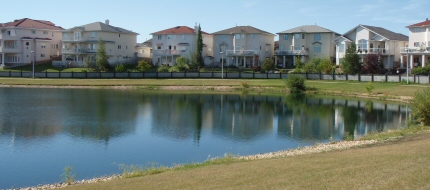
aquatic midge habitat
Edmonton's stormwater lakes can produce large midge populations.

What You Can Do

Minimize the use of outdoor lighting around your home to help reduce their presence in your yard. Yellow light bulbs in outdoor fixtures are less attractive to insects.

Keep doors closed and windows tightly screened to prevent midges from entering your home.

Mosquitoes

The City of Edmonton’s Mosquito Control Program continues with a robust and targeted ground control program to proactively manage the mosquito population and ensure our city parks and outdoor spaces are pleasant, healthy and safe to enjoy.

Learn more about the City's Mosquito Control program.

Orb Weaver Spiders

Orb weaver spiders spin the classic circular webs that most people are familiar with. The largest species around here and therefore the ones that attract the most attention include the shamrock spider (Araneus trifolium) and the jewel spider (Araneus gemmoides).

The females can measure up to 20 mm (three quarters of an inch) long and have thick, hairy legs ringed with black. The shamrock spider has a large round abdomen, whereas the jewel spider has a couple of large bumps on the abdomen behind the head.

The Problem

Late in the summer, people are sometimes concerned or even afraid if they encounter one these relatively large spiders, especially if they have built their web during the night on the porch or near a doorway.  

What You Can Do

These spiders are not poisonous to humans and are beneficial as they feed on a wide variety of flying insects in the yard. Control of these harmless creatures is not necessary.

If a web interferes with an entryway, you may want to use a broom or a strong stream of water from the garden hose to remove it. You can also use a jar to relocate "Charlotte" to another area of the yard.

Yellowjacket Wasps

Yellowjackets are wasps belonging to the genera Vespula and Dolichovespula. While there are many wasp species in the Edmonton area, most are non-colonial, do not construct paper nests and generally do not (or cannot) sting. While yellowjackets are capable of stinging in self defence, the level of terror expressed by the average picnic-goer is usually far in excess of the danger they represent.

The Problem

Most people typically encounter yellowjackets when they are outside having a meal. The workers, out searching for food sources for the colony, are attracted to meats and sweet beverages, typical fare at a summer barbecue. Other likely situations where an encounter occurs are at cleanup time as they may be inside empty pop cans, poking around in poorly-tied garbage bags or in the immediate proximity of fruit trees, especially in the fall. The usual response of swatting to the insect invader may provoke a defence response in the wasp in the form of a sting. Unlike honeybees, which can only sting once due to a barbed stinger, wasps can sting multiple times. The sting itself usually only produces minor pain, however a medical professional should be consulted if any symptoms more serious than local swelling and mild pain occur. The best reaction? Stay calm and gently shoo the wasp away. If it does not feel threatened, it should not sting.

In addition, agitated wasps, even while dying, typically release alarm pheromones that are chemical signals detected by other nearby wasps and induce aggressive behaviour. In some cases, when people claim to have been stung “for no reason”, what has likely happened is that a yellowjacket has been unknowingly swatted, squished, or stepped on, causing it to send out the alarm to its siblings. Agitated yellowjackets will sometimes attack in numbers under such circumstances, especially if the nest is particularly close by or under direct attack. This is all the more reason to treat your insect neighbours with care and respect.

What You Can Do

To remove a wasp nest yourself, proceed with care. The first step is finding the nest. If it isn’t obvious, leave food out and follow it back to its nest. If the nest is free-hanging from a tree branch, removal will be easier. Proceeding carefully at dusk, you may be able to wrap the nest in a sturdy plastic bag and remove it one fell swoop. Avoid shining a bright light on the nest or otherwise disturbing it. Seasonal timing is also of concern. If you find a yellowjacket nest early in the spring and it is in an inconvenient location, removing it earlier rather than later is best when there are fewer wasps to deal with than in the fall. Nests are not re-used in following years.

If the nest is more firmly attached to a solid structure or is subterranean (they are often constructed under the edges of sidewalks), removal of the nest may not be possible. Other simple and effective methods include using plastic bowls (preferably yellow) filled with soap-laced sugar water. The wasps will be attracted to the colour and scent, will fall into the water and will drown. When in doubt, seek a professional pest management removal company.

What Is Wrong With My Tree?

Apple Maggot

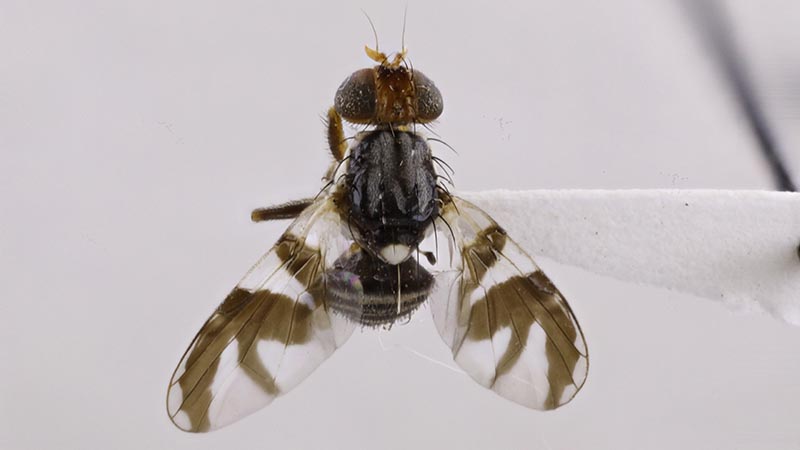
Apple maggot (Rhagoletis pomonella) is a pest fly native to North America and has been a serious pest of apples in Canada for over 100 years. It was identified in Edmonton in 2005.

The Problem

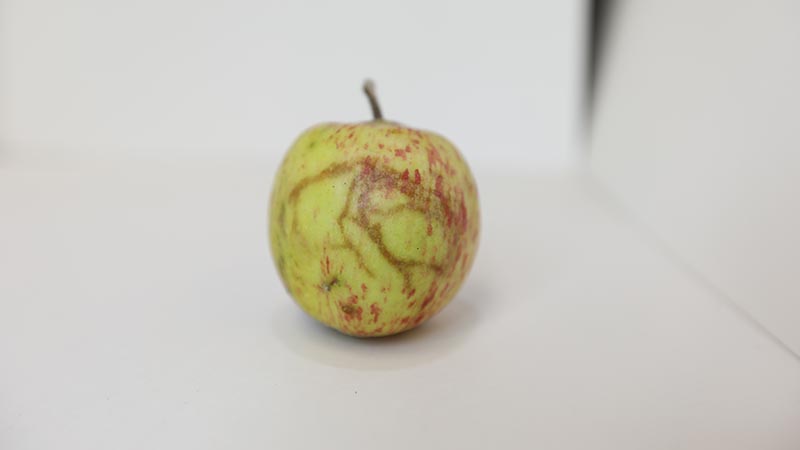
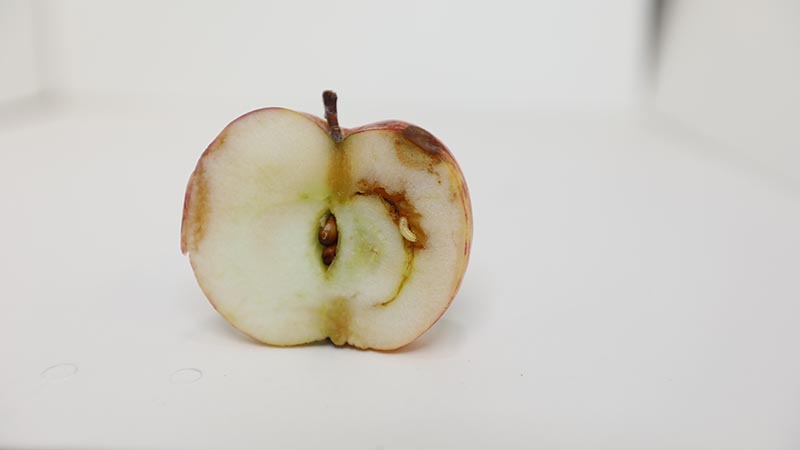
The apple maggot larva burrows in all directions through the flesh of ripening apples feeding on the pulp and leaving brown channels. Pitting, dimpling and black spots on the fruit can mark the puncture sites where female flies have laid eggs in the fruit.

The apple maggot mainly attacks apple and hawthorn. They will also sometimes attack sweet cherry, sour cherry, plum, peach, pear and cotoneaster.

What You Can Do

Pick up any fallen fruit as soon as possible and place it in your green food scraps cart for disposal. Fruit infested with apple maggot larvae tend to fall from the tree sooner than uninfested fruit and larvae may remain in the fallen fruit for several days before they mature. Timely disposal of the fallen fruit prevents mature larvae from emerging to overwinter as pupae in the soil under the tree.

Home composting of infested fruit is not recommended, as it may provide ideal conditions for the larvae and pupae to develop. If you wish to compost the material, make sure the maggots are dead first by cooking (> 70°C/160°F), freezing, or pureeing the fruit in a blender.

Commercially available traps are intended primarily for monitoring the presence of apple maggot, but may work as effective control measures in small scale (backyard) settings. They consist of a round red ball coated in apple scent and an adhesive glue to trap the flying adults.

After bloom, wrap branches you want to protect in fine mesh to prevent the adults from landing on the apples and laying eggs. 

Quarantine Information

Fresh fruit must not be brought into British Columbia from other provinces or countries without a movement certificate or phytosanitary certificate that shows the produce is free of apple maggot. There are also regulations governing movement of plant material that can host apple maggot.

Apple Maggot Insect:

Apple Maggot Insect


Apple Maggot Channels:

Apple Maggot channels on an apple


Apple Maggot Feeding:

Apple Maggot feeding on pulp

Ash Bark Beetles

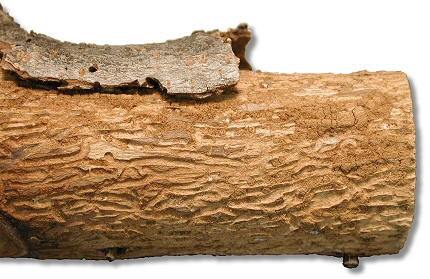
Ash bark beetles cause damage to ash trees in the Edmonton area. The most common and most damaging species here is the Western ash bark beetle (Hylesinus californicus).   The adult beetles are oval, grey and brown beetles about 2-3 mm (1/8 inch) long. The larvae living inside the tree are white, C-shaped grubs with a brown head.

The Problem

This insect tunnels between the bark and wood of ash trees. This burrowing girdles branches, causing the leaves to turn yellow in late July and early August.

The beetles usually attack dying or weakened branches, however, during periods of drought or other stress, beetle populations may reach outbreak proportions. As the attacks advance, branch dieback may continue to the point where beetles also attack and girdle the trunk, resulting in tree death.

What You Can Do

Regular, proper pruning of dead or weakened branches will remove potential beetle breeding sites.

Infested branches should be pruned out and destroyed. Branches undergoing attack can be identified by the presence of tiny holes in the bark and accumulations of boring dust. Sap bleeding from these wounds is also visible.

Weakened, older ash trees should be considered for removal, as they may spread infestations to healthy trees.

Adult beetles overwinter in the bark of the lower 15 cm (six inches) of ash tree trunks. A sticky band wrapped around the trunk about 30 cm (12 inches) above the ground may be used to trap beetles emerging in early April.
A new band installed in early September may intercept some of the beetles walking down the trunk to overwintering sites.

Ash Borer

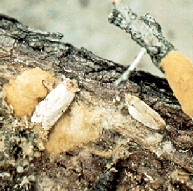
The ash borer or lilac borer is a day-flying clearwing moth native to North America. The larvae feed on the bark and wood of ash trees and lilacs.

The ash borer or lilac borer (Podosesia syringae) is a day-flying clearwing moth native to North America. The larvae feed on the bark and wood of ash trees and lilacs.

Edmonton has a high density of ash trees and monitoring shows this insect to be widely distributed throughout the city.

The Problem

Tunnels made by the larvae provide access to moisture and fungi which can result in further tree decline. Extensive tunnelling weakens stems and can increase breakage during storms.

Trees that are stressed or damaged are the most susceptible to borer attack and dieback. Tunnelling by this insect can also weaken or kill young trees, especially during prolonged dry periods.

What You Can Do

The ash borer targets open-growing trees, so avoid planting ash in exposed locations. Young trees are susceptible to attack, so if you're living in a neighbourhood that already has many ash trees, it would be a good idea to select a different type of tree to plant.

Since the insect prefers to feed on trees that are drought-stressed or mechanically injured, keep your ash tree protected, healthy and well-watered. Ash borer eggs are almost always laid in or near wounds, so avoid pruning ash trees when the egg-laying adults are present (June and July in our area).

Bonus Material

Ash borers spend two years in the larval stage to complete development this far north. Pupation occurs in the spring of the third year and adults emerge shortly thereafter.

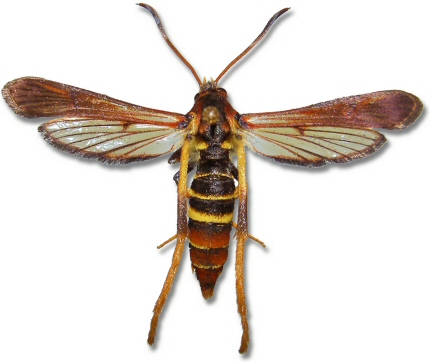
The moths have dark transparent wings, yellow stripes on the abdomen and about a 30 mm wingspan. Females live about one week, during which they lay eggs in bark crevices or tree wounds.

Once hatched, larva feed within the bark for the first summer. Larvae bore into the wood during the second year. Sawdust is visible outside the tree as larvae clear their tunnels of debris.

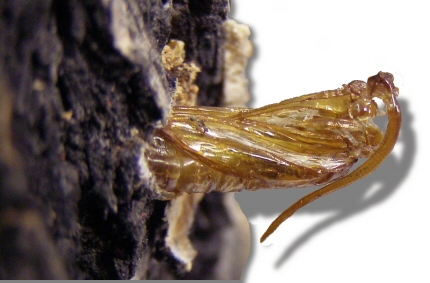
After spending the second winter in the heartwood, larvae tunnel close to the bark surface and pupate. The pupae push through the bark just before emergence. When the adults emerge, the distinctive pupal skin is left sticking out of the exit hole.

Just So You Know

The adult ash borer is a harmless moth that resembles a stinging wasp. Such mimicry is thought to offer the insect protection from predators.

Adult Ash Borer insect

Ash Borer pupal skin

Ash Leaf Cone Roller

The characteristic leaf-rolling behaviour of this insect does not seriously hurt the tree.

The ash leaf cone roller (Caloptilia fraxinella) starts out as a leafminer caterpillar. It feeds on the tissue between the upper and lower surfaces of the leaflet.  In early to mid June, the caterpillar migrates on a silk line to a different leaflet. Once on a new leaflet, the caterpillar folds the leaflet into the characteristic cone, and spins its cocoon inside. The adult emerges in fall as a small gray moth with a 12 mm wingspan.

The Problem

The rolling up of leaflets appears to have little effect on the health of the ash trees. The rolled leaflets remain attached to the tree. While a small part of a rolled leaflet will rot, most of it appears to remain undamaged.

What You Can Do

The City of Edmonton Pest Management group is attempting to reduce pesticide use and has decided against spraying for this insect on the basis that:

  • A tiny parasitic wasp attacks and kills a significant proportion of the caterpillars. These parasitic wasps are beneficial insects that do not sting people. Together with perhaps other naturally occurring enemies of the caterpillar, like birds, fungi or viruses, the population of these parasitic wasps will likely build up, thereby reducing that of the ash leaf cone roller caterpillar.
  • Any damage caused by this insect is cosmetic and does not warrant a pesticide response. These caterpillars are protected inside leaves almost all their lives, so a contact insecticide application is likely to kill off more natural enemies than caterpillars.

The University of Alberta is currently doing research to develop a "bait and kill" station, which employs the mating pheromone to draw male moths to their death.

The City of Edmonton pest management staff will continue to monitor this insect and impacts on its population by natural enemies like the parasitic wasp.

Birch Leafminers

Birch leafminers when first introduced to Edmonton caused a lot of largely cosmetic damage to our ornamental birch trees. Since the 1990s, natural enemies of this pest have suppressed the problem.

This small wasp (Lathrolestes luteolator) has drastically reduced the birch leafminer problem in Edmonton.

Since the 1970s, three species of sawflies (Fenusa pusilla, Profenusa thomsoni, Heterarthrus nemoratus) introduced from Europe were responsible for the premature browning of birch tree leaves in Edmonton. These species are now largely controlled by naturally occurring parasitoid wasps.

There is a more newly introduced species that seems to be on the rise: Scolioneura betuleti. The City of Edmonton will be monitoring this new leafminer to identify beneficial insects that may be making use of this sawfly as a host, which will support control efforts.

Birch Leafminer insect

Black Knot

Black knot is an increasingly common disease. Early detection and sterile pruning is the most effective way of dealing with this problem.

Learn more about Black Knot.

Bronze Birch Borer

This beetle (Agrilus anxius), native to North America, is 7-11 mm in length and dark green-bronze in color.

The Problem

This insect is often considered a secondary pest that attacks birch trees already stressed by things like drought. If populations build high enough on stressed trees, however, the beetle may move on to attack healthy trees.

Attacks result in progressive dieback of the crown and death of the tree within a few years. Injury is caused by the larvae feeding under the bark.

What You Can Do

A healthy birch tree is most resistant to borer attack. Proper and frequent tree care including watering should be maintained. 

If a tree exhibits top dieback symptoms, dead branches should be pruned out in the fall 30-50 cm below the dead wood or any signs of successful beetle attack (D-shaped emergence holes). All pruned material should be destroyed to prevent any beetle emergence the following spring.

Cottony Psyllids on Ash

Cottony psyllid damage and drought stress appear to have contributed to the loss of many of Edmonton's black ash trees.

The cottony psyllid (Psyllopsis discrepans) is a recently introduced insect to the Edmonton area, being first discovered here in 2000. Cottony psyllids belong to the family of insects sometimes called jumping plantlice.  

Attacks by this psyllid on black ash trees can be very noticeable. Natural control of this insect in our area seems to be largely lacking at this time.

The Problem

These cottony psyllids attack black and Manchurian ash, but not green ash. These insects suck sap from the leaflets. This feeding causes ash leaflets to become shriveled and discoloured. The leaflets curl under from the sides to enclose the psyllids and a white, cottony material they produce.

What You Can Do

Trees that are kept healthy and in optimum growing conditions are better able to sustain insect attacks. Insecticidal soap is a less toxic product registered for the control of psyllids.

The best time to treat is just after budbreak when the young psyllids hatch. Homeowners also have the option of hiring the services of a certified tree spraying company if a serious outbreak persists.

The City of Edmonton pest management staff found little effect of horticultural oil or dormant oil against overwintering psyllid eggs. Currently the City is assessing insecticide injections on boulevard ash trees.

Damage of ash leaflets caused by cottony psyllid

Dothiorella Elm Wilt

Dothiorella elm wilt is a disease involving a fungus (Dothiorella ulmi) that causes the wilting and progressive die-back of American and Siberian elm trees. Symptoms of the disease are:

  • Wilting, drooping, curling and yellowing of leaves, branch dieback, and browning of sapwood
  • Wilting is evident soon after leaf out and brown leaves persist on dead branches throughout the fall and winter
  • Impossible to visually distinguish from Dutch elm disease (DED)

The Problem

The disease attacks elms under stress, a condition that impairs the trees' defences. Elms can live with Dothiorella elm wilt for many years with low to moderate levels of fungal infection. Eventually, the infection may lead to the death of an elm tree, but not in all cases. Elms with extensive canopy dieback are considered for removal. 

Keeping the tree healthy with regular watering and proper pruning will help the tree fight the disease.

What You Can Do

Prevention of Dothiorella wilt starts by keeping elm trees healthy. Watering trees during periods of drought will help lower their stress levels and increase their resistance to infection. Anti-fungal treatments so far have not proven effective in combating Dothiorella elm wilt in Edmonton.

Elms with recognizable wilting or dieback are declared "hazard" trees under Edmonton's  . A pink and black striped ribbon and a hazard tree tag on the trunk identify the tree as being diseased. This action removes the tree from regular pruning activities, thereby reducing the risk of disease spread to healthy trees.

If you suspect that your untagged elm tree has Dothiorella wilt, please report it by calling 311. City personnel will assess your tree and take samples of branches that show signs of fungal infection for testing.

Just So You Know

Unlike Dutch elm disease, Dothiorella wilt requires no insect or other organism to spread the disease. Studies elsewhere have shown that Dothiorella fungus is spread as microscopic spores by water or wind.

The disease begins in weakened elms when spores enter natural wounds, cracks, pruning wounds or tiny pores in the bark called lenticels.

Extensive annual surveying for the disease since 1996 has led to the discovery of hundreds of cases and many removals of American elm trees in Edmonton.

Additional Information

To reduce the spread of the disease, any wood removed from a hazard tree or stump must also be disposed of at the Edmonton Waste Management Centre. Stumps must be de-barked or ground down to 10cm below the surface of the soil.

Dutch Elm Disease

Dutch elm disease is a deadly disease caused by a fungus (Ophiostoma ulmi) that can affect any elm tree. Since its introduction from Europe in about 1930, it has destroyed millions of American elm trees across North America. The disease is spread through tree roots and beetles which can transport the fungus to other nearby trees.

Learn more about Dutch Elm Disease.

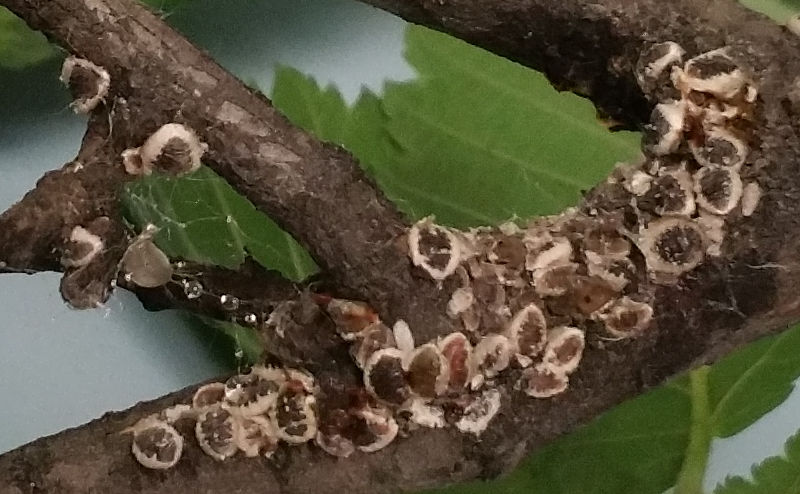
European Elm Scale

The European elm scale (Eriococcus spurius, previously Gossyparia spuria) is a scale insect introduced to North America. This insect feeds on elm trees by sucking sap from branches and leaves. European elm scale is distinct from other scale insects because of the white waxy fringe.

The Problem

European elm scale can become a nuisance because of sticky honeydew (excrement) production, especially during June and early July.

Branches and nearby surfaces are often blackened by sooty mould growing on the honeydew. Scale feeding can result in yellowing leaves (flagging) and premature leaf drop. Heavy infestation may kill weakened tree and cause branch dieback in healthy trees.  Often a thin canopy can be a symptom of heavy infestation.

What You Can Do

To minimize the effects of European elm scale, keep elm trees well watered and healthy. Prune out any dead or dying elm wood between October 1 and March 31 only.

To remove overwintering female scales before they can lay eggs, pressure wash branches after leaf drop in the fall or before bud break in the spring. On smaller trees, you can dry brush the branches instead of pressure washing to remove the scales.

Dormant oil can be applied in the fall following leaf drop or in the spring prior to bud break to kill overwintering nymphs. Apply dormant oil to the bark only if the weather forecast is for temperatures above 0℃ until the treatment is dry, and if the forecast is for no rainfall in the 24 hours following treatment.

Foliar sprays can be used to kill crawlers feeding on the undersides of leaves during summer. Tree care companies can be hired to inject larger trees against scale insects.

Bonus Material

There is one generation of European elm scale per year. Female scales overwinter as second instar nymphs, protected along the base of buds and within the cracks of twigs and smaller branches. The oval bodies of the nymphs are covered with a light grey wax.

In late spring, the scales resume development. Mature female scales can be up to 3.5 mm long. Their brownish bodies feature a distinctive white waxy fringe (ovisac) along the margin. Eggs are deposited beneath the female scales and nymphs hatch out over a period of weeks peaking in mid-June to mid-July.

The yellowish crawlers migrate to feed for the summer on lower leaf surfaces, usually attaching along the main leaf veins. The insects crawl back to branches in late summer before leaf drop to attach themselves to twigs and branches.

Just So You Know

Any mating that occurs takes place during late April and May, however European elm scale females can reproduce asexually, and the much smaller males are not always produced.

Winged and unwinged males, when present, overwinter in white felty cocoons that resemble grains of rice on the tree.

European elm scale

Fire Blight

Fire blight (Erwinia amylovora) is a bacterial disease native to North America. It infects trees and shrubs in the rose family, including crabapple, apple, mountain ash, hawthorn, cotoneaster, raspberry, and saskatoon.

Pollinating bees and other insects, birds, rain and wind spread the bacteria.

The Problem

Fire blight is a serious plant disease that can cause considerable damage and death.  It is a controlled pest in Alberta, so homeowners are responsible for control of fire blight on their plants. The most common sign is a branch of wilted, bronze-coloured leaves.

What You Can Do

Homeowners can control fire blight by carefully pruning out sick wood at least 46 cm (18 in) below the infection, sterilizing pruning tools between every cut, and disposing of the diseased wood, not using it for mulch, compost or storing as firewood.

Bonus Material

This was the first-ever bacterium proven by experiments to cause disease in plants back in the 1800s.

Forest Tent Caterpillars

Forest tent caterpillars have been a major pest on Edmonton trees in the past.

Egg bands should be removed from trees before the caterpillars hatch.

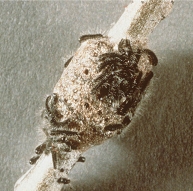
The forest tent caterpillar (Malacosoma disstria) is a pest of broadleaved trees and shrubs. Young caterpillars are black, hairy and about 3mm long. They cluster together on the trunk or branches when they are not feeding.

Mature caterpillars are about 50 mm long and are characterized by wide blue bands along the sides of the body and a row of whitish keyhole shaped spots running down the back.

The Problem

Although this species prefers trembling aspen, it is also found feeding on the foliage of birch, ash, maple, fruit trees and cotoneaster. During severe infestations the caterpillars will feed on almost any green leaves, including garden crops.

Heavy defoliation for two or more years can result in a decline in the health of a tree which makes it more susceptible to attack by other pests.

What You Can Do

For the urban homeowner, cultural control is the first line of attack against forest tent caterpillars. This consists of the removal of egg bands from infested trees and shrubs. The egg bands are easily detected between fall and leafing out in spring when the leaves are absent from the trees. Once discovered they can simply be scraped off with a dull blade.

Laboratory analysis of egg bands shows a significant impact of parasitic wasps on the hatching of forest tent caterpillar eggs. So rather than discarding those egg bands, leave them somewhere outdoors above the winter snow levels where the caterpillars will starve, but the tiny wasps can complete their development.

If some egg bands are missed or are inaccessible, clusters of caterpillars can be removed by pruning or washing down with a strong jet of water. Small caterpillars will rarely manage to recover from this, while larger ones can be controlled individually by physical means.

Keep in mind that light defoliation has little effect on tree growth.

Forest Tent Caterpillar

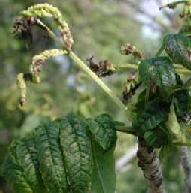
Larger Boxelder Leafroller

The larger boxelder leafroller (Archips negundana) is a green caterpillar found on Manitoba maple (boxelder) trees during spring and early summer. The caterpillar feeds on the leaves, webbing them together with silk. If disturbed, the larva quickly drops from the tree, suspended by a silken thread.

The Problem

Caterpillar webbing and feeding damage looks unsightly. Dead foliage often bleaches, giving the tree a whitish appearance. Heavy infestations can result in complete defoliation of the tree.

What You Can Do

In most situations, intervention is not required as little tree mortality has been observed. Established Manitoba maple trees in the Edmonton area that are completely defoliated over several consecutive years appear to recover and continue to grow normally. These trees have the ability to compensate for the caterpillar defoliation by producing a second set of leaves so that they appear nearly normal by the end of the summer.

Oak Gall Wasps

Several species of small gall wasps (Family Cynipidae) form a variety of distinctive twig and leaf galls on bur oak growing in our region.

These galls are abnormal plant growths stimulated by the developing wasp larvae. The tiny dark adult wasps are seldom seen.

The Problem

These conspicuous growths provide the wasps with food and protection. However, they raise concerns that something is wrong with the tree. The galls are harmless to the tree, and are only an aesthetic concern. Woody galls that form on twigs may persist on the oak tree for several years after the wasps have left them.

What You Can Do

Since galls on oak leaves cause mostly cosmetic damage, control is not usually required. Insecticide sprays would also be ineffective against the young wasps protected inside their galls. There are also a number of natural enemies that successfully attack gall wasps.

Woody galls on the twigs typically won't kill the branch, however, a large number of galls may reduce the amount of growth. Such galls can simply be removed by hand and destroyed.

Red Elm Bark Weevil

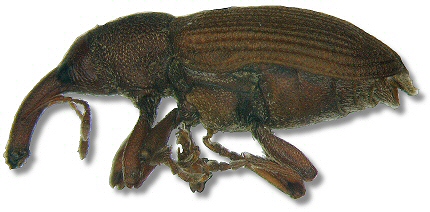
The red elm bark weevil (Magdalis armicollis) is an elm feeding beetle native to North America. This insect is not usually observed to a large extent in the Edmonton area, but since its detection in 2003, it appears populations have increased somewhat during recent dry years.

Red Elm Bark Weevil Adult

The Problem

This weevil is attracted to the branches of recently dead or dying elms, and can be a potentially serious pest of elm trees suffering from drought or other stresses. The adults move about freely and feed on the leaves, but most of the damage occurs in the form of twig ends dying off as larvae feed under the bark. These grubs can often occur in immense numbers and sometimes extend their galleries from the recently dead wood into adjacent live tissue, causing further branch dieback.

What You Can Do

To avoid an infestation of red elm weevils, keep elm trees well watered and healthy. Prune out any dead or dying elm wood (between October 1 and March 31) as it can attract adult weevils. Branches infested with larvae should be removed and destroyed to prevent further build up of the local population and possible spill over to elm trees nearby. Branches suffering from red elm weevil attack can be detected by the small exit holes that are left behind by new adult beetles emerging from beneath the bark.

Bonus Material

There is one generation of weevils per year. The insects overwinter as larvae in galleries under the bark. The larvae pupate within the tree in the spring and the adult beetles emerge about three weeks later. The adults escape the galleries by chewing small round holes to the surface and feed to some extent on the foliage.

The weevils mate and lay their eggs during May and June. Eggs are deposited in punctures in the bark, usually in clusters at the bases of twigs or around knots. The larvae feed on the inner bark and sapwood, creating sinuous tunnels that usually radiate away from the egg laying site and follow the grain of wood. The larvae eventually pupate in cells at the end of the tunnels.

The larvae are about 6 mm long or less, have a small brown head, and a plump, white, legless body. The adult weevils range in size from 3 to 6mm long and have a slightly curved snout about as long as the thorax. The yellowish or pale reddish brown wing covers contrast with the darker thorax and the head. The males are considerably smaller than the females and are decidedly darker on the head, thorax and beneath the body.

Just So You Know

Red elm bark weevil males and females differ from each other to such an extent that they were originally described as two separate species.

Red Elm Bark Weevil Adult

Red Elm Bark Weevil Galleries and Emergence Hole

Satin Moth

The satin moth is is a fairly recent introduction to the Edmonton area. It can be a pest of poplar and willow trees.

The satin moth (Leucoma salicis) was introduced to North America from Europe in the early 1920s. Satin moth was likely introduced, probably from British Columbia, to Edmonton before 1991 but went unrecognized until 1994, allowing the population to spread.

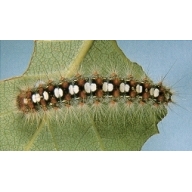
Mature satin moth caterpillars grow to be 38 mm long. Their backs are black with a central row of white or light yellow markings.

The adult moths have pure white wings with a satin-like lustre. They are heavy-built moths with a wingspan ranging from 35 to 50 mm and can be distinguished from other local white species by narrow alternating black and white bands on the legs.

The Problem

The caterpillars feed principally on the leaves of poplar and willow trees and less commonly on oak. In new outbreaks, satin moth is often seen to prefer hybrid poplar species such as the Northwest, Griffin, Silver and columnar types which are planted here as landscape ornamentals. Successive heavy attacks over three years will likely result in the dieback of branches, or even whole trees.

What You Can Do

A small parasitic wasp (Cotesia melanoscela) attacks and for the most part now suppresses satin moth populations in the Edmonton area. Typically spraying is no longer required.

There are a couple of cultural practices a homeowner can use to help control satin moth on a tree. The greenish egg masses concentrated on the lower areas of the tree can be easily scraped off in July with a dull blade and destroyed before they hatch.

A sticky band can be used to intercept much of the upward movement of young caterpillars that overwinter in bark crevices on the lower trunk area. Such a sticky band trap should be established by the end of April and monitored throughout the month of May to ensure the sticky surfaces do not become saturated with emerging caterpillars.

Satin moth caterpillar

Spiny Ash Sawfly

The spiny ash sawfly is a recent introduction to Edmonton that feeds on ash leaves.

The spiny ash sawfly (Eupareophora parca) is a small wasp that was first noticed in Edmonton in 2003. It occurs throughout the U.S. and is known in Canada from Saskatchewan to the Maritimes.

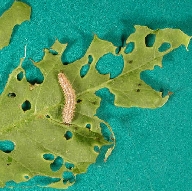
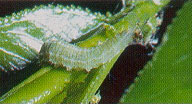
The larvae look like greenish or yellowish caterpillars with short fleshy spines and dark-coloured heads.

The Problem

Young larvae chew holes in the leaves; older larvae will consume whole leaflets. It does most damage to young ash trees in plantations and to young and old ash trees in ornamental plantings.

What You Can Do

Presently, this insect does not appear to be causing serious damage. Pest control staff may control this insect on City trees on an individual complaint basis.

Spiny Ash Sawfly

Spruce Spider Mite

The spruce spider mite (Oligonychus ununguis) is a common pest found on spruce trees. Adult mites are green-brown, have four pairs of legs and are scarcely visible to the unaided eye.

The Problem

These mites suck sap from the tree's needles, causing them to turn yellow, then brown and eventually drop off. Damage on a tree usually starts appearing on inner portion of the lower branches.

If an infestation persists, twigs and branches may die. During periods of drought, extremely severe attacks may kill the tree.

Spruce spider mites also spin a fine webbing that traps debris between the needles and makes the tree look dirty.

What You Can Do

Spruce spider mites survive best during hot, dry conditions. Heavy rain, high winds and high humidity usually control mites naturally.

Regularly washing a spruce tree down over the summer with a hard stream of water from the garden hose will control mite populations and remove unsightly webbing and trapped dirt.

Yellowheaded Spruce Sawfly

The yellowheaded spruce sawfly (Pikonema alaskensis) is native to North America. Mature larvae are about 20 mm (three quarters of an inch) long. They look like hairless green caterpillars with a series of darker stripes running along the body. They have a distinctive dark yellowish head.

The Problem

This pest attacks spruce trees, especially young, open-grown trees. The larvae eat all the new needles before moving onto older ones. Feeding damage starts near the top of a tree and moves downward.

This stripping of the needles can seriously weaken a tree. Moderate attack two or three years in a row can kill a spruce tree.

What You Can Do

If the spruce trees attacked are small and few in number, this pest can be controlled by hand picking and destroying the larvae when they first appear mid to late June. Young larvae may also be controlled by hosing them off with a strong jet of water.

Unfortunately, damage to spruce trees is generally not noticed by homeowners until later when the larvae are quite large and have already started eating entire needles. These insects can be difficult to spot among the needles so careful, timely inspections are required.

Insecticide can be applied mid to late June to protect larger spruce trees under attack.

Bug Alert! Invaders

Asian Longhorned Beetle

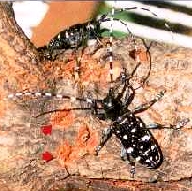
Asian Longhorn Beetle (Anoplophora glabripennis) is a potentially damaging invasive beetle species native to China and other parts of Asia. It measures up to 3.5 cm long, has a long, banded antennae and distinct, bright white spots on its shiny, black back. Other related beetles that are native to our area include the spruce sawyer beetle and poplar borer.

The Problem

This beetle likely hitchhiked here in wooden packing materials. It was found approximately in 2003 near Toronto and Vaughan in Ontario. It attacks a variety of hardwood trees such as willow, poplar, elm, maple and birch (easily some of our most common trees). Their larvae burrow extensive tunnels through their wood, killing even the largest and healthiest trees with ease. In addition, Asian longhorn beetles have no native predators that would help keep their populations from getting out of control. Considering how much of our urban and native forests are comprised of the above tree species, an infestation of these beetles could be devastating to our city. Forestry, tourism, public health and the stability of our native ecosystems would be impacted, costing us both quality of life and billions of dollars nationwide.

Almost 29,000 trees had to be destroyed in Vaughan and Toronto to keep their Asian longhorn beetle infestation from spreading. Early detection of the beetles is important in order to avoid a similar situation here in Alberta.

What You Can Do

If you see an Asian longhorn beetle, collect the specimen or take a close-up picture and send that and any detailed information regarding the date and location to 311 or email treebugs@edmonton.ca. Beetles can also be spread by the transport of firewood - so "burn it where you buy it!"

Asian Longhorned Beetle

Emerald Ash Borer

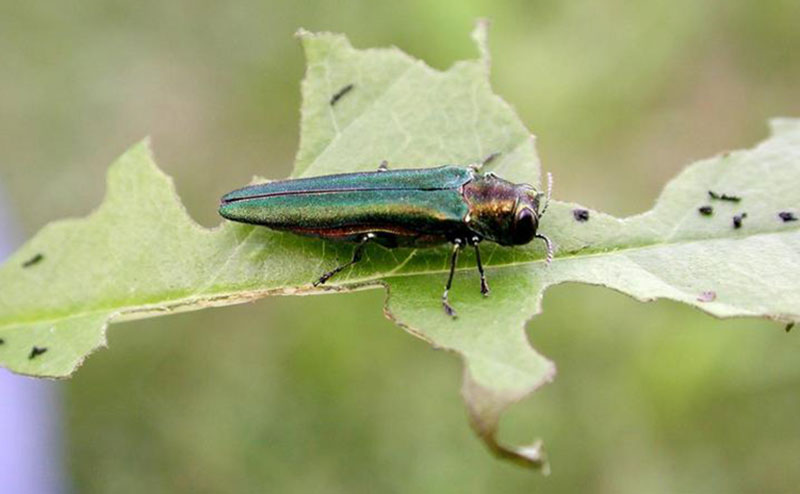
The emerald ash borer (Agrilus planipennis) is a deceptively attractive beetle. They are bright, metallic green insect and roughly twice the size of a grain of rice, 8.5 -14 mm long and 3.1 -3.4 mm wide. They start life in an egg only 1 mm long. The newly hatched larva can grow to 32 mm long over a year or two of development. They chew their way through the cambium layer of a living tree’s bark and create a zigzag tunnel behind it that prevents the flow of nutrients through the tree’s bark in that area. When many larvae chew enough of these tunnels, the tree can be entirely girdled and will quickly die. The larvae overwinter before pupating in the spring and emerge as adults about 3 weeks later. The adult beetles create a “D”-shaped hole as they emerge from the tree. Adults feed on the leaves and soon fly to find mates to begin the cycle anew. 

Emerald Ash Borer

Spongy Moth

The Spongy Moth is a serious pest that threatens a wide variety of trees in Edmonton's urban forest.

The adult female spongy moth (Lymantria dispar) has a wingspan of up to 6 cm; the wings are white in colour with a few black wavy lines or flecks.

The buff-coloured egg masses are 3 to 6 cm long and 2 to 3 cm wide and resemble pieces of chamois leather.

The Problem

Spongy moth caterpillars feed on the foliage of most trees and are among the most serious pests of deciduous species.

What You Can Do

Report any suspected sightings in Edmonton to 311.

Spongy Moth

Female spongy moths and egg masses.

Beneficial Bugs

Flower Fly

The immature stages (maggots) of many flower flies prey almost exclusively on aphids. The adult flies, many of which sport brightly coloured, body stripes are also known as hover flies.

These skilled fliers are most commonly seen hovering in the air next to flowers, appearing motionless as they search for a meal of pollen or nectar.

Flower fly larva eating an aphid.

Flower fly larva eating an aphid.

Green Lacewing

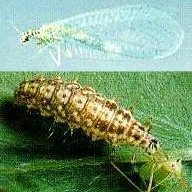
Aphid-lions use their long, curved mouthparts to catch, puncture and suck dry their prey. Food items include aphids, other small, soft-bodied insects and mites.

Aphid-lions develop into green lacewings that hunt similar prey and are recognized by their green colour, net-like wings and clumsy flight.

Green lacewing adult (top) and larvae (aphid-lion) eating an aphid.

Green lacewing adult (top) and larvae (aphid-lion) eating an aphid.

Ground Beetle

There are many species of ground beetles. Nearly all of them as adults and larvae feed on other insects and some are very beneficial.

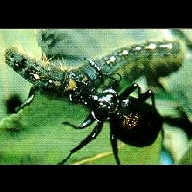
Some ground beetles as pictured here prey on quite large caterpillars that are frequently stalked at night-time.

A ground beetle attacking a forest tent caterpillar.

A ground beetle attacking a forest tent caterpillar.

Ladybird Beetle

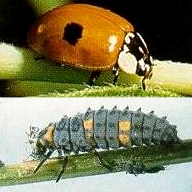
Alberta has dozens of species of these predatory beetles. The most common are the native two-spot ladybug, and the introduced seven-spot ladybug. 

Ladybugs Eat Plant Pests

Ladybugs are well known aphid hunters. During development each ladybug larva can consume hundreds of aphids or similar soft-bodied, sap-sucking garden pests.

What You Can Do

Like green lacewings, ladybugs are commercially available for biological pest management. These predators however are more manageable in closed systems, like green-houses, rather than in the outdoors.

Ladybird beetle adult

Ladybird beetle adult (top) and larvae eating an aphid.

Contact Us

Pest Management

Phone  311 | Outside of Edmonton: 780-442-5311 | TTY: 780-944-5555