

Managing growth is 1 of 3 City Plan systems. Growth management actions play a key role in implementing The City Plan, including establishing processes to guide where, when, why and how the City supports growth and development. These actions help to grow and diversify Edmonton’s housing supply. Growth Monitoring measures progress toward The City Plan’s targets.
Planning for Growth
Edmonton's population grew by over 100,000 people (more than 10%) from 2022 to 2024, the strongest rate of growth in any two-year period since at least 2003. While the pace of growth is expected to moderate, it is vital to keep planning for growth.
A greater variety of housing choices is needed to meet the needs of Edmontonians today and tomorrow. More medium and high density homes are needed in existing areas, and new communities within the city’s current boundaries must also be planned carefully.
A more even balance between greenfield and infill growth will help to ensure we are using land, amenities, infrastructure and services as efficiently as possible. This balance will also allow us to respond as neighbourhoods and districts grow and preferences change.
This approach will help Edmonton reach the following goals established in The City Plan:
- Adding 50% of new units through infill city-wide.
- Welcoming 600,000 additional residents into the redeveloping area.
Activating Growth
The City Plan emphasizes the need for growth activation, which includes increasing density in nodes (community urban centres) and along corridors (main streets) for living, working and moving. Activation requires integration of the city’s systems and networks, tradeoffs, and evidence-based decisions (see The City Plan’s Maps 10 and 11 for further context).
The public and private sectors both have roles in cultivating growth in the redeveloping area. The City will help activate growth and change by establishing the structure and technical foundation for future action (strategizing), providing infrastructure, for example mass transit (investing), and supporting ongoing momentum (nurturing). The private sector decides when and where to build housing within the framework provided by the City.
See the Managing Growth section of The City Plan (48.21 MB) for more details.
Priority Growth Areas
Priority Growth Areas are nodes and corridors expected to see the most near-term growth. They are recommended for investment before other locations in the redeveloping area. They create logical areas for concentrated housing and employment within districts and support growth in areas well-served by transit (See the Priority Growth Areas to 1.25 Million map).
Recent initiatives in Priority Growth Areas include:
- Priority Growth Area Rezoning - City-driven, proactive rezonings in five key areas to take advantage of existing transit investment and encourage more housing and commercial development opportunities. Council approved the rezonings in May 2025.
- The Infill Infrastructure Fund - funding for shared public infrastructure to support new market and non-market multi-unit housing in Edmonton’s redeveloping area.
- Neighbourhood Renewal - a cost effective, long-term strategic approach to renewing and rebuilding roads, sidewalks and street lights in existing neighbourhoods and along collector roadways. The design of neighbourhood renewal projects considers if the neighbourhood is located in a Priority Growth Area.
- Infrastructure Planning - priorities for renewing and building a broad range of infrastructure and amenities to create complete communities, encourage different ways of getting around and enable infill development. Priorities must consider the City’s ability to build, maintain and operate the infrastructure, as well as service priorities and asset management best practices.
Supporting Growth Through Infrastructure
Several financing and cost-sharing mechanisms exist to fund infrastructure that is needed to support growth. This includes sanitary and roadway infrastructure as well as fire halls, which are partially funded through developer contributions. Funding is also available to support a broad range of infrastructure types for infill development.
Funding mechanisms that support the construction of infrastructure that is required for housing include:
- Permanent Area Contributions (PAC) - facilitates cost sharing of sewer systems installed in private development areas. Cost sharing means the first developer in a new area is able to recover costs from subsequent developers.
- Sanitary Servicing Strategy Fund (SSSF) - combines the resources of developers, new home builders, the City and EPCOR to build the largest deep sanitary sewer trunk lines required for growth.
- Arterial Road Assessment (ARA) - collects money from developers as a condition of a subdivision or development permit to equitably share the costs of arterial roadway infrastructure.
- Off-site Levies for Fire Halls - fees developers pay to the City when building new neighbourhoods. While provincial legislation allows for the collection of levies for a range of infrastructure, in Edmonton they are charged only for the construction and equipping of fire halls at this time. Fire halls are required to support growth.
- Infill Fire Protection Program (IFPP) - shares costs of water system upgrades that improve fire protection in established areas. EPCOR operates the $20.2 million program and costs are shared between infill developers, ratepayers, and the City's Fire Rescue Services.
- Infill Infrastructure Fund (IIF) - provides funding for shared public infrastructure to support new market and non-market multi-unit housing in Edmonton’s redeveloping area.
Phasing Growth
The City Plan also carefully considers how to phase Edmonton’s growth to ensure the best social, environmental and economic return on investment. This includes working with the development industry to plan and deliver new neighbourhoods in the developing area (primarily outside the Anthony Henday Drive and north of 41 Avenue SW) and preparing the Future Growth Area for planning (south of 41 Avenue SW).
Preparing the Future Growth Area (FGA)
Being ready for growth includes preparing the Future Growth Area (see map below) for development over the long term.
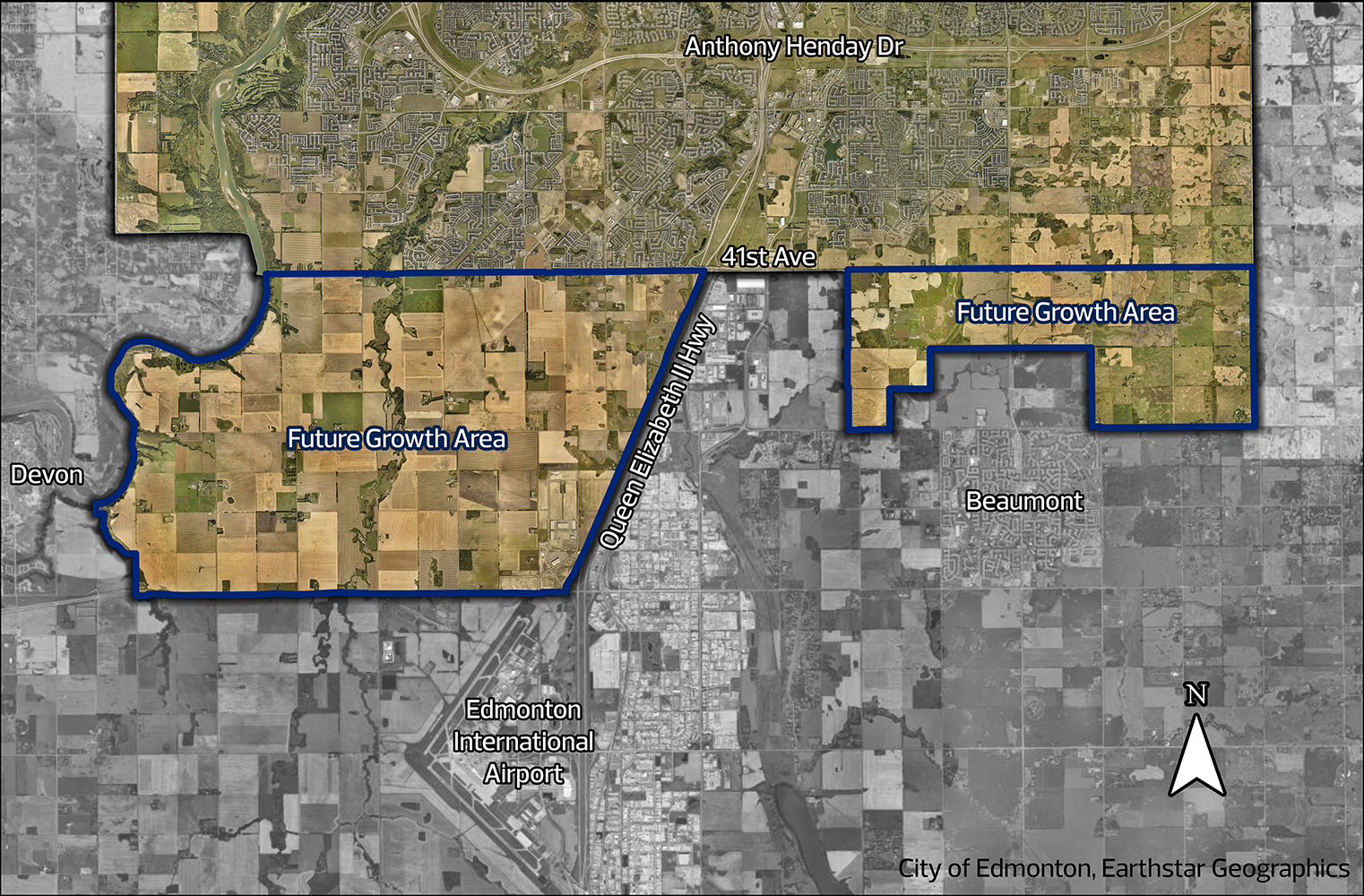
Servicing Study
By the end of 2026, a servicing study will be completed to identify constraints, major infrastructure and ecological networks, and forecast the expected progression of development in that area. This information will be refined in the future, as more detailed planning is completed.
Land Development Process
Like other areas of the city, the build out of the Future Growth Area will follow the standard development process.
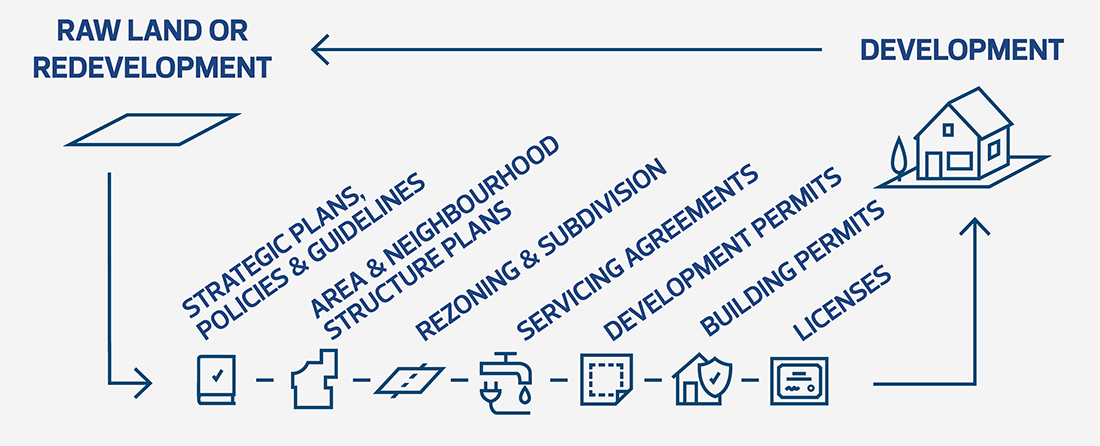
Once the servicing study is ready, developers will seek authorization from Council to prepare Area Structure Plans (ASPs) and Neighbourhood Structure Plans (NSPs). Once that is granted, those plans will be created, reviewed and presented to City Council for approval.
After approval, lands are rezoned to comply with the designated land use. At the rezoning stage, surrounding property owners are notified and can provide feedback on the proposed zoning.
Terms of Reference Modernization
The Terms of Reference Modernization project focuses on creating a revised template for statutory planning documents like Area Structure Plans (ASPs) and Neighborhood Structure Plans (NSPs) and will address topics such as greenhouse gas emissions, climate resilience, and fiscal impacts of growth.
Fiscal Impacts of Growth
The Fiscal Impacts of Growth initiative is centered on updating the Integrated Infrastructure Management Plan (IIMP) model and related processes. This work aims to better prepare for and incorporate the costs and revenues associated with growth into budget planning. The updated approach will help Council understand the implications of approving new statutory plans, including those for major redevelopments.