


The Truth and Reconciliation Commission (TRC) outlined 94 calls to action to redress the painful legacy of residential schools and advance the process of reconciliation with Indigenous Peoples.
Content Advisory: This web page contains information about the Truth and Reconciliation Commission (TRC), including content about Canada’s Residential School System and the harms done to Indigenous peoples. This content may be distressing for some readers.
The City of Edmonton's Response
We are now focused on 28 commitments that respond to, or were inspired by, the TRC Calls to Action. While many of the Calls to Action fall outside municipal jurisdiction, we’re working to advocate and support as many as possible.
| Call to Action | Associated Pillar | Theme Alignment | What it Says | What’s Happening | Examples of Aligned Work |
|---|---|---|---|---|---|
| 3* | Addressing | Child Welfare | "We call upon all levels of government to fully implement Jordan’s Principle." | The City of Edmonton is committed to exploring Jordan's Principle and how the municipal government can support it. | Transit Operations - subsidized transit passes for amiskwaciy Academy |
| 7 | Addressing | Employment | "We call upon the federal government to develop with Aboriginal groups a joint strategy to eliminate educational and employment gaps between Aboriginal and non-Aboriginal Canadians." | While this isn’t directed at municipal governments, we are actively working to diversify recruitment at the City of Edmonton. |
|
| 14 (ii,iv,v) | Resurgence | Language and Culture | "We call upon the federal government to enact an Aboriginal Languages Act that incorporates the following principles that Aboriginal language rights are reinforced by the Treaties; the preservation, revitalization, and strengthening of Aboriginal languages and cultures are best managed by Aboriginal people and communities; funding for Aboriginal language initiatives must reflect the diversity of Aboriginal languages." | While this isn’t directed at all levels of government, the City of Edmonton has been actively involved in Indigenous naming projects. |
|
| 17* | Resurgence | Language and Culture | "We call upon all levels of government to enable residential school Survivors and their families to reclaim names changed by the residential school system by waiving administrative costs for a period of five years for the name-change process and the revision of official identity documents, such as birth certificates, passports, driver’s licenses, health cards, status cards, and social insurance numbers." | The City of Edmonton is committed to reclaiming names changed by Canada’s Residential School System. | None available |
| 21 | Addressing | Health | "We call upon the federal government to provide sustainable funding for existing and new Aboriginal healing centres to address the physical, mental, emotional, and spiritual harms caused by residential schools, and to ensure that the funding of healing centres in Nunavut and the Northwest Territories is a priority." | At the request of the community, the City of Edmonton is actively involved in this space. |
|
| 27 | Awareness | Justice | "We call upon the Federation of Law Societies of Canada to ensure that lawyers receive appropriate cultural competency training, which includes the history and legacy of residential schools, the United Nations Declaration on the Rights of Indigenous Peoples, Treaties and Aboriginal rights, Indigenous law, and Aboriginal– Crown relations. This will require skills-based training in intercultural competency, conflict resolution, human rights, and anti-racism." | The City of Edmonton employs lawyers on its staff. As part of their employment at the City, they are required to take the mandatory Indigenous Awareness Training (described under Call to Action 57), and are encouraged to take additional learnings offered through the City. | The creation of an Indigenous Legal Advisor role to provide high-level guidance on Indigenous-related legal matters, advancing the City’s commitment to reconciliation and advancing Indigenous rights. |
| 41 (i,ii) | Addressing | Justice | "We call upon the federal government, in consultation with Aboriginal organizations, to appoint a public inquiry into the causes of, and remedies for, the disproportionate victimization of Aboriginal women and girls. The inquiry’s mandate would include: Investigation into missing and murdered Aboriginal women and girls; Links to the intergenerational legacy of residential schools." | The City of Edmonton has already committed to a MMIR Action Plan and multiple gender-based violence initiatives. |
|
| 43* | Addressing | Canadian Governments and the United Nations Declaration on the Rights of Indigenous People | "We call upon federal, provincial, territorial, and municipal governments to fully adopt and implement the United Nations Declaration on the Rights of Indigenous Peoples as the framework for reconciliation." | - |
|
| 44 | Addressing | Canadian Governments and the United Nations Declaration on the Rights of Indigenous People | "We call upon the Government of Canada to develop a national action plan, strategies, and other concrete measures to achieve the goals of the United Nations Declaration on the Rights of Indigenous Peoples." | The City’s Indigenous Relations Office is currently exploring what UNDRIP adoption looks like at the municipal level. | The City’s Indigenous Framework is the basis for this work for the corporation. |
| 47* | Addressing | Royal Proclamation and Covenant of Reconciliation | "We call upon federal, provincial, territorial, and municipal governments to repudiate concepts used to justify European sovereignty over Indigenous peoples and lands, such as the Doctrine of Discovery and terra nullius, and to reform those laws, government policies, and litigation strategies that continue to rely on such concepts." | - |
|
| 53 | Advocacy | National Council for Reconciliation | "We call upon the Parliament of Canada, in consultation and collaboration with Aboriginal peoples, to enact legislation to establish a National Council for Reconciliation. The legislation would establish the council as an independent, national, oversight body with membership jointly appointed by the Government of Canada and national Aboriginal organizations, and consisting of Aboriginal and non-Aboriginal members. Its mandate would include, but not be limited to, the following: ii. Monitor, evaluate, and report to Parliament and the people of Canada on reconciliation progress across all levels and sectors of Canadian society, including the implementation of the Truth and Reconciliation Commission of Canada’s Calls to Action. iii. Develop and implement a multi-year National Action Plan for Reconciliation, which includes research and policy development, public education programs, and resources. iv. Promote public dialogue, public/private partnerships, and public initiatives for reconciliation." | The City of Edmonton prioritizes keeping reconciliation at the top of its advocacy agenda with other orders of government. |
|
| 55 (iv,vi)* | Addressing | National Council for Reconciliation | "We call upon all levels of government to provide annual reports or any current data requested by the National Council for Reconciliation so that it can report on the progress towards reconciliation. The reports or data would include, but not be limited to progress on closing the gaps between Aboriginal and non-Aboriginal communities in a number of health indicators such as: infant mortality, maternal health, suicide, mental health, addictions, life expectancy, birth rates, infant and child health issues, chronic diseases, illness and injury incidence, and the availability of appropriate health services; progress on reducing the rate of criminal victimization of Aboriginal people, including data related to homicide and family violence victimization and other crimes." | While the City of Edmonton does not have much of this mentioned data, we can advocate and also collect data of our own to be held accountable through our evaluation framework. |
|
| 57* | Awareness | Professional Development and Training for Public Servants | "We call upon federal, provincial, territorial, and municipal governments to provide education to public servants on the history of Aboriginal peoples, including the history and legacy of residential schools, the United Nations Declaration on the Rights of Indigenous Peoples, Treaties and Aboriginal rights, Indigenous law, and Aboriginal–Crown relations. This will require skills-based training in intercultural competency, conflict resolution, human rights, and anti-racism." | The City of Edmonton offers Indigenous Awareness and anti-racism training, and uses the Indigenous Framework to guide how City staff can build stronger relationships with Indigenous peoples, partners and rights holders. |
|
| 71 | Advocacy | Missing Children and Burial Information | "We call upon all chief coroners and provincial vital statistics agencies that have not provided to the Truth and Reconciliation Commission of Canada their records on the deaths of Aboriginal children in the care of residential school authorities to make these documents available to the National Centre for Truth and Reconciliation." | The City of Edmonton can advocate with regional and municipal partners to ensure that this call to action is being responded to. |
|
| 75* | Addressing | Missing Children and Burial Information | "We call upon the federal government to work with provincial, territorial, and municipal governments, churches, Aboriginal communities, former residential school students, and current landowners to develop and implement strategies and procedures for the ongoing identification, documentation, maintenance, commemoration, and protection of residential school cemeteries or other sites at which residential school children were buried. This is to include the provision of appropriate memorial ceremonies and commemorative markers to honour the deceased children." | - | - |
| 76 (i,iii,iii) | Addressing | Missing Children and Burial Information | "We call upon the parties engaged in the work of documenting, maintaining, commemorating, and protecting residential school cemeteries to adopt strategies in accordance with the following principles that the Aboriginal community most affected shall lead the development of such strategies; iInformation shall be sought from residential school Survivors and other Knowledge Keepers in the development of such strategies; and, Aboriginal protocols shall be respected before any potentially invasive technical inspection and investigation of a cemetery site." | The City of Edmonton, particularly through work in the River Valley and out at Camsell Hospital, have been actively responding and investigating as inquiries are received. At this time, there are no further indications of dedicated or known residential school burial grounds within the municipal limits. |
|
| 77 | Addressing | National Centre for Truth and Reconciliation | "We call upon provincial, territorial, municipal, and community archives to work collaboratively with the National Centre for Truth and Reconciliation to identify and collect copies of all records relevant to the history and legacy of the residential school system, and to provide these to the National Centre for Truth and Reconciliation." | This Call to Action was completed by the City of Edmonton. |
|
| 79 | Resurgence | Commemoration | "We call upon the federal government, in collaboration with Survivors, Aboriginal organizations, and the arts community, to develop a reconciliation framework for Canadian heritage and commemoration." | The City of Edmonton has been actively addressing opportunities for Indigenous heritage to be rewritten into history through various channels. |
|
| 80 | Awareness | Commemoration | "We call upon the federal government, in collaboration with Aboriginal peoples, to establish, as a statutory holiday, a National Day for Truth and Reconciliation to honour survivors, their families, and communities, and ensure that public commemoration of the history and legacy of residential schools remains a vital component of the reconciliation process." | The City of Edmonton has already declared National Day for Truth and Reconciliation (September 30) as an annual civic “holiday” and has committed to ongoing funding to ensure learning, reflection and action activities are available to both staff and the public. |
|
| 82 | Awareness | Commemoration | "We call upon provincial and territorial governments, in collaboration with Survivors and their organizations, and other parties to the Settlement Agreement, to commission and install a publicly accessible, highly visible, Residential Schools Monument in each capital city to honour Survivors and all the children who were lost to their families and communities." | As a capital city, the City of Edmonton is currently pursuing a project to commemorate Residential School Survivors. Project development is anticipated to begin in 2026. | - |
| 83 | Resurgence | Commemoration | "We call upon the Canada Council for the Arts to establish, as a funding priority, a strategy for Indigenous and non-Indigenous artists to undertake collaborative projects and produce works that contribute to the reconciliation process." | The City of Edmonton, as a festival and arts city, has been heavily engaged with increasing the amount of public Indigenous art through various mediums. |
|
| 86 | Awareness | Media | "We call upon Canadian journalism programs and media schools to require education for all students on the history of Aboriginal peoples, including the history and legacy of residential schools, the United Nations Declaration on the Rights of Indigenous Peoples, Treaties and Aboriginal rights, Indigenous law, and Aboriginal– Crown relations." | The City of Edmonton employs communications staff across the corporation. As part of their employment at the City, they are required to take the mandatory Indigenous Awareness Training (described under Call to Action 57 above), and are encouraged to take additional learnings offered through the City. | - |
| 87* | Awareness | Sports | "We call upon all levels of government, in collaboration with Aboriginal peoples, sports halls of fame, and other relevant organizations, to provide public education that tells the national story of Aboriginal athletes in history." | The City of Edmonton is active in the space of sport and recreation and is committed to telling the stories of the city’s and the region’s Indigenous athletes. | The City is committed to pursuing storytelling and sponsorship opportunities to raise awareness about current and former Indigenous athletes from the region. For example: |
| 88 | Addressing | Sports | "We call upon all levels of government to take action to ensure long-term Aboriginal athlete development and growth, and continued support for the North American Indigenous Games, including funding to host the games and for provincial and territorial team preparation and travel." | The City of Edmonton is committed to hosting sports and events that highlight Indigenous athletes. |
|
| 91 | Resurgence | Sports | "We call upon the officials and host countries of international sporting events such as the Olympics, Pan Am, and Commonwealth Games to ensure that Indigenous peoples’ territorial protocols are respected, and local Indigenous communities are engaged in all aspects of planning and participating in such events." | The City of Edmonton continues to bid on, and expand, tourism in the city. As an aspiring host city for many national and international events and festivals, this is a principle the City strives to incorporate. |
|
| 92 (i,ii) | Addressing | Business | "We call upon the corporate sector in Canada to adopt the United Nations Declaration on the Rights of Indigenous Peoples as a reconciliation framework and to apply its principles, norms, and standards to corporate policy and core operational activities involving Indigenous peoples and their lands and resources. This would include a commitment to meaningful consultation, building respectful relationships, and obtaining the free, prior, and informed consent of Indigenous peoples before proceeding with economic development projects; ensure that Aboriginal peoples have equitable access to jobs, training, and education opportunities in the corporate sector, and that Aboriginal communities gain long-term sustainable benefits from economic development projects." | The City of Edmonton is doing a lot of work in this space in our role as a “corporation” and supporting other businesses. |
|
| 92iii | Awareness | Business | "We call upon the corporate sector in Canada to adopt the United Nations Declaration on the Rights of Indigenous Peoples as a reconciliation framework and to apply its principles, norms, and standards to corporate policy and core operational activities involving Indigenous peoples and their lands and resources. This includes providing education for management and staff on the history of Aboriginal peoples, including the history and legacy of residential schools, the United Nations Declaration on the Rights of Indigenous Peoples, Treaties and Aboriginal rights, Indigenous law, and Aboriginal–Crown relations. This will require skills based training in intercultural competency, conflict resolution, human rights, and anti-racism." | The City of Edmonton is doing work in this space as a “corporation” by supporting other businesses and administering training to staff. |
|
| 94 | Addressing | Newcomers to Canada | "We call upon the Government of Canada to replace the Oath of Citizenship with the following: I swear (or affirm) that I will be faithful and bear true allegiance to Her Majesty Queen Elizabeth II, Queen of Canada, Her Heirs and Successors, and that I will faithfully observe the laws of Canada including Treaties with Indigenous Peoples, and fulfill my duties as a Canadian citizen." | The City of Edmonton is providing opportunities for Indigenous employees to affirm their oath in a culturally appropriate way. |
|
*Specifically calls on municipal government or “all governments"
Interactive Dashboard
Use the interactive dashboard for a more comprehensive view of the City of Edmonton’s TRC Municipal Response Plan and the progress of our reconciliation journey.
Goal of the Municipal Response Plan
The City launched its Truth and Reconciliation Commission Municipal Response Plan in Fall 2022, which includes 4 pillars: Awareness, Addressing, Resurgence and Advocacy. The Municipal Response Plan aims to remove barriers for Indigenous Peoples in Edmonton and enhance access to municipal programs and services. As a “living document,” the plan is designed to adapt to the priorities of Indigenous community members.
This work is informed through community engagement, which includes the wisdom of Indigenous Elders and Knowledge Holders, and operates alongside:
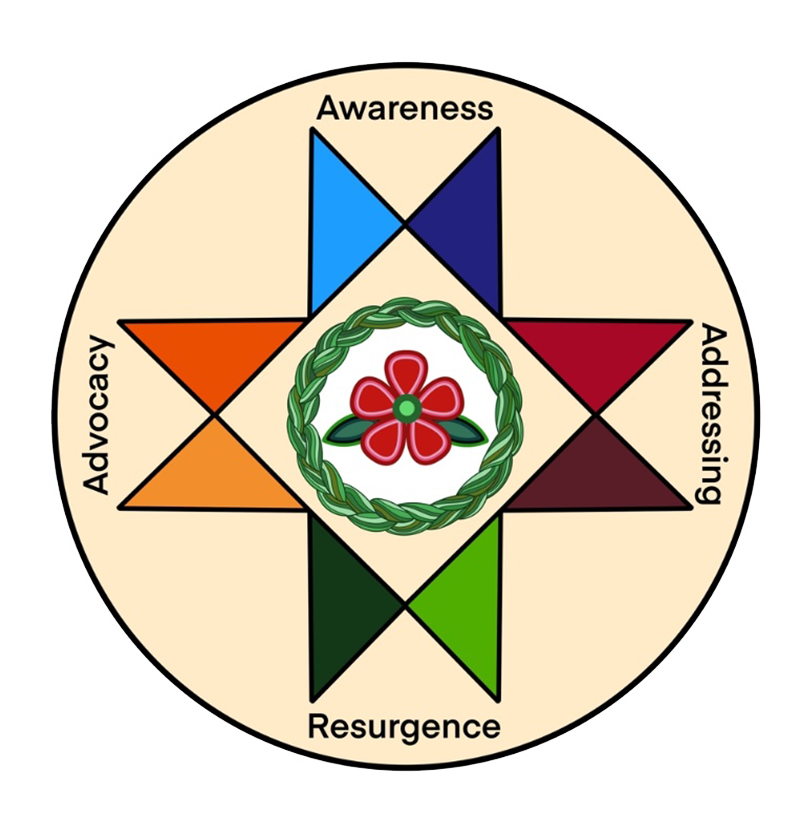
Guiding Principles or Pillars
These guiding principles, or pillars, support the development and implementation of the TRC Municipal Response Plan.
Public education and training to advance understanding of colonialism and Canada’s residential school system.
Role we Play
Listener
“We listen, with open hearts and minds, when Indigenous Peoples share their stories and experiences.”
Description
The awareness pillar is focused on advancing opportunities for staff and the public to learn about truth and reconciliation and to connect with others while doing so. This pillar represents the foundational work we all must do to understand the ‘why’ behind reconciliation. We must enact our roles as listeners to hear the truth about colonization and its continued impact on Indigenous peoples.
Changes to municipal systems, policies and procedures to support Indigenous Peoples.
Roles we Play
Partner
“We work in partnership with Indigenous Peoples on initiatives to improve the physical, mental, spiritual and emotional well-being of Indigenous Peoples in Edmonton.”
Connector
“We connect Indigenous Peoples to the programs, services, people, and resources that enrich the community and foster relationships to create positive change.”
Description
Moving from listening and learning to action is an ongoing process that requires Administration to thoughtfully implement projects and initiatives that address the priorities of Indigenous Peoples in Edmonton. This is where our roles of partner and connector show up as we create a city (including policies, programs and services) that meets the needs of Indigenous people.
Funding and partnerships with Indigenous communities to support the reclamation of culture, knowledge, language and autonomy.
Role we Play
Listener
“We listen, with open hearts and minds, when Indigenous Peoples share their stories and experiences.”
Description
Listening, learning and action are all critical components of how the City responds to the 94 Calls to Action. Long-term systemic changes and creating the conditions for Indigenous resurgence may take more time, but will create a lasting impact that not only supports repairing relationships between Indigenous and non-Indigenous peoples but shares the space required for Indigenous cultures to thrive in Edmonton.
Working with partners to create change.
Role we Play
Advocate
“We stand with Indigenous Peoples to create a safe and inclusive city where everyone is treated with dignity and respect.”
Description
Many of the Calls for Action are outside the jurisdiction of the City of Edmonton. However, we can play a role as an advocate to key partners to respond and commit to change.
The TRC Municipal Response Plan: How We Got Here
The Truth and Reconciliation Commission (TRC) Municipal Response Plan was approved by City Council in October 2022.
Building on the Indigenous Framework’s intent to foster positive, meaningful relationships with Indigenous peoples in Edmonton, the TRC Municipal Response Plan responds to the Truth and Reconciliation Commission’s 94 Calls to Action. With the Indigenous Framework woven throughout the Plan, there is a symbolic connection between the work and an interconnectedness that will continue to be nurtured.
This TRC Municipal Response Plan was created through the use of extensive engagement and research across multiple areas, including community and Elders related to the Indigenous Framework, the Missing and Murdered Indigenous Relatives (MMIR) Action Plan, and the Mayors Roundtable in June 2022. A national jurisdictional scan of local responses to the TRC Calls to Action and the stories shared through the TRC also informed the Plan.
Hear our Voices: Michel People and Residential Schools Exhibit at City Hall
Indigenous Commemorations
| Event | Date |
|---|---|
| Red Dress Day | May 5 |
| Moose Hide Campaign | May (dates vary) |
| Blue Jean Jacket Day | June 6 |
| Indigenous History Month | June |
| Okîsikow (Angel) Way Day | June 14 |
| Treaty No. 6 Recognition Day | August 23 |
| Walk a Mile in a Ribbon Skirt | September 16 |
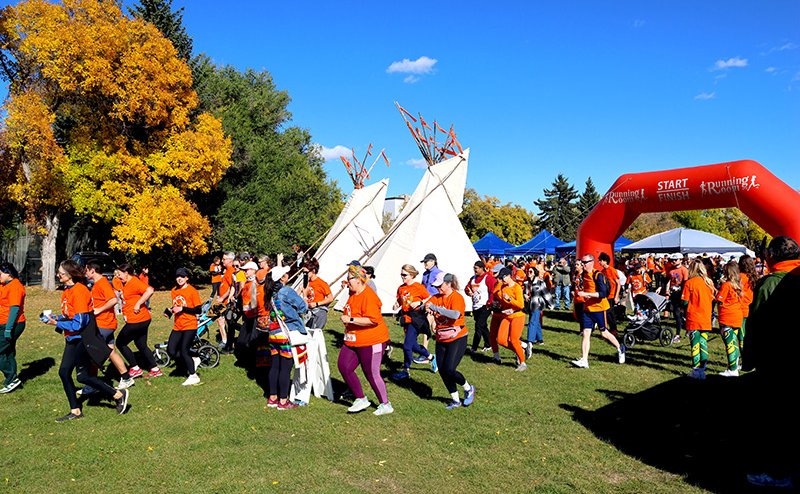
| Orange Shirt Day Run and Walk | September 28 |
| Sisters in Spirit Day | October 4 |
| Métis Week | November (Dates vary) |