


The lower speed limit improves safety around schools and playgrounds and protects young children, our most vulnerable road users.
Playground Zones
30 km/h between 7:30am-9pm (7:30-21:00) every day where playground zone signs are posted.
Extended hours:
- Protect children attending after-hour activities at schools
- Reduce driver confusion around changing hours in different zones
- Creates consistent start and end times city-wide where our children play
There are currently 387 playground zones in Edmonton.
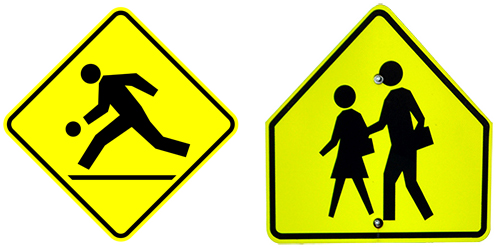
The yellow signs, commonly known as playground zone or school zone signs, are sometimes seen without the speed-limit posted below it. These signs mean a school is in the area or children may be playing nearby. Caution is required, but the 30 km/h speed limit does not apply.
You may see these signs where schools or playgrounds are located on arterial roads or near green spaces without playground equipment.
School Safety Programs
The City is proactively enhancing safety near schools by installing safety upgrades like zebra crossings, stop signs, pavement markings, retro-reflective sleeves, adaptable traffic calming measures, speed check signs and flashing beacons.
The Safe Routes to School program focuses on holistically reviewing safety concerns at school sites and surrounding roads and pathway networks to identify safety upgrades by working with schools, school board planners, and other interested parties. The program selects several sites each year using traffic safety data.
School Safety Pilot Projects
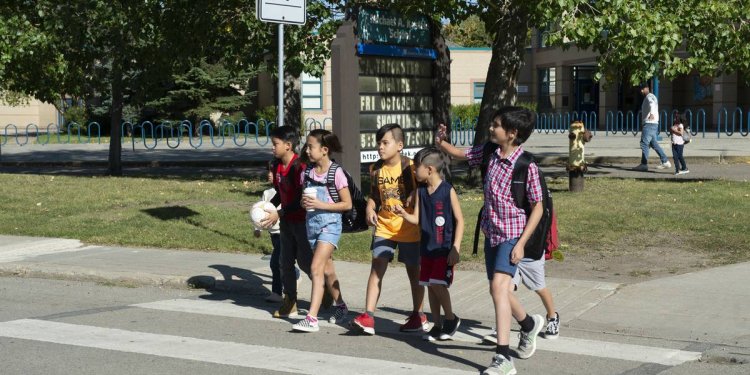
The City of Edmonton is trialing innovative traffic safety upgrades on arterial roads near several schools to lower speeds at key times to keep kids safe on the way to and from school.
A 30 km/h speed limit will be in effect when flashing beacons are active along arterial roads near select schools, during key times of day when there is an increase in student activity and pick-up/drop-off traffic. Upgrades include other measures that encourage safe driving behaviours, like pavement markings and speed check signs.
To date, the City's pilot project areas are:
- Highlands School
- St. Mary School
- St. Martin School
After the measures are installed, the City continues to monitor traffic data in the area to determine if any adjustments are needed. Edmontonians can inform the City about any operational challenges or maintenance needs related to the installed measures by calling 311.
Whether walking, biking or rolling, students rely on drivers to slow down, stay alert and make safe choices to get to and from school safely. The results of this pilot help inform how the City addresses traffic safety at schools, especially around schools close to arterial roads where designated playground zones are not available.
Frequently Asked Questions
These are the most frequently asked questions around lower speed limits for school zones and playground zones. Find out why 30km/h will improve safety around areas where children learn and play.
Under ideal conditions, vehicles traveling at 50 km/h require 24-28 meters to stop. Add another 10 meters when roads are wet or icy. Vehicles traveling 30 km/h need only 8-10 meters in ideal conditions (and another 5 meters in poor conditions). By slowing down, motorists have a better opportunity to react when children are crossing the road, and students stand a better chance of surviving a pedestrian/vehicle collision.
At 30 km/h, nine out of 10 people would survive a car crash; at 40 km/h, seven out of 10 people would survive; and at 50 km/h, less than two out of 10 people would survive. The probability of a fatality or serious injury for people walking increases as the speed increases.
The speed limit in playground zones is 30 km/h between 7:30am - 9pm every day.
Young children are at the greatest risk for pedestrian-related injury and death. They lack the cognitive ability to judge speeds and safe situations. By installing playground zones around schools with elementary and junior high grades, we are able to protect the most vulnerable road users in Edmonton.
Playground zones are installed at schools on residential and collector roads, not arterial roads.
Any area where children frequent can be marked as a playground for the safety of the children, even if there is no playground equipment.
Motorists are required to slow down to 30 km/h from the start of the zone and stay at that rate of speed until after they have passed the sign which indicates the end of the 30 km/h zone.
Since major high-speed roads won’t be affected, this will mostly alter the first and last minute of a car drivers’ commute as they enter/exit quieter neighbourhood streets where average speeds are already low especially during non-ideal driving conditions, such as night, rain/snow storms, ice/snow ruts in winter, parked cars and narrower lanes and similar.
Reduced speed not only results in safer roads but also supports people using many methods of transportation, which ultimately reduces the number of vehicles using the roads and minimizes traffic congestion. In places that have implemented 30km/h speeds limits, there has been less traffic issues.
Also, the dominant cause of traffic congestion is intersection bottlenecks, such as traffic signals and stop signs, not midblock speed.
Playground Zone Change Request Form
Your requested change will be judged based on Alberta Infrastructure and Transportation Guidelines and City of Edmonton supplementary guidelines.
Required fields are marked with an asterisk (*). This information is required to communicate with you if needed.
The City will only contact you if the evaluation team needs more information.
Playground Request Form
Contact Us
311 Contact Centre
Phone 311 | Outside Edmonton and Video Relay Service (VRS): 780-442-5311 | TTY 711