Project Update - Summer 2026
The project is complete. The remaining minor construction and landscaping work has been completed.


Please choose between the following three options:
Skip to main menu Skip to site search Continue to current page menu and contentMain page content begins here
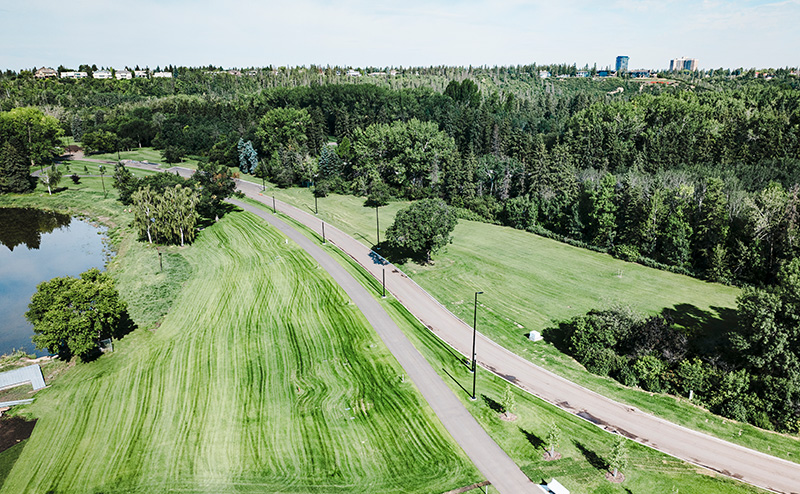
William Hawrelak Park has reopened to the public following rehabilitation.
The project is complete. The remaining minor construction and landscaping work has been completed.
Located in Edmonton’s stunning river valley, William Hawrelak Park is a 68‑hectare gem filled with wide‑open meadows, shady picnic spots and a 5‑hectare lake.
The William Hawrelak Park Rehabilitation Project was identified as a priority to address aging park infrastructure and meet future demands.
The project addressed the utility, transportation, open spaces and facility infrastructure throughout the park. Most of this infrastructure was original to the park since its opening in 1967. The infrastructure had exceeded its lifespan and required repair, replacement or upgrading to remain operational and meet current and future demands.
Watch the project overview video to learn more. Please note that the park playground mentioned in the video was replaced with a new playground.
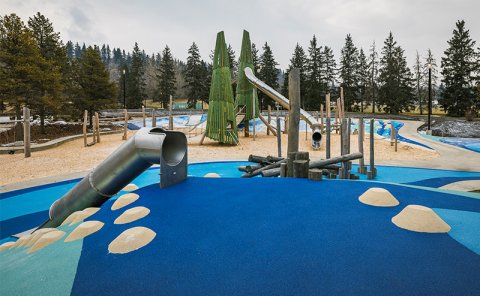
The new playground has slides, swings and nature-themed play structures.
Construction occurred throughout the park. While utility replacement comprised the majority of the project, park facilities and open spaces were also included in the overall rehabilitation.
The following items were included in the rehabilitation project:
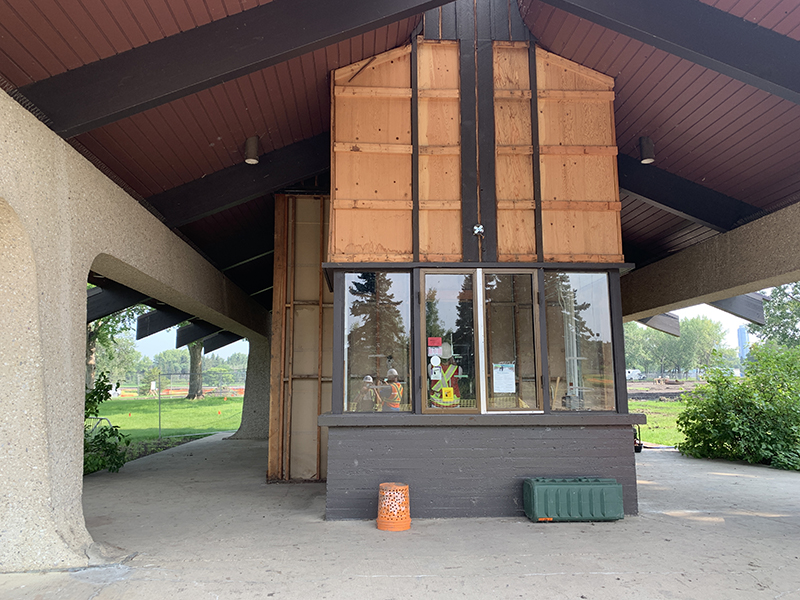
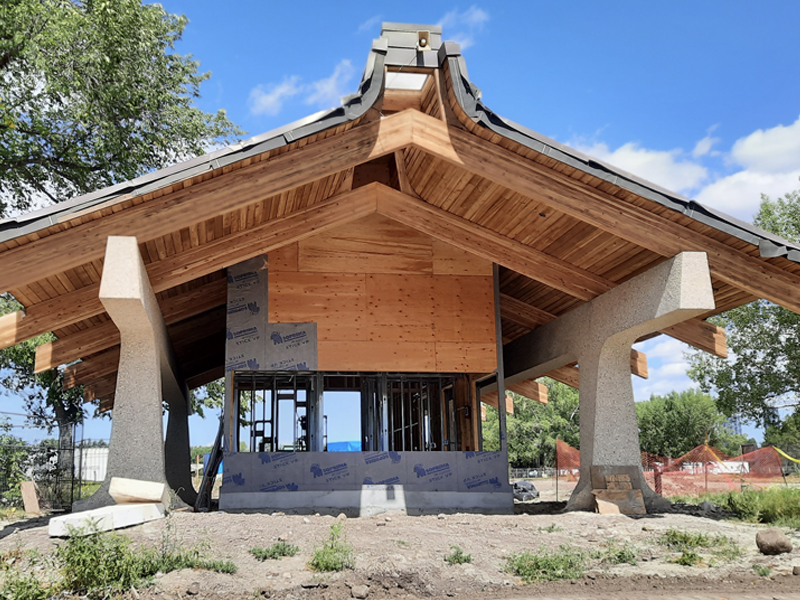
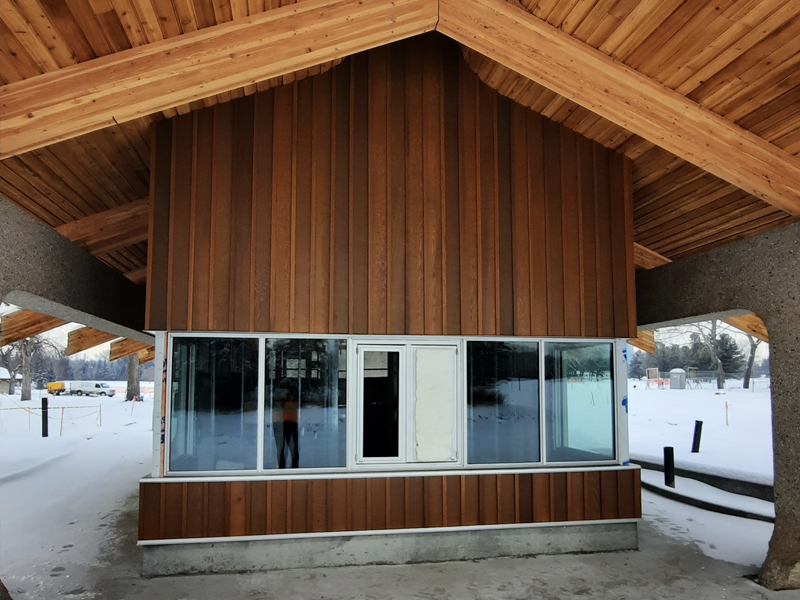
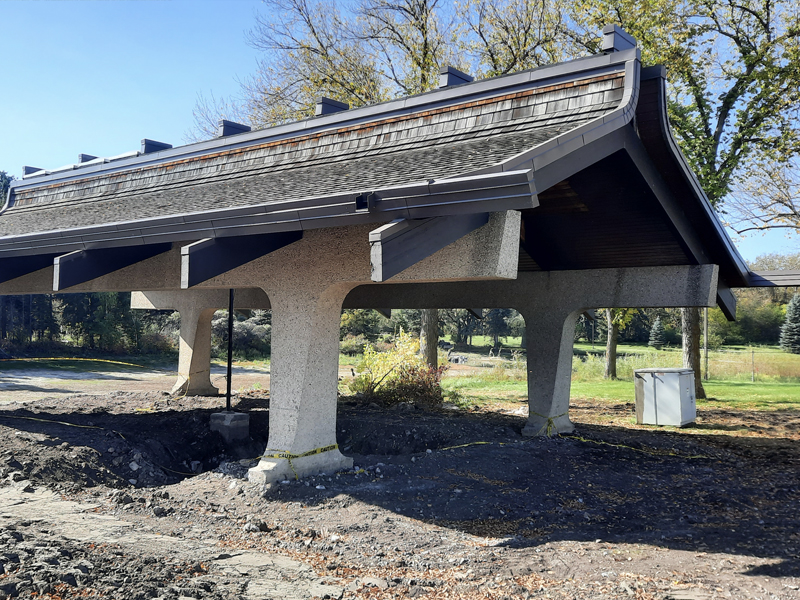
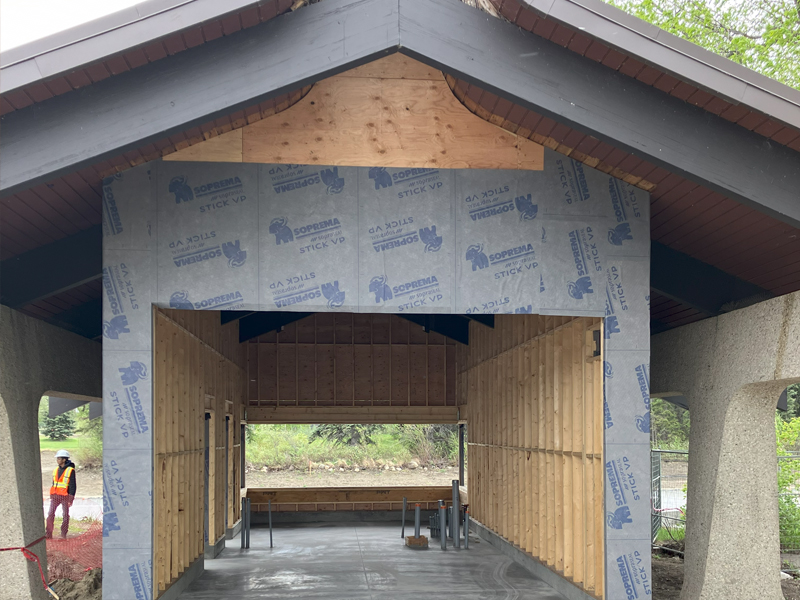
The William Hawrelak Park Main Pavilion, Boat House and Picnic Shelters #1, #2 and #3 were built between 1968 and 1973. These structures are examples of mid-20th-century modern architecture with clean lines, organic forms and clear influences of West Coast post-and-beam construction.
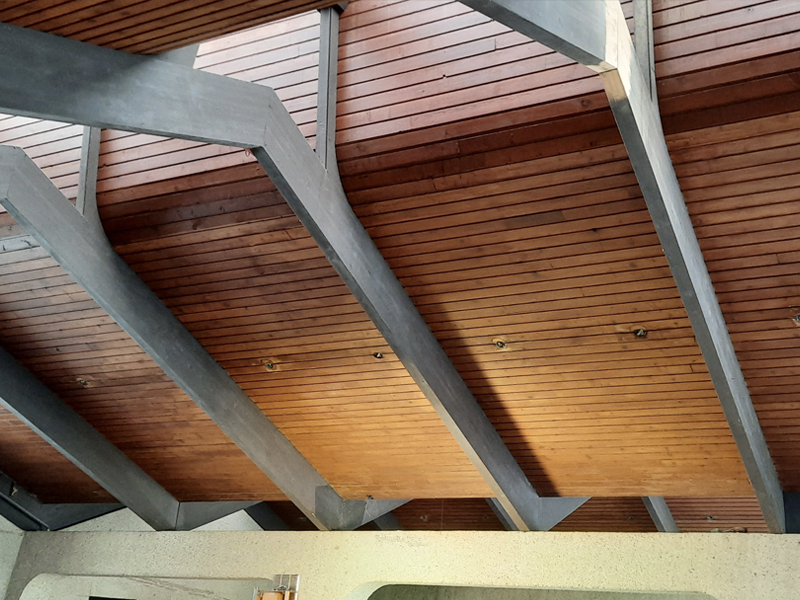
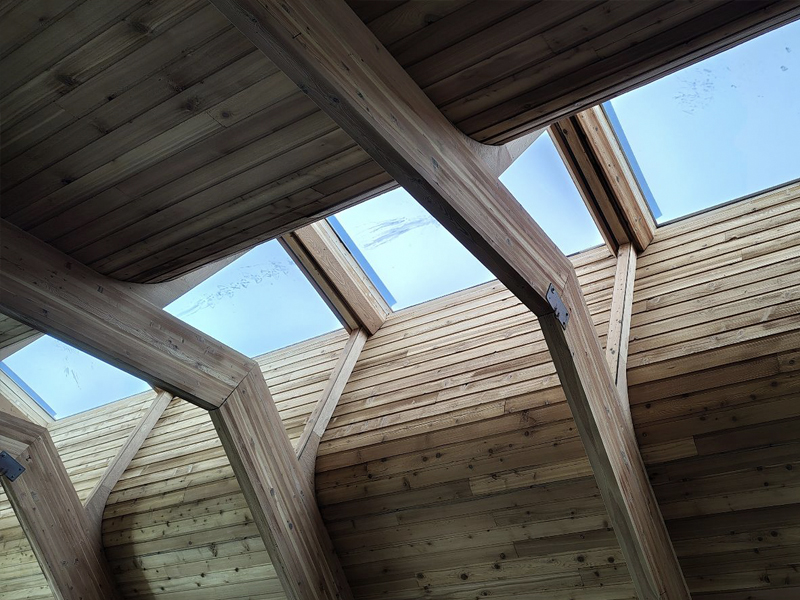
All 5 structures share a distinct architectural form with parallel concrete column-and-beam systems supporting timber rafter trusses. The roof design has tongue-and-groove cedar decking topped with cedar shakes. The roofline of each structure leads along a curve to a series of central domed skylights. This shared form is important to the heritage value of the structures.
In 2023, Edmonton City Council designated the Main Pavilion, Boat House and Picnic Shelters #1, #2 and #3 as Municipal Historic Resources under the Alberta Historical Resources Act. As a result, the rehabilitation project restored or preserved the existing concrete columns, roof trusses and original wood features accordingly. For example, the extensive wood features in the Main Pavilion were restored to their original natural cedar colour.
City rehabilitation projects, like this project, often involve electrical, structural and mechanical updates which improve energy efficiencies and reduce consumption. While these updates are driven by the lifecycle of the infrastructure, the benefits to energy efficiency and environmental sustainability cannot be ignored. The City looks at all aspects of rehabilitation projects to address items which can improve climate resiliency — from switching to LED lighting to improving insulation.
The William Hawrelak Park Rehabilitation Project illustrated how environmental sustainability measures are a core component of rehabilitation and can have a profound impact. As part of the planning and design process, work was completed to identify steps needed to align with the City’s Sustainable Building Policy. Examples of the steps taken included:
Parking was removed in some areas along the perimeter road. To offset these changes, the main parking area was extended. This added more spaces to the main parking area near the entrance of the park. Overall, the park saw a minor increase in the number of stalls.
As the largest urban park in Canada, with more than 160 kilometres of maintained pathways and 20 major parks, the River Valley is a natural wonder for all Edmontonians to be proud of. For a list of other parks in the river valley, visit the river valley parks page.
The project is complete. The remaining minor construction and landscaping work has been completed.
The project has achieved a significant milestone as minor construction and landscaping work continue. Visitors can now access the entire park and enjoy all park amenities and activities, including walking, biking, picnics—as well as a new playground, a new lakefront promenade, a modernized pavilion and updated washroom facilities.
The new perimeter path and multi-use trails are fully paved, supporting safe, inclusive and accessible use for people of all ages and abilities.
The rehabilitation project addressed the utility, transportation, open spaces and facility infrastructure throughout the park. Most of the infrastructure was original to the park's opening in 1967, and had exceeded its lifespan—requiring repair, replacement or upgrading to remain operational and meet current and future demands.
The park’s grand reopening celebration took place on May 30, 2026.
William Hawrelak Park has reopened to the public! Visitors can access most of the park and enjoy various amenities and activities, such as walking, biking, snowshoeing and hosting winter picnics, as well as the new playground, new lakefront promenade, modernized pavilion and updated washroom facilities. The new perimeter path and multi-use trails are fully paved, supporting safe, inclusive and accessible use for people of all ages and abilities.
The rehabilitation project addressed the utility, transportation, open spaces and facility infrastructure throughout the park. Most of the infrastructure was original to the park since its opening in 1967. It had exceeded its lifespan and required repair, replacement or upgrading to remain operational and meet current and future demands.
Much of the rehabilitation wasn’t fancy work, but it was important and necessary. The rehabilitation of aging infrastructure was vital to this beloved park for continued service and sustainability.
While the park is open for casual use, visitors may notice localized construction work to address commissioning, testing and warranty-related items. Landscaping and finishing work will continue into spring 2026. This work can be completed safely while the park is open.
Park visitors are kindly asked to please respect all signage and obey staff directions near active work areas. We are working diligently to complete the remaining work as quickly and safely as possible.
Some areas will be protected to allow new plantings to take root.
Celebrate the completion of the William Hawrelak Park Rehabilitation Project and explore everything the park has to offer at the grand reopening celebration on May 30, 2026. Learn more on William Hawrelak Park.
The William Hawrelak Park Rehabilitation Project is approaching the end of construction. The project continues on time and on budget.
Throughout 2025, substantial progress has been made on landscaping and park facilities, including the picnic shelters, Main Pavilion and the operations yard.
The following project work has recently been completed:
The remaining rehabilitation work includes:
Construction is anticipated to be completed in the coming months. As construction activity slows down, the City will prepare the space (such as installing picnic tables, benches and signage) and staff to safely reopen the park to the public. The park is anticipated to reopen in winter 2025/2026.
Rehabilitation work continues across William Hawrelak Park. Paving of the roadways and shared pathway continues. Electrical work continues around the park, including additional pathway lighting for security.
Facility work on the Main Pavilion, Heritage Amphitheatre, picnic shelters and main service yard continues. Work on the mechanical and electrical systems, interior framing and finishing in all facilities is underway. The refinishing of the interior wood ceilings and structures in all facilities is complete. The concrete work inside and outside all facilities is complete. The concrete for the lakefront path and seating is complete.
Landscaping will continue throughout 2025. The grading of Hawrelak Lake and work on the vegetative buffer around the lake are complete. The landscaping will need time to establish before the park can reopen to the public.
Rehabilitation work continues across William Hawrelak Park. Paving of the roadways and shared pathway continues. Facility work continues on the Main Pavilion, Heritage Amphitheatre, main service yard and picnic shelters. Landscaping work has started and will continue throughout 2025. The rehabilitation of the two overflow drainage outfalls at the North Saskatchewan River is complete.
Watch the William Hawrelak Park Year Two video to learn more.
Rehabilitation work continues across William Hawrelak Park. Paving of the park roadways and shared pathway continues.
Facility work continues on the Main Pavilion, Heritage Amphitheatre and main service yard. Landscaping work has started across the park as other earthworks continue.
The first year of rehabilitation work in William Hawrelak Park is coming to a close. Replacement of all deep utility services throughout the park is complete. Rehabilitation of the 2 drainage outfalls is nearing completion.
Perimeter road and main parking lot paving is underway. Existing concrete from the park roadways and trails has been recycled and will be used for road materials to stabilize the new roads and trails.
Rehabilitation work is underway on buildings, pathways and roadways in the park and will continue throughout the winter and into 2024. Landscaping work will begin in the spring.
Watch the William Hawrelak Park Year One video to learn more.
Trenching and deep utility work started throughout the park. Watch this video to learn more.
A full park closure is in place as rehabilitation work is underway.
River valley trails around the park perimeter remain open during construction. Occasionally, short-term trail detours may be necessary and will be identified with signage, as appropriate. Although the perimeter trails are accessible around the park, there is no trail, parking or washroom access within William Hawrelak Park. Trail access parking and washroom facilities are available at the adjacent park sites, including: Buena Vista Park, Sir Wilfrid Laurier Park, Emily Murphy Park and Victoria Park.
A Council Report on the Tree Management for the William Hawrelak Park Rehabilitation Project (IIS01731) was prepared for the Urban Planning Committee on May 2, 2023. This report includes the Tree Preservation Plan and the Tree Restoration Plan.
Site preparation and deep utility work is underway at this time.
During construction, nearby residents may experience increased noise levels and traffic due to the nature of the work. The majority of construction will occur between 7am and 7pm in accordance with the Community Standards Bylaw 14600 (see Bylaw Lookup).
Please respect all signage and obey instructions of staff in this active work zone.
We understand the inconvenience caused by the park closure and look forward to the reopening in winter 2025/26. Visit the parks and river valley page to find other available parks and amenities.
Detailed design is nearly complete and construction is planned to begin in spring 2023.
Full park closure for up to 3 years is necessary for safety due to the extent of the rehabilitation work. Park closure will begin in spring 2023. It is possible that some recreation activities may resume in a staged manner as construction nears completion.
The project team, including City of Edmonton staff and external advisors including architects, engineers and construction managers, evaluated many options and determined the optimal approach to construction by taking into account multiple perspectives. The analysis included staging of construction through both partial and full park closures.
Among the items considered through this process:
Festival Accommodations - we recognize that a total closure is impactful, however, having ongoing restricted operations over an extended period of years if partially staged was not considered desirable either.
Safety - A large portion of this work will involve replacement of the deep service utilities throughout the entire park. Underground utilities are disruptive and create safety concerns if any portions of the park are left open. They require a significant amount of space to undertake the trench and backfill activities. A typical 3 to 4 metres deep pipe installation can require up to 16 to 20 metres width in working space when taking into account both the trench dimensions with safe cutback slopes as well as the space for a spoil pile to stage the excavated material.
Complexity - There are significant interdependencies with utilities. If we phased the work, we would either have to provide temporary services of most utilities in order to keep the park operating, or we would have to cut off some services until work was complete. Neither option would be appealing to the public or festival teams.
Risk - We anticipate a significant amount of permitting requirements for this project that can be considered and managed in one single request which reduces the overall risk.
Construction Schedule - The full closure strategy allows us the greatest opportunity to stack activities concurrently. This overlapping of activities and resources helps accelerate the timelines and create further agility ensuring the completion date committed to the public has the greatest chance of success.
Cost - A full closure helps provide greater assurances of the total cost for the project. It will be less susceptible to inflation and market pressures including changing codes and standards, regulations and permits. There is also expected to be less temporary work that otherwise may be required when proceeding in a staged approach.
User Experience - One way of promoting a good user experience is through consistency. Our objective will be to maintain active trail detours around the park once it’s fully closed to ensure that users can traverse the river valley trail system. Having consistent access and circulation around the construction area will aid users navigating the area as opposed to avoiding it all together.
Park Operations - Addressing the full scope of work under a total closure allows for the accelerated benefits of the renewal work contributing to enhanced serviceability and reliability issues in a more timely manner.
The project team explored all options, conducted an extensive amount of engagement and determined the best course of action. This was a difficult decision. As construction progresses, the team will actively work to identify areas where passive recreation activities may resume in a staged manner as the rehabilitation progresses.

Summer 2026
May 30
Spring
March 13
Early 2026